
You want candles that feel warm, beautiful, and intentional. But once you start shopping for supplies, the choices get muddy fast. One wax says natural, another says clean burn, a third comes in plastic-heavy packaging, and suddenly a simple creative project feels like a supply chain puzzle.
That confusion is normal. A candle isn't just wax with a wick. It's a small system of material decisions: what was grown, what was processed, what can be reused, what burns cleanly, and what gets thrown away when the flame is gone. Good eco friendly candle making supplies help you make something lovely. Great ones also make the process easier, cleaner, and more consistent.
As both a candle maker and a sustainable design consultant, I think the best way to choose supplies is to stop asking only, “Is this greener?” and start asking better questions. Does it create less waste in the studio? Does it simplify production? Does it improve the finished object? Does it make refills and reuse realistic, not theoretical? That mindset leads to better candles and better habits.
Table of Contents
- The Rise of Sustainable Candle Making
- The Anatomy of an Eco-Friendly Candle
- Choosing Your Sustainable Wax A Practical Comparison
- Sourcing Supplies for Every Creator
- The Sustainable Studio Minimizing Waste in Your Practice
- Crafting a Brighter Greener Future
The Rise of Sustainable Candle Making
You don't start with a market report. You start with a feeling. You light a candle for dinner, for a bath, for a quiet evening at home, and you want the mood without the nagging sense that the product was built around disposable materials and petroleum-based shortcuts.
That's why sustainable candle making has moved from a niche craft concern into a broader design decision. People still care about fragrance, color, and glow. They also care about what sits in the jar, what goes into the air, and what remains after the candle has finished burning.
The industry has been moving in that direction too. One eco-friendly candle market estimate cited by Candle Shack says North America held 38% and Europe 30% of the market, with the category projected to grow at a 6.7% CAGR to USD 739 million by 2035 according to its eco-friendly candle making overview. That matters because it shows sustainability isn't sitting at the edge of the category. It's shaping demand.
What people are really choosing
When makers switch supplies, they usually think they're changing one thing. In practice, they change several at once.
- Material origin: Plant-based waxes such as soy, rapeseed, coconut, and beeswax come from renewable sources rather than petroleum feedstocks.
- End-of-life waste: Glass jars, recycled paper packaging, and plastic-free components make disposal or reuse simpler.
- User experience: A better supply choice often means cleaner setup, easier refilling, and a candle that looks more refined on a shelf or table.
Sustainable candle making works best when beauty and responsibility point in the same direction.
That last point gets overlooked. Eco friendly candle making supplies aren't only about reducing impact. They can also improve how a product feels in the hand, how a workspace functions, and how confidently a maker can repeat results.
Why this shift feels different now
Older ideas of “green crafting” often sounded like compromise. Less polished packaging. Fewer scent options. A worthy product rather than a desirable one. Today the strongest sustainable candle systems don't ask you to give up elegance. They ask you to design more intelligently.
That means looking beyond the wax block or bottle of fragrance and judging the whole candle as a usable object. Is the vessel reusable? Can leftover material be saved? Can the maker avoid unnecessary mess? Can the candle adapt to different spaces and occasions?
Those questions lead naturally to the anatomy of the candle itself.
The Anatomy of an Eco-Friendly Candle
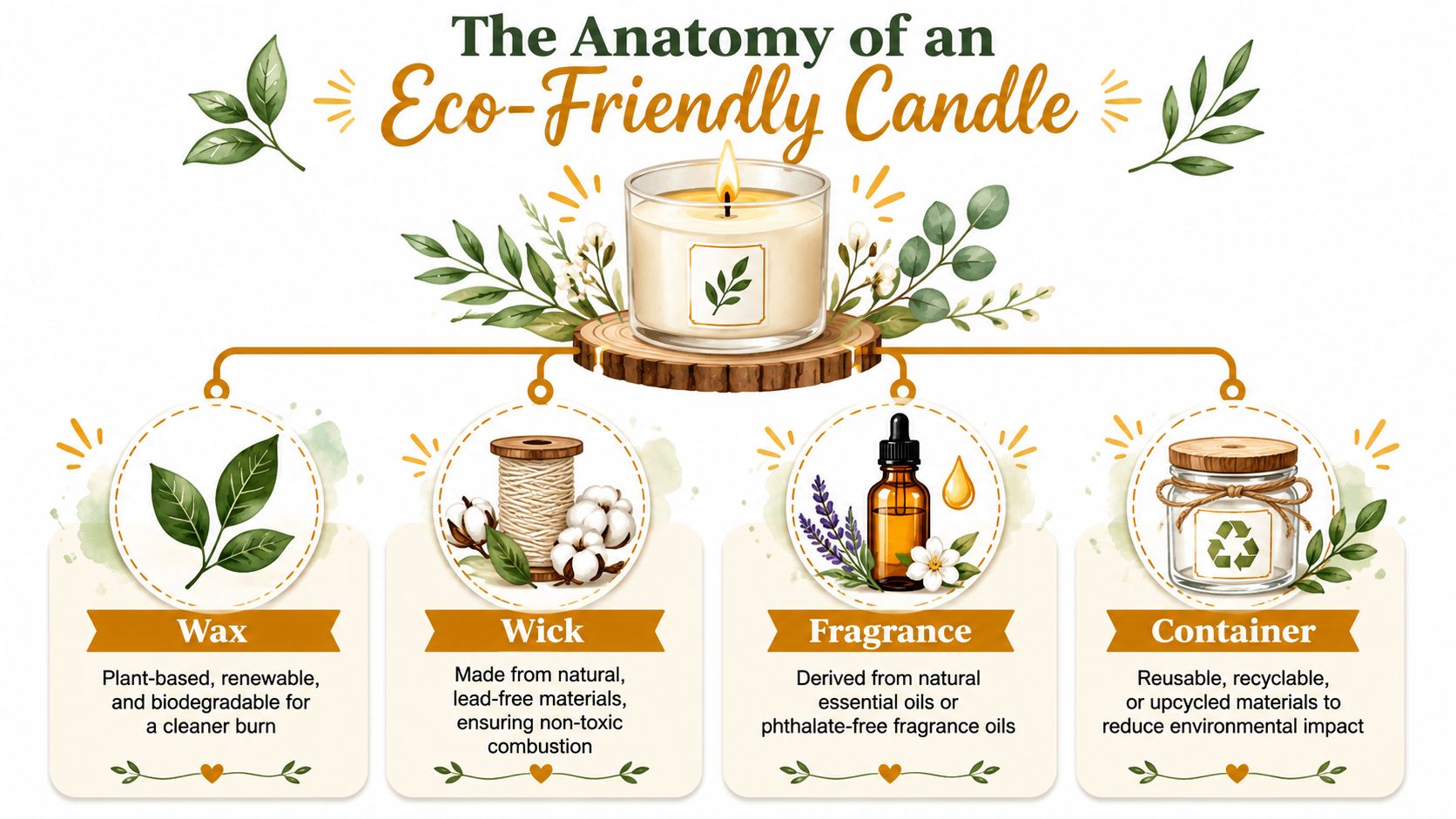
An eco-friendly candle is only as thoughtful as its individual parts. If one component is low-waste and another is disposable, the system becomes less coherent. The simplest way to judge supplies is to break the candle into four pieces: wax, wick, fragrance, and container.
Wax comes first
Wax drives almost everything. It affects burn behavior, scent performance, finish, and how forgiving the candle is to make. In sustainable candle guidance, soy wax stands out because it is renewable, biodegradable, plant-based, and widely described as cleaner burning than paraffin. It is also more forgiving with wick selection than paraffin, which can reduce trial-and-error waste during testing, as noted in this guide to eco-friendly candle making practices.
That “forgiving” quality matters more than beginners realize. If a wax tolerates small variations better, you spend less time correcting tunneling, weak melt pools, or oversized flames. Less rework means fewer wasted supplies.
Traditional paraffin, by contrast, comes from petroleum. It has long been common because it's familiar and easy to source, but it doesn't align as neatly with a renewable-material approach.
Wicks fragrance and vessels matter too
A cleaner candle needs a wick that matches the same philosophy. Cotton and linen wicks are commonly recommended in sustainable candle guides because they are biodegradable and clean-burning. The wick isn't glamorous, but it controls the flame. A poor wick can turn good wax into a frustrating candle.
Containers deserve equal attention. Glass jars remain one of the strongest choices because they are reusable and recyclable. In practice, the best container is often one you'll keep using. A simple tumbler, apothecary jar, or sturdy heat-resistant vessel can outlast many refills if the design invites reuse.
For packaging, look for recycled paper, cardboard, and plastic-free protective materials. Packaging choices often cause many “natural” candles to lose their credibility. A responsible fill inside a wasteful outer box is still a mixed message.
Practical rule: If you can't imagine reusing the vessel or recycling the packaging easily, the candle system still needs work.
Fragrance sits in the middle. Many makers choose essential oils or carefully selected fragrance oils, but the larger principle is restraint and compatibility. Use scents that work with the wax, and dose consistently so you don't waste material chasing a stronger throw than the system can realistically support. If you enjoy scented projects, this guide to essential oil candles is a useful companion for thinking about scent choices.
A modern format worth understanding
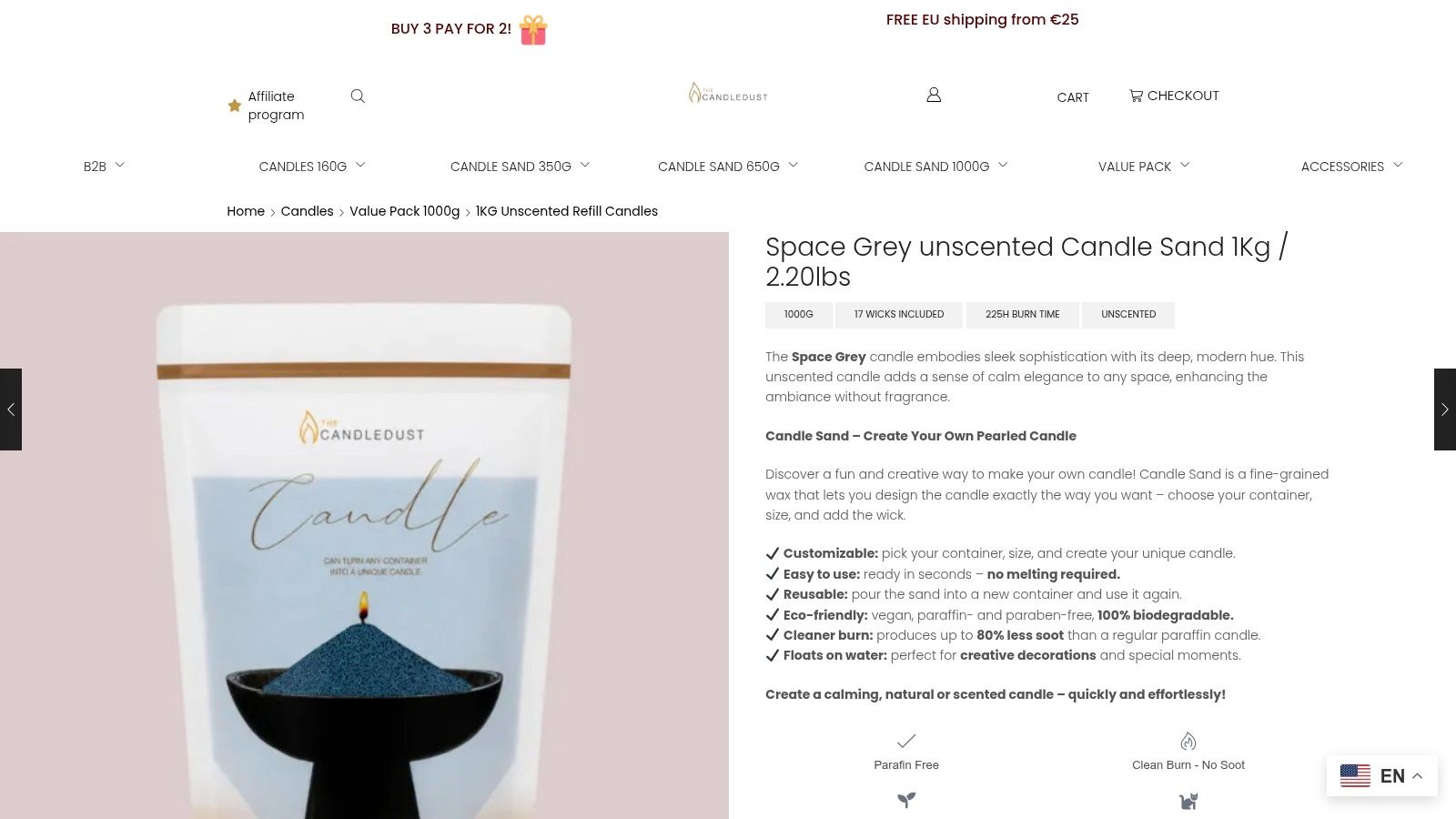
Not every candle has to be poured in the traditional way. Granular wax systems, often called candle sand or pearled candle wax, offer a different model. Instead of melting, pouring, cooling, and remelting for corrections, you place fine wax granules into a heat-resistant container and insert a wick.
That changes the making experience completely. You can adapt the size to the vessel, refresh the look easily, and avoid the mess that often comes with poured wax. It also opens a design advantage: you're not limited to standard jars sold as candle vessels.
A good example is Rhubarb Sparkle Scented Candle Sand 350g/0.73lbs, described as Candle Sand – Create Your Own Pearled Candle. The key idea isn't hype. It's flexibility. Fine-grained wax lets a maker choose the container, size, and arrangement instead of building the whole project around a pour.
For many creators, that's where eco friendly candle making supplies stop being a checklist and start becoming a design language.
Choosing Your Sustainable Wax A Practical Comparison
Wax is the decision that shapes the rest of the project. It determines how much testing you'll need, how polished the surface looks, how the candle behaves over time, and how much mess the process creates.
That's why I tell new makers to compare waxes in plain working terms, not romantic descriptions. Ask what each wax is good at. Ask what it asks of you. Ask where it saves effort and where it creates it.
How to compare waxes without getting lost
Some waxes look ideal on paper but create extra friction in practice. Others may be technically simple but less aligned with your environmental values. A useful comparison balances four questions:
- How does it burn? Longer burn time and steady flame behavior matter to the user.
- How easy is it to work with? A wax that's tolerant of small errors reduces waste.
- What kind of object does it make? Smooth, creamy, rustic, matte, pearled, and translucent are all different visual outcomes.
- Can the system be reused? Refill logic is as important as ingredient origin.
One industry guide notes that eco-friendly candles can burn 2 to 3 times longer than paraffin alternatives, and states that a 3×6 inch beeswax candle burns for over 110 hours versus 60 hours for paraffin, while soy candles typically burn 30 to 50% longer than paraffin in its eco-friendly candles guide. Those figures don't mean every natural wax candle will outperform every paraffin candle. They do show why wax selection deserves close attention.
Eco-Friendly Wax Comparison
| Wax Type | Key Benefit | Best For | Eco Credentials |
|---|---|---|---|
| Soy wax | Forgiving to work with and widely used for cleaner-burning container candles | Beginners, home makers, scented jars | Renewable, biodegradable, plant-based |
| Beeswax | Long burn potential and classic natural character | Pillars, tapers, unscented or lightly scented candles | Natural wax with biodegradable appeal |
| Coconut wax | Soft, luxe-looking finish and premium feel | Blends, smooth container candles | Plant-based option often chosen for sustainable ranges |
| Rapeseed wax | Regional appeal for makers seeking plant-based alternatives | Container candles and local sourcing strategies | Renewable and biodegradable plant-based wax |
| Candle sand or pearled wax | No pouring step, flexible vessel choice, easy visual restyling | Upcycled containers, events, low-mess making | Supports reuse-oriented candle formats |
Where candle sand fits
Candle sand doesn't replace every wax format. It solves a different problem. If you enjoy the ritual of melting and pouring, a traditional wax may still suit you. But if you care about modular design, refill logic, and neat setup, granular wax is a serious alternative, not a novelty.
Its biggest design strength is freedom. You can use different heat-resistant vessels without recalculating a full pour recipe each time. Its biggest operational strength is simplicity. You skip melting equipment for many setups, and you can rethink the arrangement without scraping cooled wax from a jar wall.
For modern creators, that matters. Many don't want a production process spread across thermometers, pitchers, and cleanup cloths every time they want a fresh candle on the table. They want a candle that fits into daily life.
If you're exploring low-mess making formats alongside classic methods, this article on DIY candle making at home is a helpful next read.
There's also an aesthetic advantage that deserves more attention. With high-quality pearled wax, the finish is part of the appeal. Fine, silky, even granules create a more composed surface than coarse or uneven particles. That's where the idea of a #PerfectPearl becomes useful as a design standard. Not a slogan, but a way to judge quality. Uniform pearls look cleaner in glass, fill space more elegantly, and make the whole candle feel intentional rather than improvised.
Sourcing Supplies for Every Creator
A home crafter and a hospitality buyer may both want sustainable candles, but they don't shop the same way. One needs manageable quantities, forgiving materials, and room to experiment. The other needs consistency, low mess, and a system staff can repeat without drama.
For home makers
If you make candles at home, don't start by buying everything. Start by choosing a material system that matches how you work. If you like testing fragrances and poured finishes, small-batch soy supplies and reusable glass jars make sense. If you prefer quick setup and visual flexibility, a granular wax format may suit you better.
Upcycled vessels are often the smartest first container. Old glass bowls, sturdy jars, and heat-resistant cups can all become candle homes if their shape supports stable wick placement and safe burning. That one habit can change how you shop, because you stop buying a new vessel every time you buy wax.
A practical sourcing checklist for home makers:
- Buy for one method first: Don't mix pillar supplies, container supplies, and novelty molds in the same first order.
- Choose reusable vessels: Build around jars and containers you'll want to keep.
- Test small and record everything: Keep notes on wick choice, scent level, and vessel shape.
- Favor low-waste packing: If a supplier uses paper-based protective materials, that reduces cleanup and disposal friction.
For events hospitality and repeat setups
Professionals need fewer surprises. A restaurant, wedding planner, or venue stylist can't spend service hours scraping spilled wax or reworking inconsistent candles across dozens of tables.
That's where reuse-oriented formats become operationally attractive. The Candledust specializes in plant-based candle sand that can be poured into a heat-resistant vessel, wicked, and refreshed by replacing the wick and reusing the remaining powder. For event work, that means the candle system can be adjusted to the container and setup rather than forcing every table to follow a rigid jar format.
After you've seen the basic setup, the workflow makes more sense in motion.
Professional buyers should source around repeatability:
- Consistency: Match wick type, vessel family, and wax format across locations or events.
- Speed: Staff should be able to set, reset, and clear candles without specialist training.
- Storage logic: Bulk supplies should stack cleanly and stay usable between events.
- Refill potential: Systems that support reuse reduce replacement churn.
Packaging is part of sourcing too
A sustainable candle that ships in hard-to-recycle protective waste loses part of its value. Packaging needs its own brief. It should protect fragile items, use sensible materials, and stay aligned with the kind of product you're trying to make.
If you're assembling kits, gift sets, or event favors, Afida's sustainable packaging collection is a useful reference point for paper-based and lower-waste packaging ideas.
Good sourcing always has two layers. The object itself, and everything wrapped around it.
The Sustainable Studio Minimizing Waste in Your Practice
Buying better supplies helps. Using them carelessly cancels out part of the benefit. Most waste in candle making doesn't come from one dramatic mistake. It comes from small habits: overheating wax, overpouring fragrance, mismatched wicks, disposable cleanup materials, and containers that never get a second life.
Control heat to protect materials
Temperature control is one of the clearest examples of sustainability and quality working together. One eco-friendly candle-making guide recommends melting wax gently and keeping it below 80°C, then cooling to about 65°C before adding essential oils, because overheating can drive off volatile fragrance components and waste material, as explained in Nikura's eco-friendly candle making guide.
That advice is practical, not fussy. Overheated wax can dull scent, create inconsistency between batches, and force you to use more material than necessary to chase the result you wanted in the first place.
Heat is a tool, not a test of toughness. Gentle handling usually gives the better candle.
If you're working with poured candles, a thermometer and a written process save more material than most beginners expect.
Design your studio for reuse
A sustainable studio is built around recovery. Containers should return to service. Leftover wax should go into future projects where possible. Failed test candles shouldn't automatically head for the bin.
Useful low-waste practices include:
- Repurpose leftovers: Offcuts and extra wax can become wax melts or be saved for non-display testing.
- Reuse jars thoughtfully: Clean and rewick vessels that are still in good condition. This guide on how to reuse candle jars offers practical ideas.
- Choose refill-friendly formats: A candle system that lets you replace only the consumed part creates less waste over time.
- Pack orders with recycled cushioning: For shipping or storage, The Box Warehouse newspaper packs are a sensible example of protective paper material that fits a reuse-minded workflow.
One of the quiet advantages of candle sand is that it naturally supports this studio logic. Unused material remains usable. You're not chiseling hardened wax out of a pouring pot just to change direction.
Small habits that change the outcome
Wick trimming is a tiny act with outsized effects. A trimmed wick supports a steadier flame and a cleaner burn. It also helps the candle behave the way you intended, instead of smoking or consuming material unevenly.
Gift-minded makers should think sustainably here too. A product like Dark Honey 650g/1.43lbs is described as Perfect for gifting, and that phrase matters because the most sustainable gift is often one designed to be used, refreshed, and kept rather than discarded after the first burn.
Keep a small notebook in the studio. The least glamorous habit often saves the most material.
When makers treat process discipline as part of the craft, eco friendly candle making supplies deliver more than good intentions. They deliver fewer mistakes, less clutter, and a cleaner path from raw material to finished light.
Crafting a Brighter Greener Future
Responsible candle making isn't about chasing purity. It's about making sharper choices. Choose renewable waxes when they fit the object you want to create. Use biodegradable wicks and reusable glass where possible. Treat packaging as part of the design, not an afterthought. Build your process so materials stay in use longer and waste has fewer chances to appear.
The most interesting shift in this space is that sustainability now improves more than footprint. It can improve appearance, flexibility, workflow, and the everyday experience of using the candle. That's especially true when makers think in systems instead of isolated products.
A beautiful candle should never feel like a contradiction. It can be elegant, practical, giftable, and more responsible at the same time. For home makers, that may mean choosing soy wax and a saved glass jar. For stylists and venues, it may mean choosing a refill-friendly format that resets quickly and keeps tables looking polished. For designers, it may mean looking for materials that feel as good visually as they perform functionally.
The goal is simple. Make candles you'll be proud to light, proud to give, and proud to make again.
If you want a flexible way to create candles in your own vessels, explore The Candledust for plant-based candle sand, refills, and candle-making formats built around reuse, clean presentation, and simple setup.