
You light a candle because you want your home to feel calm, warm, and cared for. Then your bird starts fluffing up, blinking more than usual, or moving away from the room, and the cozy mood suddenly feels complicated.
That tension is real. Bird owners don't just decorate for themselves. They decorate around one of the most delicate respiratory systems in the home. A candle that seems harmless to you can affect your bird very differently, especially if it contains paraffin, fragrance, or the wrong wick.
A bird-safe home doesn't have to feel sterile. You can still have soft light, beautiful vessels, and a ritual that makes evenings feel special. The key is learning what makes some candles risky, what “safe” really means, and where stylish alternatives fit in.
Table of Contents
- The Hidden Dangers in Your Home's Glow
- Ingredients and Candle Types You Must Avoid
- What Truly Defines a Bird Safe Candle
- The Elegant Solution of Plant-Based Candle Sand
- Essential Safety Tips for Burning Candles Around Birds
- Your Bird Safe Home Checklist
The Hidden Dangers in Your Home's Glow
A candle can look clean while still releasing things your bird's body struggles to handle. That's the part many loving owners miss. Birds don't process indoor air the way we do, so the same small plume of smoke or fragrance that barely registers to us can become a serious problem in a much shorter time.
Their respiratory system works a bit like a very high-efficiency air filter. It's remarkably effective, but it's also easy to overload. Tiny particles, fumes, and volatile compounds don't have to be dramatic to be harmful. They just have to be present.
Paraffin is the first concern
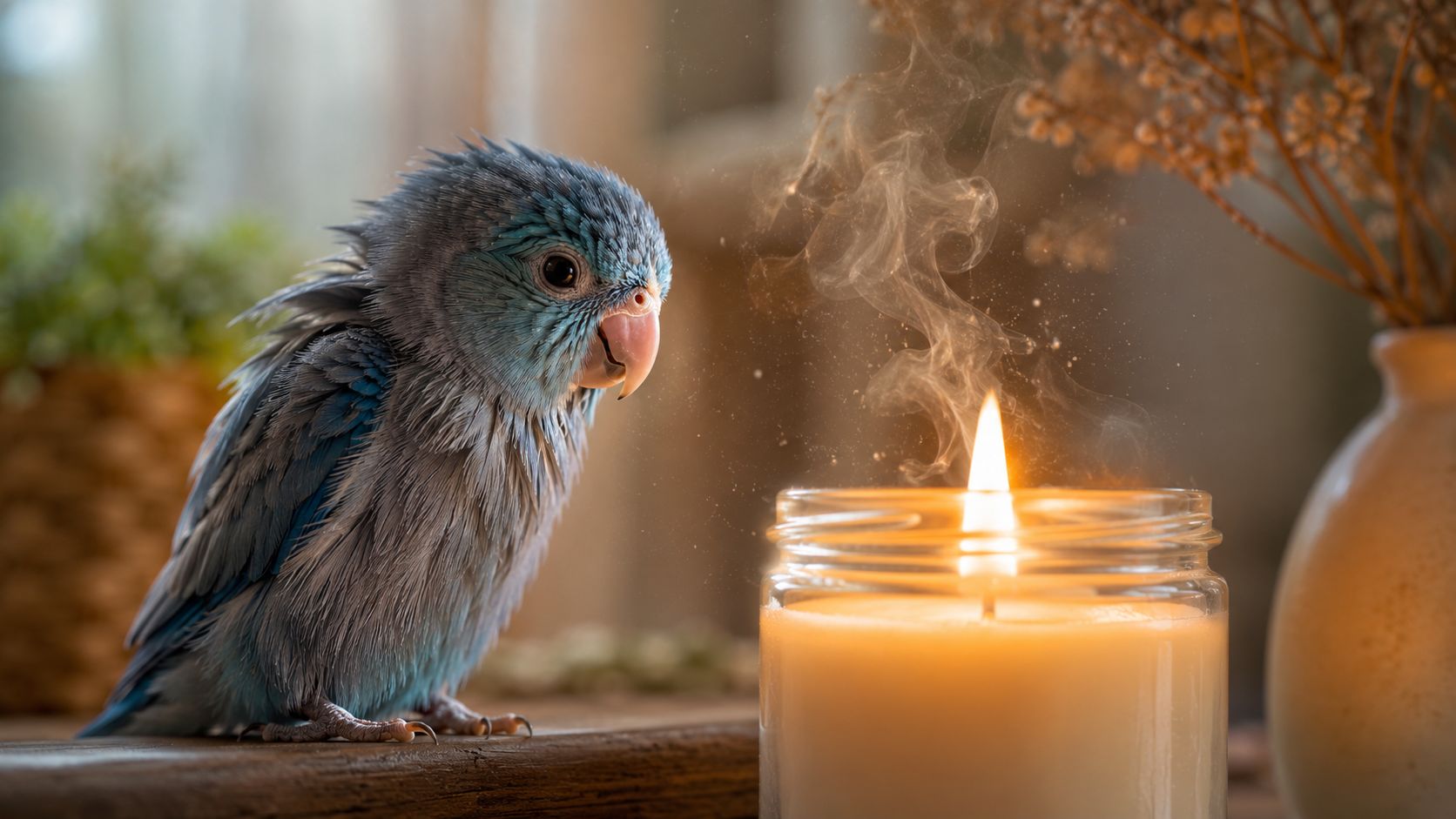
Paraffin wax is a petroleum byproduct, and it's one of the biggest red flags in bird-safe candles. Historical safety data described by the American Veterinary Medical Association found that approximately 78% of avian respiratory distress cases linked to household fumes were attributed to paraffin-based candles, and those candles produced up to 90% more soot than clean-burning alternatives like beeswax, according to this parrot candle safety review.
That soot matters. You may see it as a faint smudge on a jar or wall. Your bird inhales it as fine particulate matter.
Soot and fumes don't need to be visible
Some owners assume danger starts when a candle smells strong or smokes heavily. It often doesn't. A candle can burn with a small, steady flame and still release enough residue or fumes to irritate a bird's airways.
Common trouble signs include:
- Black residue: If you notice soot around the rim, on nearby surfaces, or on the vessel itself, your bird is breathing air you should question.
- Heavy scent throw: If the room fills with fragrance quickly, that's not a comfort feature for a bird. It's exposure.
- Mystery ingredients: If the label doesn't clearly name the wax, wick, and fragrance source, you can't make a confident safety call.
Birds don't need a room to look smoky for the air to become unsafe.
Fragrance adds another layer of risk
Wax type is only part of the picture. The other issue is what gets added to the wax. Synthetic fragrance blends and many scented oils release compounds into the air as the candle burns. In a bird household, that's where “pretty” and “problematic” often overlap.
This is why bird safe candles aren't just about avoiding one bad ingredient. They're about reducing several risks at once: petroleum-based wax, soot, wick chemistry, and airborne fragrance compounds. Once you see the full picture, the shopping choices become much clearer.
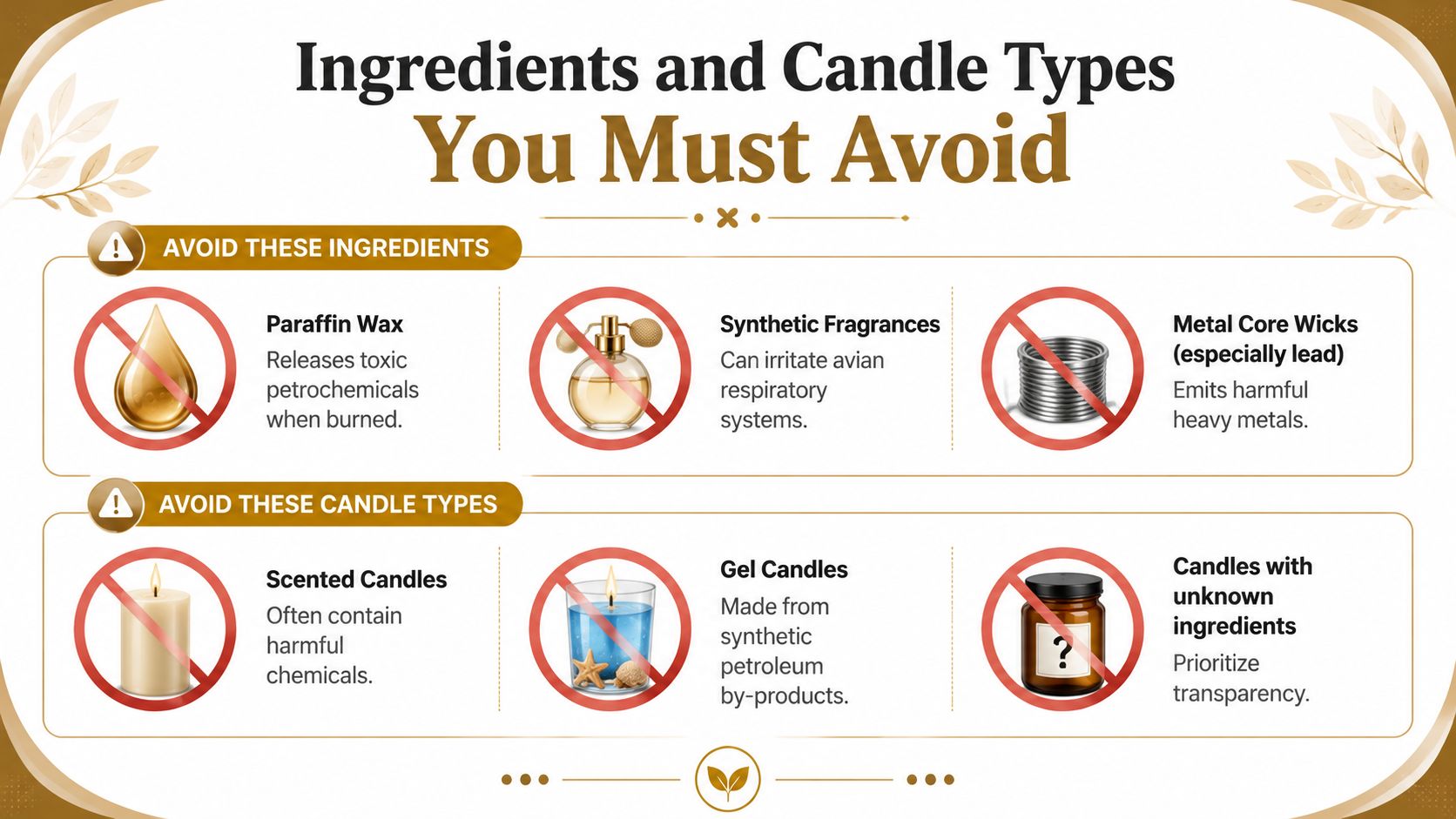
Ingredients and Candle Types You Must Avoid
Shopping for bird safe candles gets confusing because packaging often sounds reassuring while saying very little. “Natural blend,” “clean scent,” and “eco candle” don't tell you what your bird is inhaling.
For bird owners, label reading needs to be more strict than it is for the average shopper. You're not just buying décor. You're screening for respiratory irritants.
Why labels confuse so many bird owners
A candle may use a plant-based wax and still be a poor choice if it's heavily scented. That's why many owners feel misled by “non-toxic” marketing. The wax may be cleaner than paraffin, but the finished product still may not belong in a bird home.
The European Pet Bird Federation reported in 2023 that 15 essential oils were identified as high-risk irritants for birds, including cinnamon, peppermint, and tea tree, while lavender and white sage were flagged as safer only in very low concentrations, according to this summary of the EPBF findings.
That matters because many candles use “essential oil” language to sound gentle. For birds, “natural” doesn't guarantee safe.
If you want a deeper look at fragrance concerns, this guide on essential oil candles and indoor use is useful background reading.
Bird Safety Scorecard
| Component | Avoid (High Risk) | Choose (Low Risk) |
|---|---|---|
| Wax | Paraffin wax, gel wax, unclear “wax blend” | Unscented beeswax, unscented soy, clearly labeled plant-based wax |
| Fragrance | Synthetic fragrance, strong essential oil blends, scented candles with vague disclosure | Unscented candles |
| Wick | Metal-core wick, unlabeled wick materials | 100% cotton wick |
| Product type | Heavily scented jar candles, gel candles, candles with unknown ingredients | Transparent ingredient lists and simple constructions |
A few practical shopping rules help:
- Skip paraffin first: If paraffin appears anywhere on the label, put it back.
- Treat “fragrance” as a warning word: If the brand doesn't explain the scent system clearly, assume it isn't bird-friendly.
- Choose transparency over branding language: A plain label with specific materials is safer than a poetic label with no details.
Even products designed for creativity need this same filter. For example, Rhubarb Sparkle Scented Candle Sand 350g/0.73lbs is described as Candle Sand – Create Your Own Pearled Candle, a fine-grained wax that lets you choose your container, size, and wick. For a bird home, though, the key question still isn't just the format. It's whether the product is scented.
Shopping rule: In a bird household, ingredient clarity matters more than marketing mood.
What Truly Defines a Bird Safe Candle
The phrase bird safe candles gets used too loosely. Many people hear “soy,” “beeswax,” or “plant-based” and stop there. That's understandable, but it leaves out the most important distinction.
A cleaner wax is not automatically a safe finished candle.
Why unscented matters more than most people think
Avian toxicology findings indicate that up to 90% of scented candles still release volatile organic compounds from essential oils such as citrus or cinnamon at levels that can trigger respiratory distress in birds. That's true even when the wax itself is described as non-toxic.
Readers often get stuck at this point. They ask, “What if it's only lightly scented?” or “What if the oils are pure?” The problem is that birds react to what becomes airborne, not to how wholesome the ingredient list sounds on paper.
A lightly perfumed room can still be too much for a bird.
The difference between cleaner and safe
Think of candle choices in layers:
- Cleaner wax means you've reduced one hazard.
- Unscented formula means you've removed another major hazard.
- Simple wick and good ventilation reduce the remaining burden on the air.
That's why the gold standard in a bird home is usually an unscented candle with a simple construction. Not luxurious fragrance. Not wellness language. Not essential oils marketed as gentle. Unscented.
The safest candle for a bird isn't the most natural-smelling one. It's the one that adds the least to the air.
This distinction also helps with guilt. If you've bought “clean” candles before and assumed they were safe, you weren't careless. You were responding to the same language most shoppers see. The smarter move now is to separate cleaner from safe and make your decisions from there.
The Elegant Solution of Plant-Based Candle Sand
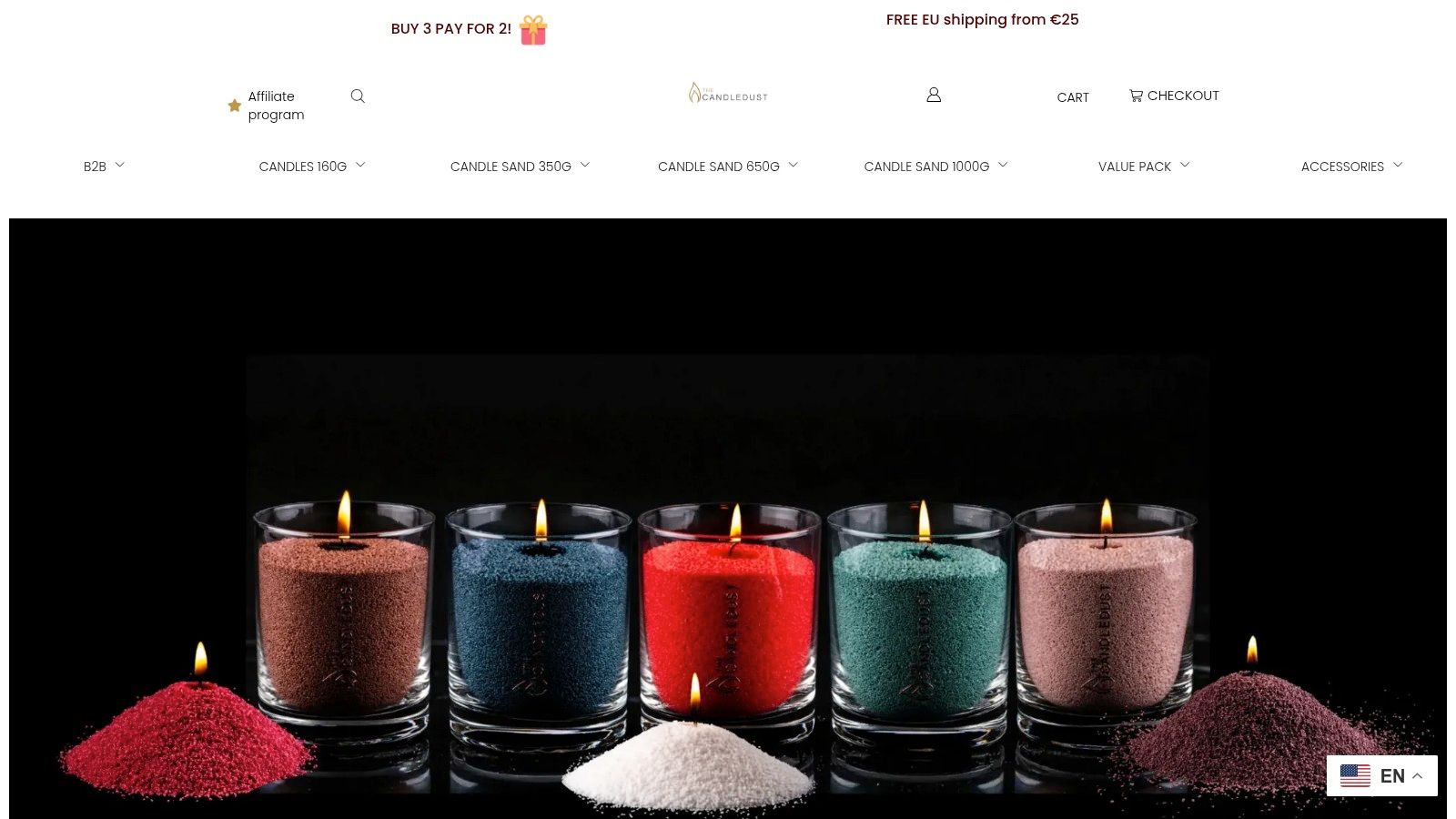
Some bird owners give up on candles completely because they don't want to manage all the uncertainty. Others want soft evening light but don't love the idea of a tall jar or pillar sitting within reach of an active parrot. Candle sand enters that conversation from a different angle.
Instead of thinking only about wax chemistry, it changes the format of the candle itself.
Why the format changes the safety conversation
Traditional candles combine several issues at once. They may use questionable wax. They may carry fragrance. They also rely on a fixed vessel or freestanding form that can be bumped, tipped, or placed badly.
By contrast, guidance around candle sand often focuses on the fact that the user chooses a stable, heat-resistant container. That matters in homes with birds, where movement is unpredictable and curiosity is constant. The available safety guidance also notes that the free flame design of candle sand in a stable, user-chosen container changes the risk equation by eliminating the knock-over danger posed by active pets like parrots.
If you're comparing materials, it also helps to review what The Candledust candle sand is made of, especially if you're trying to avoid paraffin-based products.
One option in this category is The Candledust, which makes plant-based, paraffin-free candle sand that you pour into a heat-resistant vessel, insert with a wick, and light. In a bird household, the format is especially relevant when you want more control over container stability and setup.
Why texture and consistency matter in daily use
Not all candle sand looks or handles the same way. If the grains are uneven, dusty, or clumped, the result can feel messy and improvised. That may not sound like a safety issue at first, but daily usability affects whether people keep using a safer setup consistently.
The author's quality point here is practical. Special processing can create silky, smooth, even candle pearls without lumps and uneven particles. That's the idea behind #Perfectpearl. It's less about luxury language and more about having a material that pours neatly, settles evenly, and looks polished in the open vessels people already use for décor.
A smoother, more uniform sand also suits the way many bird owners decorate. They often prefer surfaces that are easy to check, easy to clean, and easy to reposition away from cages and flight paths.
Here's a closer look at how the format works in practice:
For many homes, the biggest appeal is simple. Candle sand can offer a softer, more flexible lighting ritual without forcing you into the usual jar-candle tradeoffs. If you choose an unscented version and use it with strong ventilation and common-sense placement, it fits much better into a bird-safe routine than the average scented candle on a gift-shop shelf.
Essential Safety Tips for Burning Candles Around Birds
Even the cleanest setup still involves combustion. That means safety habits matter every single time, not just when you're testing a new product.
Ventilation comes first
Independent bird-care guidance is clear on this point. Safe candle use is impossible without excellent ventilation, and recommendations include 100% cotton wicks and keeping windows cracked to dilute indoor emissions, according to this parrot-focused candle guidance.
Ventilation doesn't mean blasting air directly at the flame or your bird. It means giving the room a reliable path for air exchange.
Use these habits:
- Crack a window: A small opening helps reduce buildup in the room.
- Burn for shorter periods: Don't treat any candle as an all-evening background object.
- Watch your bird, not just the flame: If your bird seems restless, sleepy, sneezy, or eager to leave the area, extinguish the candle.
If you're comparing fire-conscious setups, this article on making powder candle use more fire safe adds useful context.
Placement and supervision are non-negotiable
The second rule is simple. Never burn a candle where a bird can fly to it, land near it, or startle into it. A beautiful centerpiece means nothing if it sits on a known flight path.
A safer setup usually looks like this:
- Choose another room: If possible, burn candles away from the main bird area.
- Use a stable surface: No wobbling trays, fabric-draped shelves, or edges.
- Keep birds secured before lighting: An out-of-cage parrot and an open flame are a poor combination.
- Stay present: If you leave the room, the candle goes out.
Practical rule: If supervision isn't possible, use a high-quality LED candle instead.
Some households decide that open flame never makes sense when their bird is out and active. That's a completely reasonable boundary. A bird-safe home isn't about squeezing candles into every setting. It's about choosing the moment carefully, or skipping flame when the situation doesn't support it.
Your Bird Safe Home Checklist
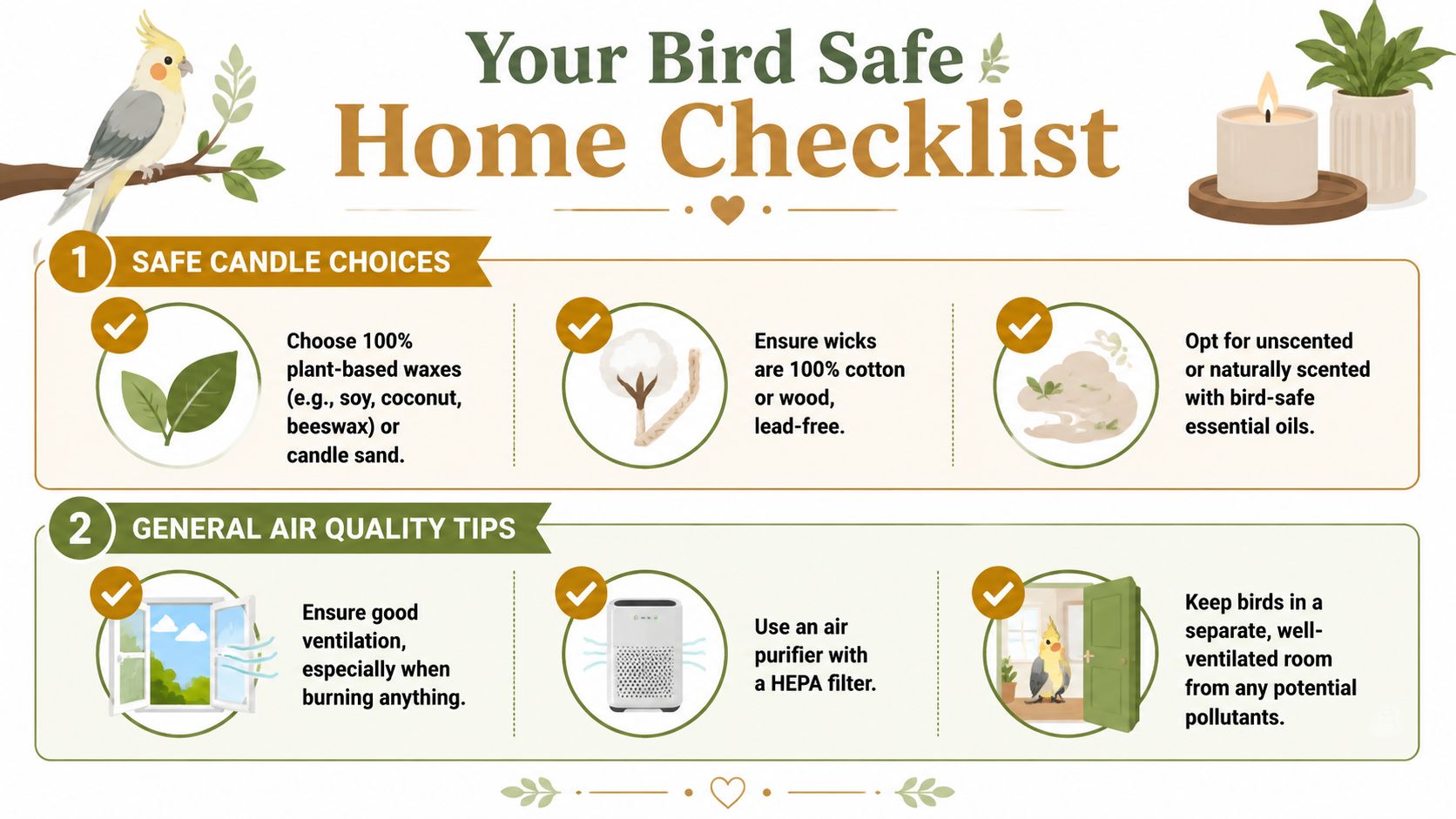
The goal isn't to create a perfect home. It's to create a home where beauty doesn't compete with your bird's lungs.
Keep this checklist simple and strict:
- Choose unscented first: If a candle adds fragrance to the air, it doesn't belong high on your trust list.
- Check the wax carefully: Avoid paraffin and unclear blends. Look for plainly labeled plant-based or beeswax options.
- Confirm the wick: Stick with 100% cotton when possible.
- Prioritize ventilation: Crack a window and don't burn anything in stale, closed air.
- Think about format: Candle sand in a sturdy, heat-resistant container can solve placement and knock-over concerns better than many traditional shapes.
- Burn away from birds: Distance matters. Separate room is better when possible.
- Never leave a flame unattended: Not for a phone call, not for dinner, not for “just a minute.”
- Use LED when needed: Some evenings call for zero combustion. That's still a cozy choice.
The decorating mindset that serves bird owners best is this one: fewer additives, fewer unknowns, more control. That approach gives you a calmer room and a safer one.
If you want a candle option that fits a more flexible home décor routine, The Candledust offers plant-based candle sand designed for use in your own heat-resistant container. For bird households, the most sensible place to start is an unscented version, used with good ventilation, careful placement, and the same caution you'd apply to any open flame.