

You've styled the tables, polished the glassware, and placed the flowers, but the candles are still creating tomorrow's cleanup problem. Traditional pillars leave melted wax inside rented vessels, while half-burned candles often end up discarded after one event. For busy event teams and home stylists, the most useful centerpiece candle ideas aren't only beautiful. They're easy to reset, reuse, and adapt.
Candle sand changes that workflow. Pour it into a heat-resistant vessel, place the wick, light it, then let the sand cool before removing the spent wick. The remaining powder can be used again, giving one centerpiece a longer life across dinners, weddings, seasonal displays, and hospitality settings.
Table of Contents
- Why Candle Sand Transforms Centerpiece Design
- Materials and Measurements for Your First Sand Candle
- Choosing Containers Colors and Scents for Every Tablescape
- Occasion-Specific Centerpiece Variations
- Wick Sizing Burn Testing and Indoor Air Safety
- Resetting Reusing and Storing Candle Sand Between Events
Why Candle Sand Transforms Centerpiece Design
A long wedding table can look perfect at the start of setup and chaotic again by teardown. I've seen teams scrub wax from rented glass cylinders, scrape residue from ceramic bowls, and throw away candles that still contain usable material because the vessels need to be returned quickly. That labor rarely appears in the original styling plan, but it affects the event budget, the condition of rental inventory, and the time available for the next room.
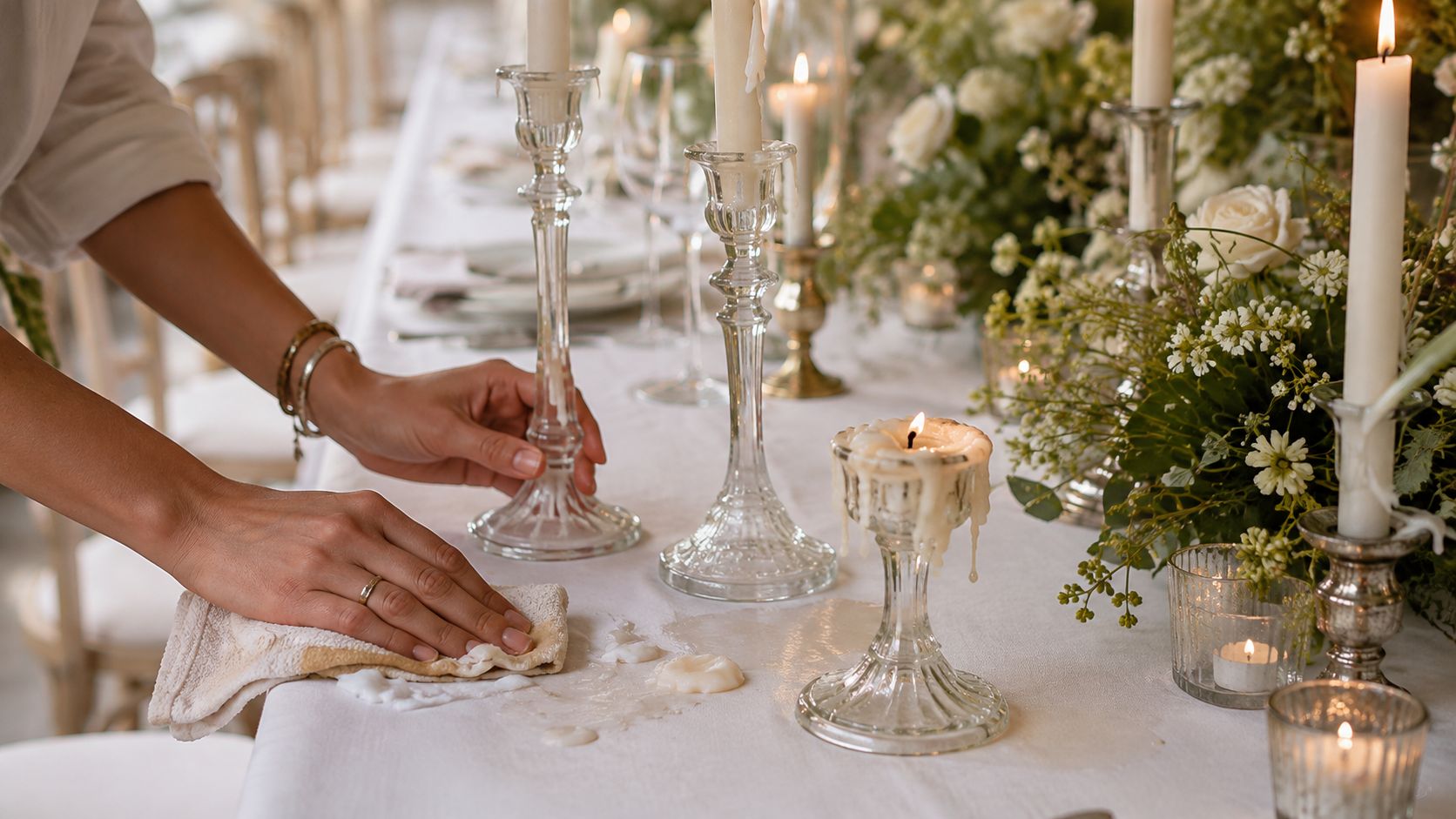
Plant-based candle sand offers a cleaner alternative. Instead of bringing a pre-formed pillar with a fixed shape and footprint, you pour the sand into almost any suitable heat-resistant container, add a wick, and create the candle where it will be displayed. When the flame is extinguished and the contents have cooled, you can scoop out the wick and reuse the remaining powder without chiseling hardened wax from the vessel.
That flexibility matters on event day. A single collection of vessels can move from a formal dinner to a wedding welcome table by changing the sand color, fragrance, wick position, or surrounding botanicals. For foundational tablescape principles such as scale, balance, and choosing a centerpiece that suits the table, ABC Hire's centerpiece guide is a useful complementary resource.
The difference is in the material
Melted wax hardens against the container. Candle sand stays loose until the wick is lit, so the vessel remains available for another design once the sand has cooled. That makes it particularly practical for rental glassware, upcycled jars, metal bowls, and seasonal home décor.
The Candledust pioneered scented sand candles and is one of the first sand wax candle producers in the world, as well as one of the first to introduce scented sand candles globally. Its special processing creates silky, smooth, even candle pearls without lumps or uneven particles, a finish the brand calls #Perfect pearl. That consistency is central to the product's positioning, because uneven particles can make a poured surface look rough before it's even lit.
Practical rule: Choose centerpiece candle ideas that survive teardown as well as they photograph during the reception.
Candle demand also supports this shift beyond visual styling. Independent market research estimates the global candle market at USD 14.77 billion in 2025, with projected growth to USD 25.44 billion by 2033 and a 7.3% CAGR; the same market source places Europe at 30.0% of global candle demand in 2025 (Grand View Research market data). The National Candle Association reports that about 35% of candle sales take place during the Christmas and holiday season (National Candle Association seasonal sales data), reinforcing how naturally candles fit weddings, holiday tables, and event styling.
For professionals, the strongest advantage isn't novelty. It's control. You can buy vessels once, refresh the contents repeatedly, and avoid making every event dependent on a specific pillar size.
You'll find a detailed comparison of formats in candle sand versus pearled candles, especially useful when deciding whether a loose-fill format suits your centerpiece workflow.
Materials and Measurements for Your First Sand Candle
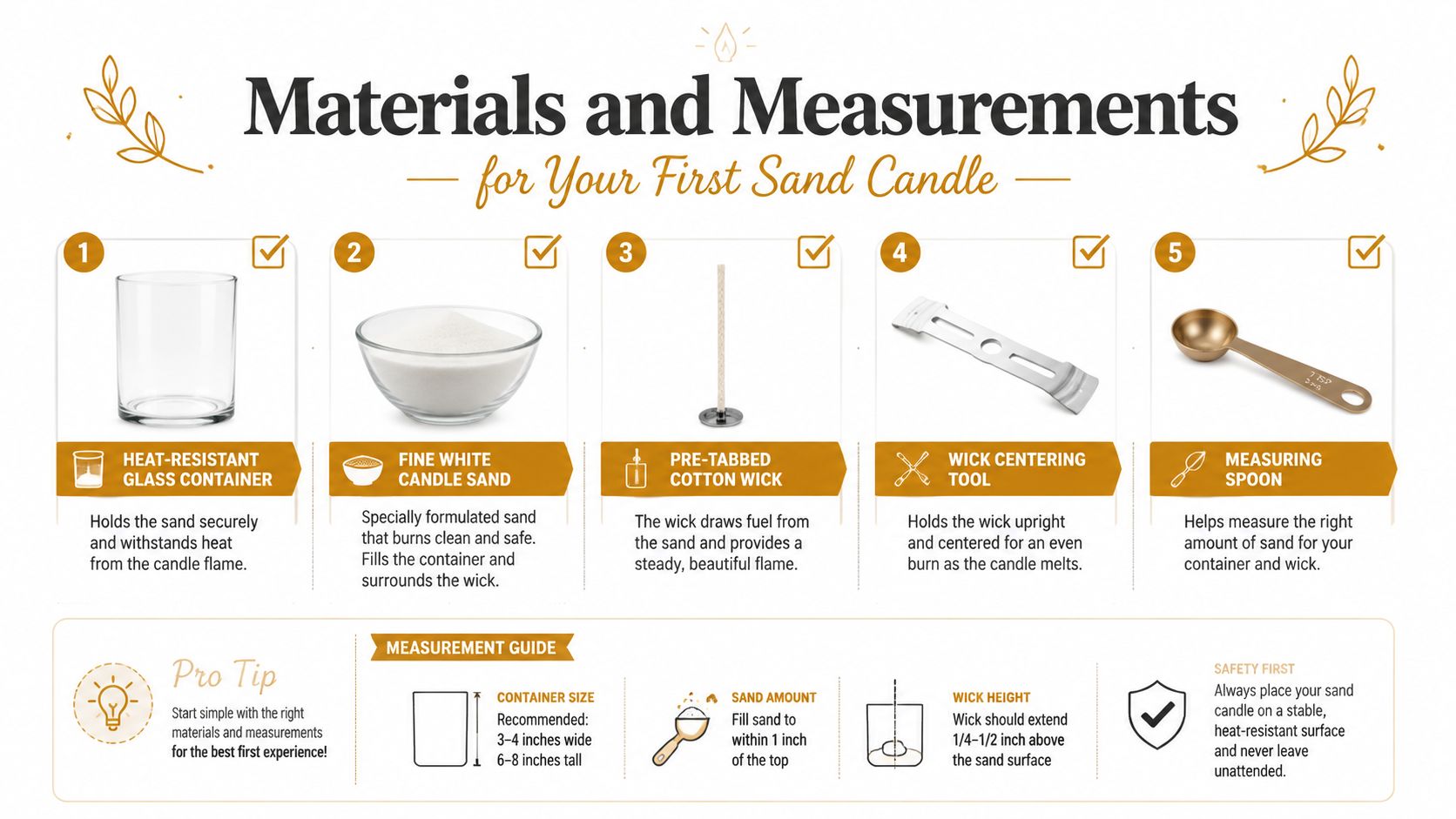
A busy event setup rewards materials that reset quickly. Start with a heat-resistant glass, ceramic, or metal container that sits securely on the table and has no cracks, loose decorations, or flammable coating. A stable wide-mouth vessel is the easiest first choice because you can center the wick, check the surface, and empty the sand without scrubbing hardened wax from the sides.
Your materials checklist
- Heat-resistant vessel: Choose glass, ceramic, or metal made to tolerate heat. Avoid thin decorative pieces that flex, crack, or become unstable.
- Candle sand: Add enough for the planned candle height while leaving approximately a half-inch gap below the rim. The required amount varies with vessel width and fill height, so weigh the first setup and record it. That measurement lets one bulk pack serve multiple vessels and future events with little waste.
- Pre-tabbed wick: Match the wick to the vessel's inside diameter, not its outside measurement. A wick that is too small may tunnel, while one that is too large can overheat the vessel.
- Wick centering tool: Use a holder, chopstick arrangement, or centering bar to keep the wick upright as the sand settles.
- Measuring spoon or small scoop: Controlled scooping helps with even layers and reduces spills when several colors are used.
- Optional fragrance: Select scented sand made for candles or a product specifically intended for candle use. Do not add random oils to a burning candle, and keep food fragrance restrained around a dining table.
Build the candle gradually. Add a layer, tap the vessel gently against the work surface, and check the level before adding more. This reduces air pockets and produces a cleaner top. Avoid packing the sand aggressively, since the wick needs a clear, stable path for burning. Loose sand also makes post-event resetting practical. Empty it into a clean, labeled container, then refill another vessel for the next occasion instead of removing wax residue.
A five-minute pouring sequence
Place the wick tab on the base and keep it centered. Add sand in small amounts around it, pausing to confirm that the wick remains vertical. Correct any shift immediately. Once the vessel is nearly full, repositioning is slower and can disturb the surface.
Stop at the half-inch rim gap, smooth the top with the back of a clean spoon, and hold the wick centered until the sand supports it. Trim the wick before lighting according to the supplier's guidance. For retail context on candle formats, see the earlier market data above. Those varied formats also show how a sand candle can be scaled from a small place-setting accent to a larger focal vessel, while the same material can be reused across both.
A fuller beginner workflow, including preparation and lighting considerations, is demonstrated in this video and available in The Candledust beginner's guide to candle sand.
Choosing Containers Colors and Scents for Every Tablescape
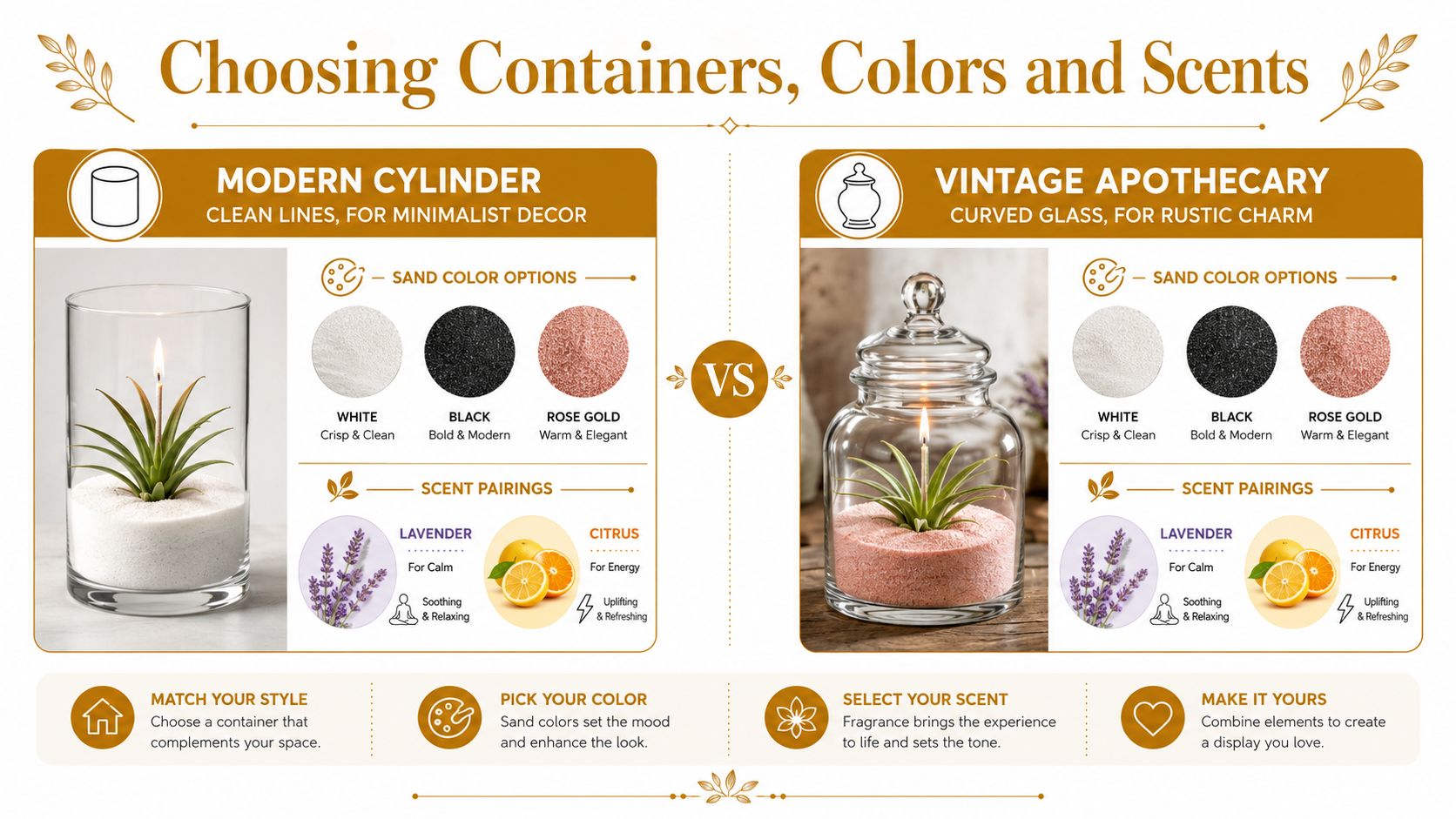
The vessel establishes the visual language before the flame is lit. A wide-mouth cylinder feels architectural and contemporary, while a vintage goblet creates height and softness. Low-profile bowls work best when guests need clear sightlines, and geometric terrariums add structure to a modern tablescape, although their corners can make even filling more time-consuming.
Match the shape to the setting
A wide cylinder is the dependable workhorse. It gives you room to center one wick, creates a clean column of light, and pairs well with minimalist linens or repeated vessels. A vintage goblet looks collected and romantic, but its narrower opening requires more patience during filling and makes cleaning the surrounding rim more important.
A geometric terrarium suits editorial styling and angular décor. Use a single color inside it so the shape remains the focal point. A low bowl spreads the glow across the table and works well with greenery, but a wide diameter may require a wick configuration validated through burn testing rather than a single wick chosen by appearance.
For an orderly arrangement, repeat one element across different shapes. For example, use clear cylinders and amber goblets with the same ivory sand, or use matching black sand in vessels that vary in height.
Use color as structure
Single hues create the most reliable result. Amethyst can support a jewel-toned dinner, while Baby Pink works for a soft wedding palette. White sand keeps the arrangement light and allows flowers or colored glassware to carry the visual emphasis. Black creates contrast in a modern setting, but it can make soot or ash more visible if the wick isn't properly maintained.
Layered colors create a gradient, but the transition must be deliberate. Add each layer evenly around the wick, settle it gently, and avoid mixing the boundary with the spoon. Two related tones usually look more controlled than a crowded stack of unrelated colors.
Treat fragrance as part of the menu
Scent should support the occasion, not compete with it. Subtle florals suit an intimate dinner, while fresh citrus can feel appropriate for an outdoor brunch. Lavender can reinforce a calm, relaxed room, but strong fragrance can become distracting in a small dining space.
Unscented sand is often the professional choice for multi-course meals, tasting events, and venues where the chef's aromas need to remain clear. It's also a sensible option when guests have varied scent sensitivities. Fragrance can be added to the overall experience through flowers, herbs, or room ventilation rather than forcing every flame to carry a noticeable aroma.
The glass candle container guide offers further ideas for matching vessel materials and silhouettes to a finished tablescape.
Occasion-Specific Centerpiece Variations
A wedding centerpiece has different demands from a restaurant centerpiece, even when both use the same sand and wick. Weddings reward repetition and visual rhythm. Formal dining rewards restraint. Hospitality demands a design that staff can reset quickly without damaging the vessels or slowing service.
Weddings
Use a family of vessels rather than one oversized arrangement. A combination of low bowls, medium cylinders, and taller glass pieces creates movement down a long table while keeping the design cohesive. Place candle vessels between floral groupings rather than burying them inside dense foliage, and keep combustible botanicals away from the flame.
For 100 or more place settings, prepare a sample table first. Record each vessel type, sand color, wick position, and fill height, then assign one person to portion sand while another centers wicks. Bulk preparation works best when every container follows the same repeatable sequence. The result looks intentional, and replacement pieces can be assembled without improvisation.
Candle and flower combinations remain especially requested in wedding styling, while non-floral centerpiece options are reported as costing 30% to 50% less than fresh-flower arrangements in 2026 wedding coverage (Paperlust wedding centerpiece reporting). The important distinction is not just price. Reusable vessels and loose candle sand can be refreshed for another event instead of discarded with a one-day floral installation.
Formal dining
Keep the flame below the conversation line by choosing low bowls or short cylinders. Place the vessels along the table's center, leaving clear space for serving dishes, glassware, and guests' hands. A single wick gives a calmer visual profile in smaller vessels, while wider designs should be tested before the event.
Unscented sand usually performs better at a food-focused table. The flame adds warmth without introducing a competing fragrance, and a restrained ivory, white, or muted color palette keeps attention on the meal.
Hospitality venues
Restaurants and hotels need consistency more than elaborate variation. Choose vessels with broad bases, repeat one or two colors, and store pre-portioned sand with spare wicks so staff can reset tables between seatings. Keep a small replacement kit nearby, including a scoop, wick tool, clean cloth, and labeled refill container.
For a personal celebration at home, the same approach can make a reusable arrangement feel more meaningful. If you're pairing candles with a keepsake, browse unique anniversary gift options for ideas that extend the occasion beyond the table.
Wick Sizing Burn Testing and Indoor Air Safety
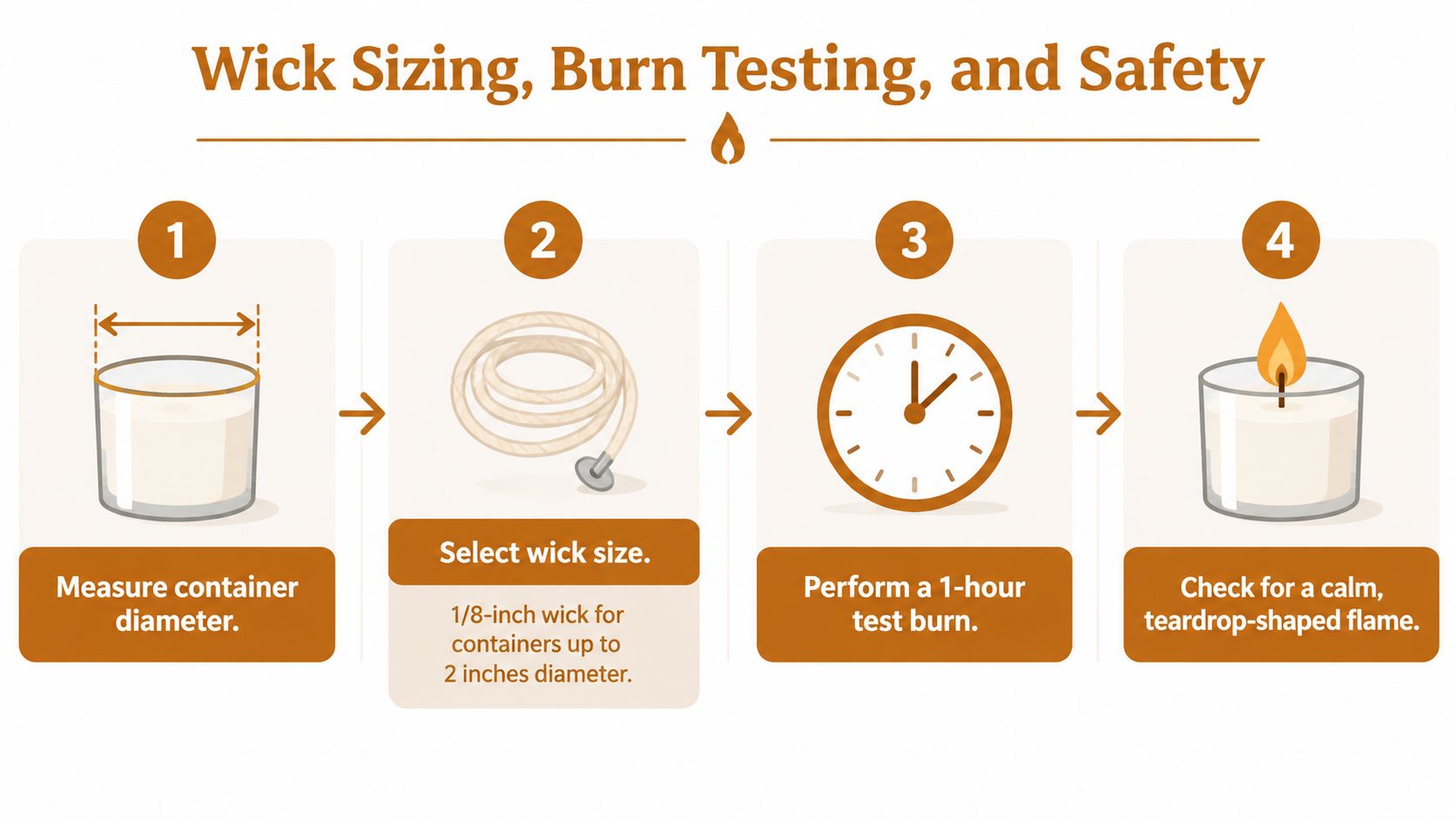
A beautiful container can still produce a poor centerpiece if the wick is wrong. Start with the vessel's inside diameter, then validate the choice under controlled conditions. Practical wick guidance recommends trimming to about 1/4 inch, burning on a level heat-safe surface, and checking whether the melt pool reaches the vessel wall at the expected pace (Lone Star Candle Supply wick guidance).
Test before the event
A useful benchmark is a full edge-to-edge melt pool in roughly 1 hour per inch of container diameter, with a flame around 1 inch tall and a melt pool approximately 1/4 to 3/4 inch deep (Lone Star Candle Supply wick guidance). Record flame behavior, soot, mushrooming, melt-pool depth, and vessel temperature rather than judging only by the first few minutes.
Run at least three test candles, using the recommended wick, one size up, and one size down. Burn them in identical conditions for 2 to 4 hours per session, following the testing guidance in this wick sizing reference. If the candle hasn't reached the wall after the expected interval, the wick may be too small. If it reaches the wall too quickly and the container becomes hot to the touch, the wick may be too large.
Wide vessels may need dual or triple wicks for even coverage, but don't add wicks just to create a brighter display. More flame means more heat, so validate the complete setup.
Protect the room as well as the table
Scented candle combustion can raise indoor particulate matter and other pollutants. Recent coverage includes a 2025 study reporting that particulate levels from scented candles can exceed health-relevant indoor-air guidelines, while practical indoor-air guidance recommends ventilation, shorter burn times, and careful wick trimming (indoor-air and candle safety coverage).
In a small dining room, crack a window where practical, maintain gentle airflow, and avoid clustering many strongly scented candles in one enclosed area. Choose unscented sand for guests with sensitivities or for rooms where ventilation is limited. Before a professional event, inspect every vessel for cracks, keep flames away from linens and greenery, and extinguish candles before moving the centerpiece.
If fragrance selection is difficult, the All Scents and colors Sample Set (Mini Packs) is described as a Candle Powder Sample Pack with approximately 45 mini packs, including scented and colored options, and the catalog snapshot specifies that you'll receive 25 mini packs. Use samples to assess how a scent sits in your actual room, not only how it smells in the package.
Resetting Reusing and Storing Candle Sand Between Events
Reset the centerpiece as soon as the vessel is safe to handle. Extinguish the flame, let the sand cool completely, then lift out the spent wick and metal tab. Scoop away pearls that look discolored or contain debris, and top off the vessel with fresh sand before the next use.
Keep unused or recovered sand in an airtight container in a cool, dry place. Label containers by scent, color, and condition so a busy team doesn't combine incompatible batches or search through open bags during setup. Separate strong fragrances from unscented stock, and keep the storage area away from moisture, direct sunlight, and heat.
The reuse model is where candle sand earns its place in a professional kit. One bulk pack can refresh multiple vessels across multiple occasions, but the exact number of candles depends on vessel diameter and fill height, so weigh your first completed arrangement and use that figure for planning. Removing the wick instead of scraping wax also helps protect rental glassware and reduces cleanup waste.
Refresh the same vessels with a new sand color, a different wick arrangement, or seasonal botanicals kept safely away from the flame. A clear cylinder can feel summery with pale sand and citrus fragrance, then become a winter centerpiece with white sand, evergreen accents, and an unscented burn.
The Candledust offers plant-based candle sand in scented and unscented formats, colored and white options, refill sizes from 350g to 1000g, wicks, vessels, and bulk solutions for events and hospitality. Visit The Candledust to build a reusable centerpiece system that lets you pour, light, reset, and restyle your vessels instead of discarding them after one occasion.