

Floating candles are specially designed wax candles that are less dense than water, allowing them to float and burn on a liquid surface. In fresh water, floating candle wax is commonly described around 0.85 to 0.90 g/cm³ or about 0.9 g/cm³, while water is about 1.0 g/cm³, which is why these candles stay afloat instead of sinking.
If you're here, you're probably staring at a vase, bowl, or wedding centerpiece idea and wondering whether floating candles are practical or just pretty in photos. They are beautiful, and they can create a calm, reflective glow that feels instantly refined, but they also work best when you understand how they're built, where they shine, and when a more flexible modern option makes life easier.
Table of Contents
- What Are Floating Candles and Why Use Them
- The Simple Science of How Candles Float
- Inspiring Uses for Floating Candle Ambiance
- The Modern Alternative A Smarter Way to Float Light
- Pro Tips for Safe and Beautiful Placement
- Buying vs DIY Which Is Right for You
What Are Floating Candles and Why Use Them
What are floating candles? They are wax candles made to sit on the surface of water and burn while partially submerged. A clear description from Aroma Paradise's explanation of water candles notes that floating candles, also called water candles, are buoyant wax devices designed to float on liquid surfaces and burn safely without melting prematurely.
That sounds technical, but the design purpose is simple. You want light that feels softer than a table lamp and more polished than a standard pillar candle. Water changes the effect. It adds reflection, movement, and a sense of space, even in a small room.
Why people choose them
Floating candles are popular because they do two jobs at once. They act as light and as decor.
- For centerpieces: A plain glass bowl looks finished once water, a candle, and a few floral touches are added.
- For quiet evenings: A single vessel on a bathroom shelf or dining table creates a gentle glow without filling the whole room with harsh brightness.
- For events: They work especially well when you want a formal look that still feels warm.
Floating candles are one of those decor pieces that look more complicated than they are. The setup is simple, but the visual result feels layered.
What often confuses first-time users
Many people assume any small candle will float. It won't. A tealight, taper, or random molded candle isn't designed for that job, so it may tip, sink, or burn unevenly.
A true floating candle is shaped and balanced for water use. That's why people searching for what are floating candles are usually asking a practical question, not just a definition. They want to know whether these are decorative novelties or functional candles. The answer is both.
The Simple Science of How Candles Float
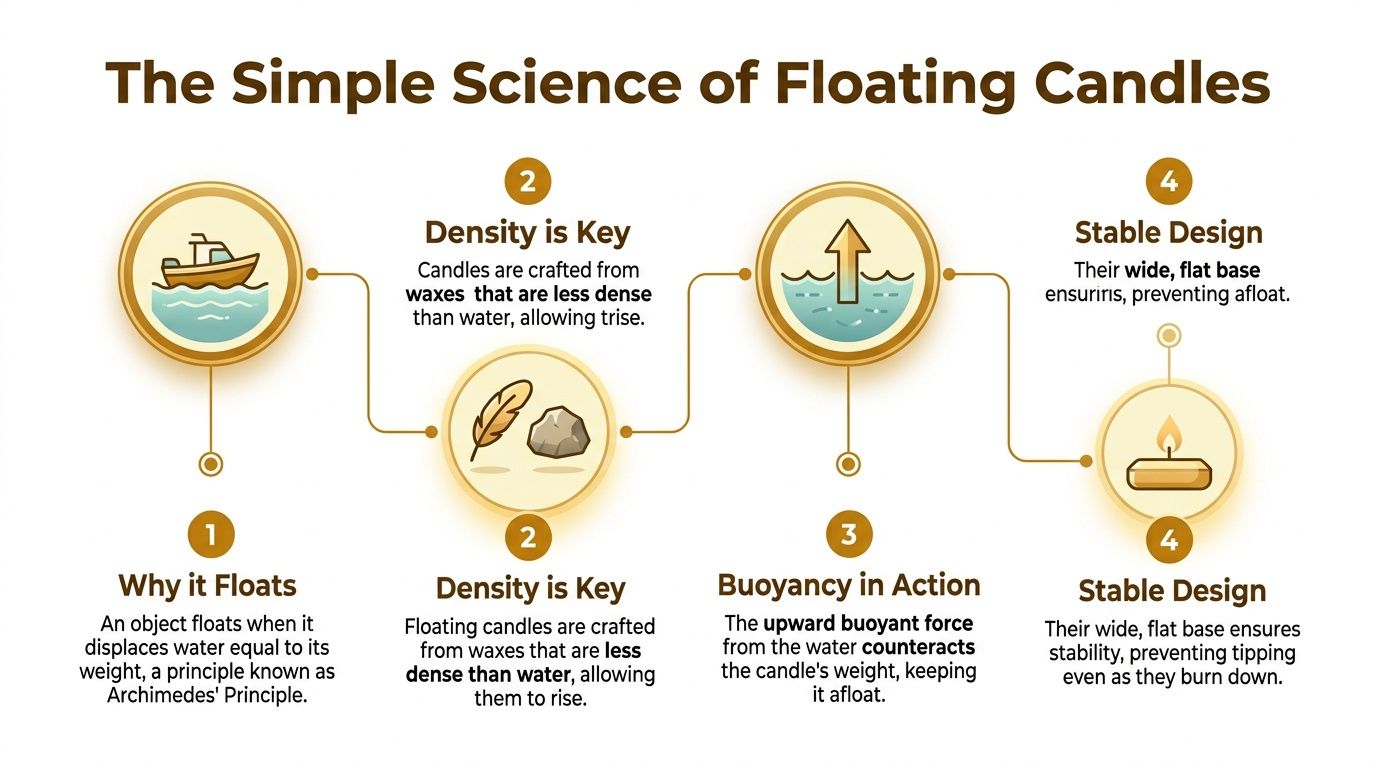
A floating candle stays on the surface for the same basic reason a boat does. Its material and shape allow the water to support it.
Why buoyancy matters
According to CandleScience's guide to making floating candles, floating candles operate on buoyancy because wax such as paraffin has a lower density than water, about 0.9 g/cm³ compared with water at about 1.0 g/cm³. That difference is what lets the candle rise and stay afloat.
If you like simple comparisons, think of water as the support system. If the candle's density stays below the density of the water, the water can hold it up. If the material were denser, it would sink.
There's also a fascinating twist. In The paradox of the floating candle that continues to rise above water, researchers describe how a floating candle can rise higher as it burns because its weight decreases while its buoyancy stays nearly constant.
Practical rule: Floating is only half the story. A candle also needs to stay upright while the flame burns.
Why shape affects stability
A floating candle isn't just made from light wax. It also needs a stable base. Candle makers often use a broad, flat bottom, and for handmade versions that base may need weighting so the flame stays vertical instead of leaning.
That detail matters because a tilted flame burns poorly. It can expose one side to drafts, encourage dripping, and make the candle look messy instead of elegant.
If you're curious how makers approach this, this water candle making article gives a broader look at vessel-based candle styling. The same design logic also explains why products such as Rhubarb Sparkle Scented Candle Sand 350g/0.73lbs are framed as “Create Your Own Pearled Candle.” Fine-grained wax lets you shape the candle setup around the container instead of depending on a pre-molded floating form.
Inspiring Uses for Floating Candle Ambiance
Floating candles earn their place because they feel ceremonial even in ordinary settings. A simple bowl of water changes the way candlelight behaves. The flame reflects, the container seems deeper, and the table looks more intentional.
At home and at the table
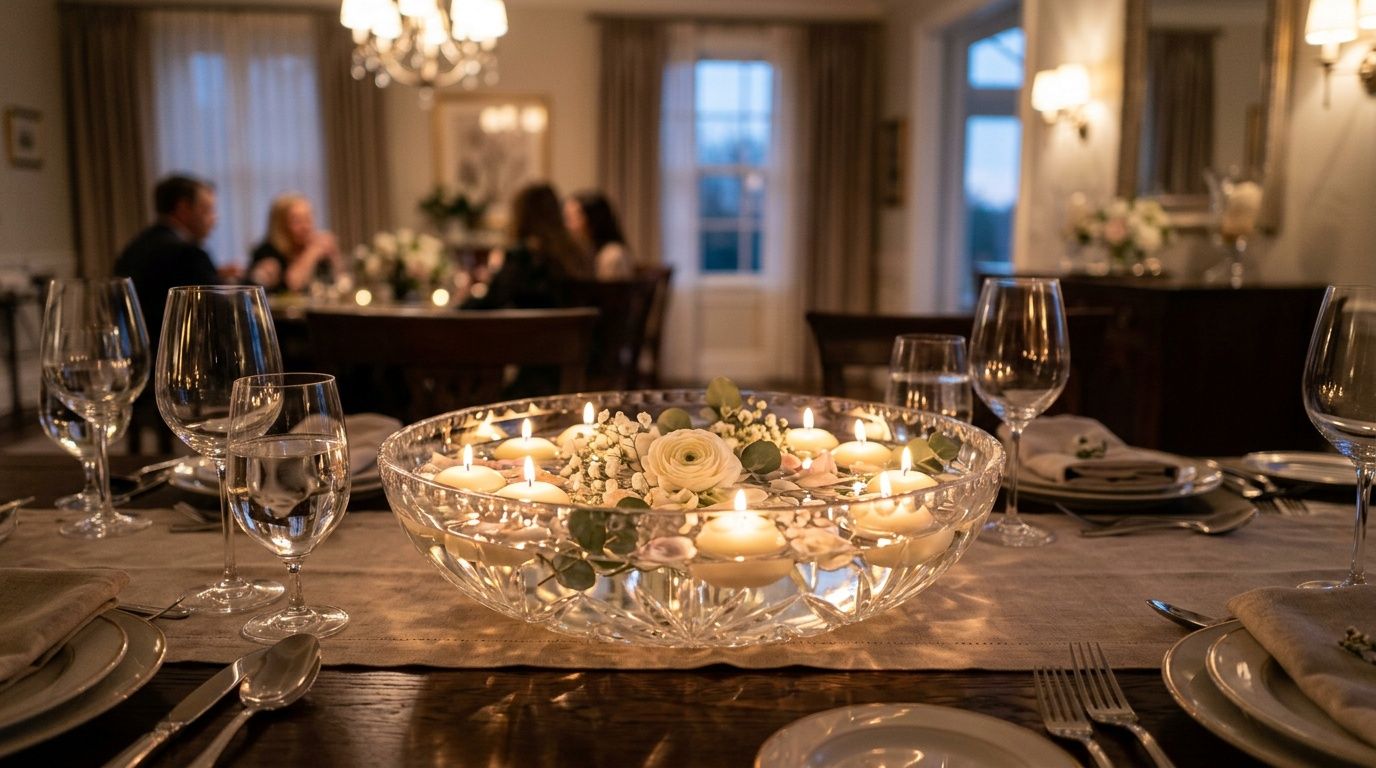
For dinners, floating candles work best when the vessel is part of the styling, not just a holder. Clear glass bowls, cylinders, and low compotes all create different moods. Add a few flowers, keep the palette restrained, and the whole arrangement feels polished without being fussy.
They're also common in wedding decor because they create light without visually crowding the table. If you're planning an event and want examples of how professionals build the overall look around candlelight, Wedding Studio is a useful reference for ceremony and reception styling ideas.
A lot of people pair floating candles with blooms for softer centerpieces. These floating candle centerpiece ideas with flowers show why the combination works so well. Water keeps the look airy, and flowers stop the setup from feeling stark.
In traditions and ceremonies
Floating candles also carry meaning far beyond decor. A discussion of the tradition in this cultural overview of floating lantern use describes their role in Asian festivals such as Toro Nagashi and Obon in Japan, where floating lights are used to guide spirits and honor the deceased. The same source also notes that people in different cultures use floating lights for wishes, prayers, and remembrance.
That history matters because it changes how you see them. They aren't only decorative objects. They can mark memory, ritual, and reflection.
- Wedding tables: Romantic, formal, and easy to read across a room.
- Spa-style rooms: Calm light with gentle movement on the water's surface.
- Memorial gatherings: A respectful visual language that feels quiet rather than theatrical.
Some candle decor is about brightness. Floating candles are more about atmosphere and meaning.
The Modern Alternative A Smarter Way to Float Light
A dinner table set for guests often looks calm in photos. During setup, it can be less graceful. Water needs to be poured, levels need to match, and floating candles need the right shape to sit evenly. Traditional floaters still create a classic effect, but they ask you to design around their limits.
Where traditional floaters can feel limiting
The common frustrations are practical. Hosts and stylists often wonder how much water to use, how long the candles can sit before lighting, and whether reused bowls or vases will behave the way they expect. Those are small questions, but they add up when you are trying to create a polished room rather than troubleshoot each centerpiece.
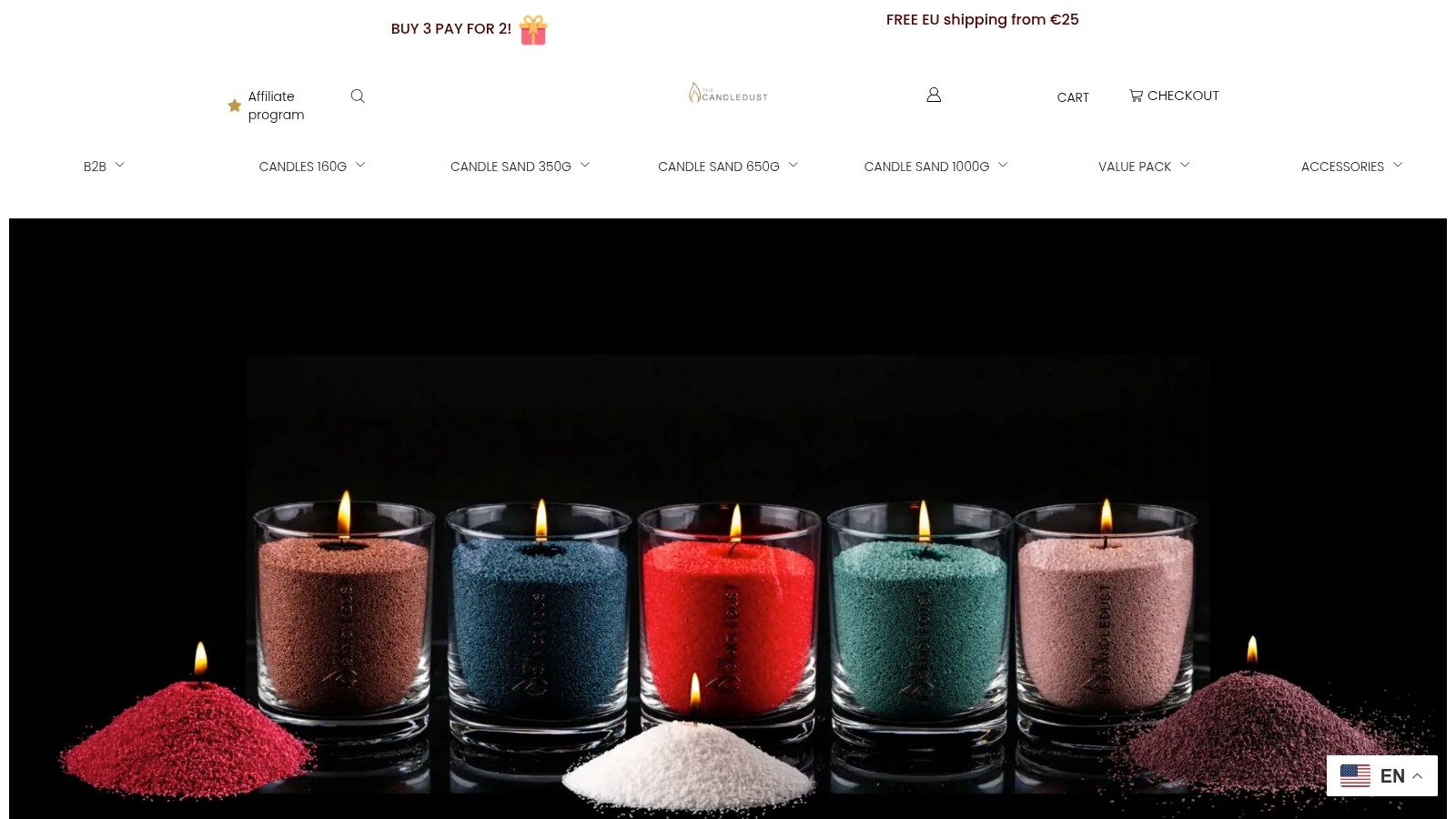
Candle sand approaches the same mood from a different direction. Instead of placing a pre-shaped wax disc on water, you pour fine wax granules into a heat-safe vessel, insert a wick, and let the container define the design. The result is closer to styling with texture than styling with a fixed object.
That difference matters.
With floating candles, the water and the candle shape do part of the design work for you. With candle sand, you control more of the composition yourself. A low glass bowl, a tall hurricane, or a row of small votive holders can all produce a soft, glowing effect without relying on a floating form.
The Candledust is one brand in this category. The brand focuses on creating candle sand with a consistent, fine texture for vessel-based candle styling. Visually, that consistency helps the surface look clean and refined before the candle is even lit.
The product category also has a useful backstory. Saga Candles' article on what sand candles are explains how commercially scented sand candles developed as producers found ways to blend fragrance into granulated wax more evenly. That history helps explain why candle sand feels modern. It was designed to solve real styling and scent-distribution problems, not merely to imitate a standard candle in a different shape.
Floating Candles vs. The Candledust Candle Sand
| Feature | Traditional Floating Candles | The Candledust Candle Sand |
|---|---|---|
| Setup | Requires water and a candle designed to float | Poured into a heat-resistant container with a wick |
| Container freedom | Best in water-friendly bowls, vases, and vessels | Works across many vessel shapes |
| Look | Classic reflected glow on water | Pearled, sculptural surface with customizable arrangement |
| Reworking the display | Usually limited once the candle is chosen | Easy to reshape by changing the vessel or wick position |
| Mess management | Water handling and wax residue can complicate cleanup | Dry-fill format changes the cleanup routine |
| Scent format | Depends on the individual candle | Scented sand candle formats are available in this category |
A simple way to compare them is this: floating candles are a preset solution, while candle sand is a build-your-own lighting material. If you want the poetry of soft candlelight but more freedom over the vessel, texture, scale, and reset process, candle sand offers a more flexible path.
A short demonstration helps if you've never seen sand wax in use:
Pro Tips for Safe and Beautiful Placement
Good candle styling depends less on expensive props and more on a few sound habits. If an open flame sits near water, glass, flowers, or table linens, placement decisions matter.

Placement rules that prevent common problems
Start with the vessel. A stable, heat-safe container with enough width is easier to style and less likely to tip if someone bumps the table.
Then look at the room itself.
- Avoid drafts: Air movement makes flames lean, flicker hard, and burn unevenly.
- Watch surrounding decor: Keep petals, ribbons, and dried materials far enough from the flame that they don't curl inward.
- Stay present: Never leave burning candles unattended, even when water is part of the display.
Keep the composition simple enough that the flame remains the focal point and safe enough that no decorative element can drift into it.
Small styling choices that improve the final look
For floating candles, restraint usually looks better than overfilling the vessel. A few stones, clear glass gems, or a modest floral accent can frame the light without competing with it.
For candle sand vessels, the same principle applies. Let texture do some of the design work. A clean container, a centered wick, and a smooth surface often look more refined than a heavily layered display.
A quick mental checklist helps before lighting:
- Is the container steady?
- Is the flame clear of all decorative material?
- Is the setup away from curtains, sleeves, and traffic paths?
If all three answers are yes, the arrangement is usually in a much better place both visually and practically.
Buying vs DIY Which Is Right for You
DIY floating candles can be satisfying, but they require precision. According to The Candle Depot's floating candle specifications, homemade floating candles call for wax melted to 185°F and poured at 180°F, with the wick centered carefully and trimmed to a quarter-inch after molding to control flame height and reduce dripping.
When buying makes more sense
If you want dependable results for an event, buying ready-made floating candles is often the simpler path. The hard parts have already been solved for you, including shape, wick placement, and overall balance.
This matters most when the candles are part of a deadline. Weddings, dinners, and venue setups don't leave much room for test batches that lean, smoke, or release poorly from a mold.
When DIY is worth it
DIY makes sense if you enjoy the craft itself and want to experiment. It can also be useful if you're trying to match an unusual vessel or learn more about candle construction.
If you're more interested in creative freedom than in melting and molding wax, this guide to DIY candle making at home is a helpful starting point for comparing formats. That's where candle sand stands out as a middle option. You still get control over the vessel and final look, but without the same level of temperature management and mold precision required by traditional floating candles.
The choice often isn't only buying versus DIY. It's whether you want a fixed candle shape or a format that adapts to your container, table plan, and style.
If you want the flexibility of creating candlelight in your own vessels with a cleaner, more design-led look, explore The Candledust. Their candle sand format is a practical option for home decor, events, and anyone who likes the atmosphere of floating candles but wants more freedom in how the final display comes together.