

You're standing in front of a shelf of jars, tins, and ceramic bowls, trying to guess which one will make a candle burn well instead of just looking nice on a label. That's the key decision with the best containers for candles, because the wrong vessel can waste wax, distort the flame, or crack under heat, while the right one makes the whole candle feel calm, balanced, and easy to use.
For refillable candle sand, the container matters even more. You're not picking a one-time holder, you're choosing a vessel you may clean, re-wick, and reuse again and again, so the shape, material, and opening all need to support that rhythm. If you've ever wanted a smooth, lump-free pour that looks polished in glass, ceramic, or tin, that's the logic behind #PerfectPearl.
Table of Contents
- Why the Right Container Changes Everything
- The Candle Container Market at a Glance
- Glass, Ceramic, Tin, Concrete, and Shells Compared
- Heat Resistance and the Safety Rules You Cannot Skip
- Matching Containers to 350g, 650g, and 1000g Refills
- Styling, Reusing, and Cleaning Containers
- Recommendations for Home, Weddings, and Hospitality
- Common Buyer Questions Answered
Why the Right Container Changes Everything
A buyer often starts with fragrance, then ends up fixing the container later. That works for a quick gift, but it's a weak way to buy a candle if you care about burn quality, cleanup, or reuse. The vessel is the frame around the flame, and if the frame is wrong, even a good wax blend can feel unfinished.
The container is part of the candle, not separate from it
Think of a candle container the way a baker thinks about a pan. The batter can be excellent, but the pan still decides whether the cake rises evenly or scorches at the edges. Candle sand works the same way, because a smooth, even fill still needs a heat-safe vessel that supports the wick and holds its shape cleanly.
That's why a first-time buyer should stop asking only, “What looks elegant?” and start asking, “What can handle heat, cleaning, and refilling?” For standard jar candles, that means choosing a stable vessel with proper depth and width. For refillable candle sand, it also means checking whether the opening makes wick replacement easy and whether residue will wipe out cleanly after use.
Practical rule: a beautiful container that fails at cleanup is not a good refill container.
Why refillable candle sand changes the decision
With refill formats, the container isn't consumed on the first burn. It becomes part of a loop. You burn the wick, remove the spent wick, refresh the vessel, and keep the same look for the next use. That makes smooth interiors, thermal stability, and simple access more important than one-time decorative detail.
That mindset also explains why #PerfectPearl matters in a practical sense. Fine, silky candle sand is easier to level in a vessel, easier to relight cleanly, and easier to present in transparent or open containers without distracting clumps. In other words, the container and the sand have to work together, not compete for attention.
The Candle Container Market at a Glance
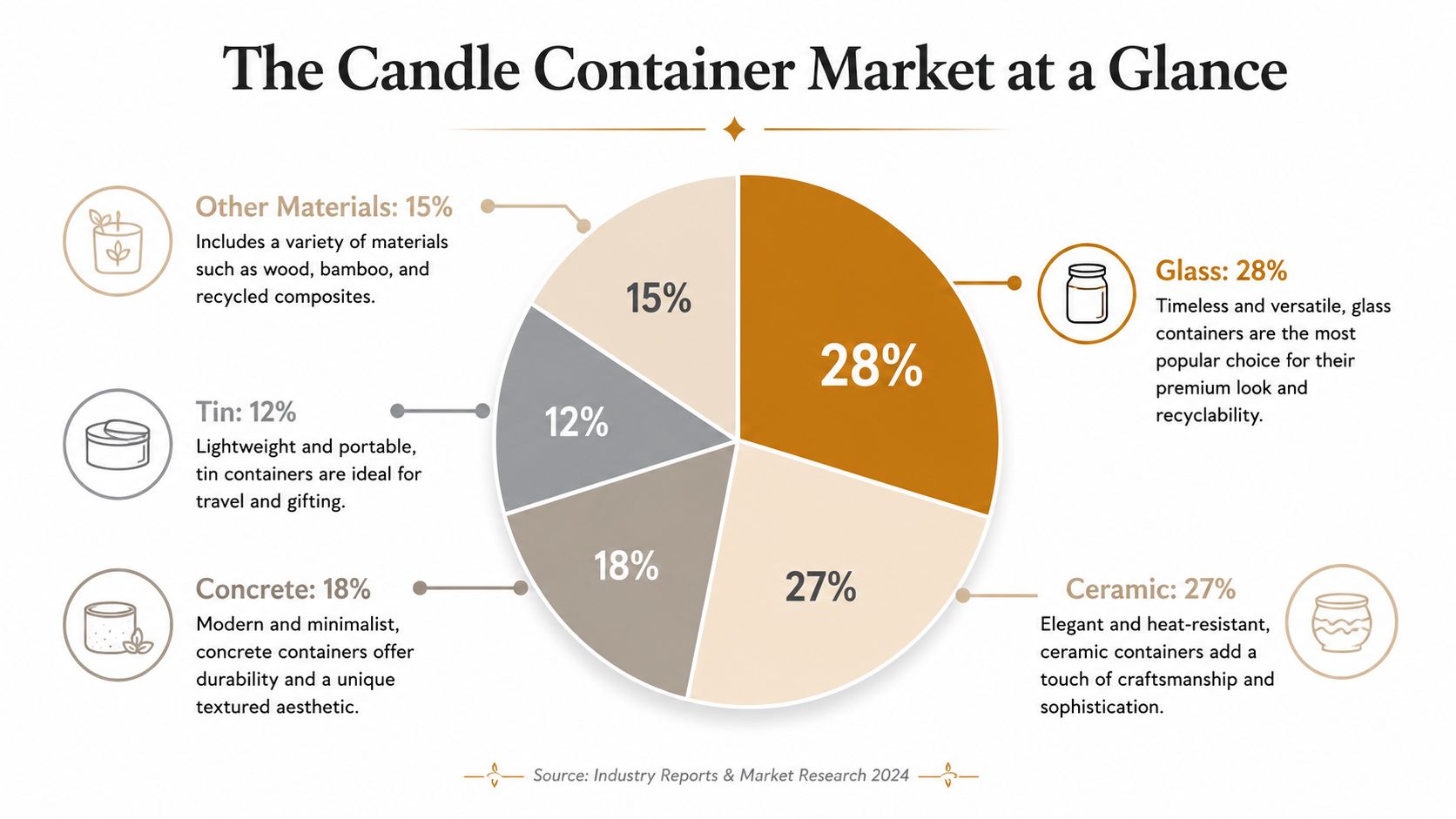
A first-time buyer can learn a lot from what shelves already favor. Glass is the most commonly purchased material, with a 28% global share, followed by ceramic at 20% and metal tins at 16%. Together, those three account for 64% of the ranking, which suggests that retail shelves, private-label programs, and buyer expectations already center on those formats (market breakdown).
What the market share numbers mean in practice
Those shares matter because they show which containers people already trust. If you are shopping for a home candle, glass, ceramic, or tin is usually the safest starting point. If you are buying for gifting, hospitality, or a private-label line, familiar formats also help the candle feel easy to understand before anyone even lights it.
A smaller share can still point to an important use case. The same source places recycled glass at 8%, which shows that sustainability is already a real subsegment rather than a passing idea. That creates a clear split for buyers. Some want a vessel that looks polished and premium. Others want a container that supports reuse and lower waste, especially when the goal is to refill the same candle body after the wick is spent.
For refillable candle sand, that reuse question matters even more. A jar is not just packaging here, it is part of the workflow. A buyer choosing between a 350g, 650g, or 1000g refill needs to think about how the vessel will be cleaned, how easily the wick can be replaced, and whether the inside will wipe out without leaving stubborn residue. A container that looks good once but becomes difficult to reset is like a measuring cup with a warped base, it may still hold material, but it stops being reliable for repeat use.
Here is the simplest way to read the market:
- Glass: the easiest all-around choice for visibility, gifting, and a clean presentation.
- Ceramic: a strong option for more decorative, grounded looks.
- Metal tins: practical for travel, events, and lightweight setups.
- Recycled glass: a meaningful option for buyers who want a sustainability story without leaving the mainstream.
For a closer look at one familiar format, Candle glass / vase sits in the timeless, elegant end of the market and suits a cozy table setting.
Why this shortlist helps first-time buyers
A market share chart does not replace testing, but it does narrow the field. If a container type is already common, retailers keep stocking it for a reason and buyers keep choosing it for a reason. That does not make it perfect for every refill setup, but it does make it a sensible starting point before you move into heat safety, sizing, and easy wick replacement.
Glass, Ceramic, Tin, Concrete, and Shells Compared
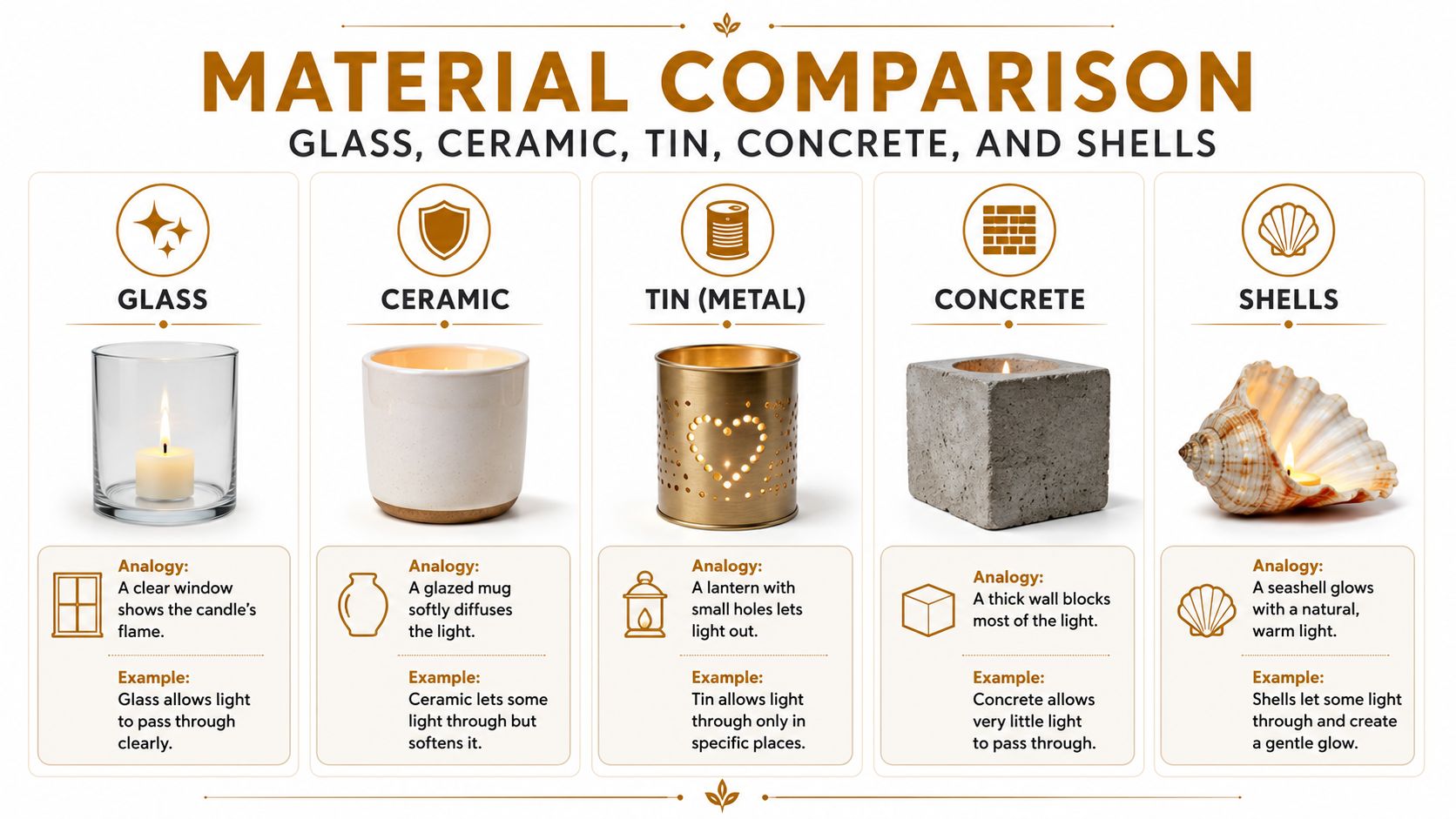
Glass is like a clear picture frame. It shows the flame, the color, and the level of the fill without distraction, which is why it suits tabletop candles and refillable sand setups that rely on visual neatness. The tradeoff is that glass has to be chosen carefully, because thin or poorly made pieces can overheat or crack.
Ceramic feels closer to a fired clay brick. It hides what's inside, gives a more tactile look, and can suit rooms where the candle should feel like part of the décor rather than the main visual event. If it's fully vitrified and glazed properly, it can be a strong container choice, especially for repeat use.
Tin is the travel mug of candle containers. It's light, practical, and forgiving for event transport or outdoor use. It doesn't have the same decorative presence as glass or ceramic, but it can be easier to carry, store, and clean when the goal is convenience.
Concrete works like a slow-release stone. It has visual weight and a modern feel, which is why it appears often in hospitality or architectural décor. The tradeoff is obvious, it's heavy, and it's not the most casual vessel for someone who plans to move candles around often.
Shells are the most delicate category here, and they belong in a narrower lane. They can look beautiful for single-event styling, but they're usually better treated as decorative or special-use vessels rather than dependable long-term refills.
Practical rule: the more often you plan to reuse a container, the more important smooth interiors, stable walls, and easy cleanup become.
For refillable candle sand, glass, ceramic, and some tins are the most usable categories because they support repeated filling and wick replacement. Concrete can work for certain settings, but it's more of a statement vessel. Shells are better reserved for occasional presentation unless you're comfortable treating them as limited-use décor. A helpful technical overview of glass-style containers is available in this guide on candle glass containers.
Heat Resistance and the Safety Rules You Cannot Skip
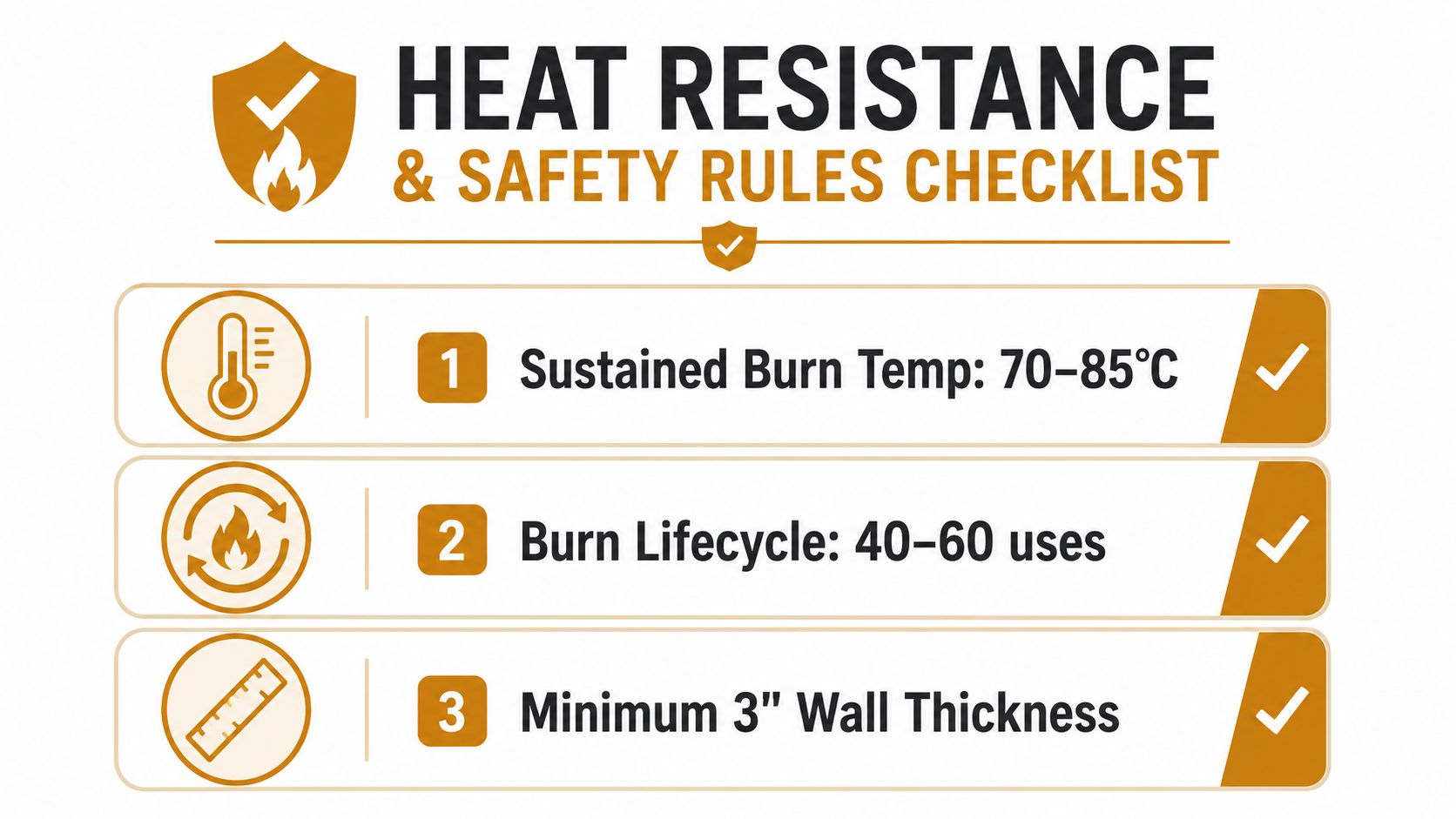
A container can look beautiful on a shelf and still fail under a real burn cycle. For refillable candle sand, that risk matters even more, because the vessel may be filled, emptied, cleaned, and used again. The basic safety standard is simple. The container should be non-porous, non-flammable, and structurally sound for sustained burn temperatures around 70–85°C over roughly 40–60 burns (safety guidance). That is the level you want before you treat a vessel as reusable, not a special upgrade.
The five-second safety check
Before you light anything, check three things. First, does the vessel behave like a heat container, or is it only decorative? Second, do the walls look thick enough to handle repeated heating and cooling without stress? Third, does the opening give the melt pool room to stay centered instead of crowding the rim?
For glass, a safer baseline is at least 3 mm thick, and wider containers over 3 inches in diameter are more likely to support a full melt pool and reduce tunneling (safety guidance). A thin decorative jar may still look fine on day one, but repeated use is where weak glass starts to show its limits.
Why borosilicate and vitrified ceramics matter
Among glass options, borosilicate glass is the most heat-tolerant option cited in the research, with thermal shock resistance of at least 180°C ΔT in one benchmark table, while tempered soda-lime glass is listed around 110–130°C ΔT (heat-resistant vessel guide). For ceramic vessels, the key phrase is fully vitrified. A dense ceramic body behaves more like a sealed baking dish than a porous planter, which is why kiln-fired stoneware or porcelain is preferred over earthenware that can absorb too much water and fail under repeated heating.
A useful ceramic benchmark is water absorption below 0.5%. That signals a vessel that is dense enough for repeated thermal cycling rather than casual display use (heat-resistant vessel guide).
Metal containers bring a different set of tradeoffs. A good metal container guide helps explain where tins fit, especially for refillable systems that need easy cleanup and quick wick replacement. In practice, that is one reason tins stay useful for sand candle workflows. They are easy to empty, wipe down, and return to service when the liner and finish are designed for repeated use.
Matching Containers to 350g, 650g, and 1000g Refills
The best refill container is the one that gives your sand enough room to burn cleanly without burying the wick or pushing wax too close to the rim. The practical rule from candle-making guidance is to leave at least 0.5 inch (1.3 cm) of headspace at the top of the vessel, which helps reduce overflow risk and supports a stable melt pool (container guidance). That clearance matters even more when you're reusing the same vessel.
| Container Sizing Guide for Candle Sand Refills | ||||
|---|---|---|---|---|
| Refill Size | Suggested Diameter | Suggested Depth | Headspace | Best Container Types |
| 350g | Narrow to medium opening | Shallow to moderate | At least 0.5 inch | Glass tumbler, small ceramic bowl, compact tin |
| 650g | Medium to wide opening | Moderate depth | At least 0.5 inch | Wide glass jar, ceramic vessel, sturdy tin |
| 1000g | Wide opening | Deeper vessel | At least 0.5 inch | Large ceramic bowl, wide glass vessel, hospitality-style container |
How to think about each refill size
A 350g refill is usually the most personal format. It suits a smaller glass tumbler or compact ceramic vessel when you want a neat everyday candle on a side table or vanity. The visual effect is simple and clean, and the smaller footprint makes it easier to keep the flame centered.
A 650g refill works better when you want presence. Think of a medium glass jar, a wider ceramic bowl, or a tin that can sit comfortably in a dining room or entryway. This size gives more surface area, which helps the candle feel substantial without becoming hard to place.
A 1000g refill belongs in a vessel that can handle scale. Wide ceramic bowls and larger heat-safe glass containers are the clearest matches, especially when the candle is meant to anchor a room or a table setting. In a refill workflow, that larger format also gives you more flexibility for layered sand looks.
Practical rule: width matters as much as volume, because the internal diameter drives how the burn behaves.
If you're comparing ceramic specifically for larger refill vessels, this ceramic container guide is worth a look for shape and finish considerations.
Styling, Reusing, and Cleaning Containers
A good candle container should look like décor even when it's empty. That's one reason refillable candle sand works so well in layered colors, minimal white fills, or event-matched palettes. The vessel stays on display, so the surface finish and shape keep mattering after the flame is gone.
Make reuse feel intentional
When the wick burns out, remove the spent wick, clear leftover residue, and refresh the vessel with new sand. That reuse loop is what makes the format feel cleaner than a one-and-done candle jar, especially for buyers who care about waste reduction and presentation consistency. The goal is not to treat the vessel like packaging, but like part of the room.
Glass is the easiest material to keep visually fresh because you can see what needs cleaning. Ceramic needs a bit more care if the glaze is delicate, and tins need attention around seams and rims so you don't bend them during cleanup. Concrete is sturdy, but because it's more porous in spirit than polished glass, it benefits from gentler wiping rather than aggressive scrubbing.
Keep the inside as useful as the outside
A container that looks great but traps odor or residue won't stay in rotation for long. Smooth interiors, non-porous surfaces, and simple openings make refilling easier and wick replacement less awkward. That is exactly why reusable glassware-friendly wick systems matter in candle sand workflows, because the vessel needs to be practical, not just attractive.
If you're styling for events, use the container as a base layer. A single tone gives a crisp, hotel-like effect, while layered sand gives you a more custom look for color themes or seasonal tables. The same vessel can do both if it's easy to clean and wide enough to reset quickly between uses.
Recommendations for Home, Weddings, and Hospitality
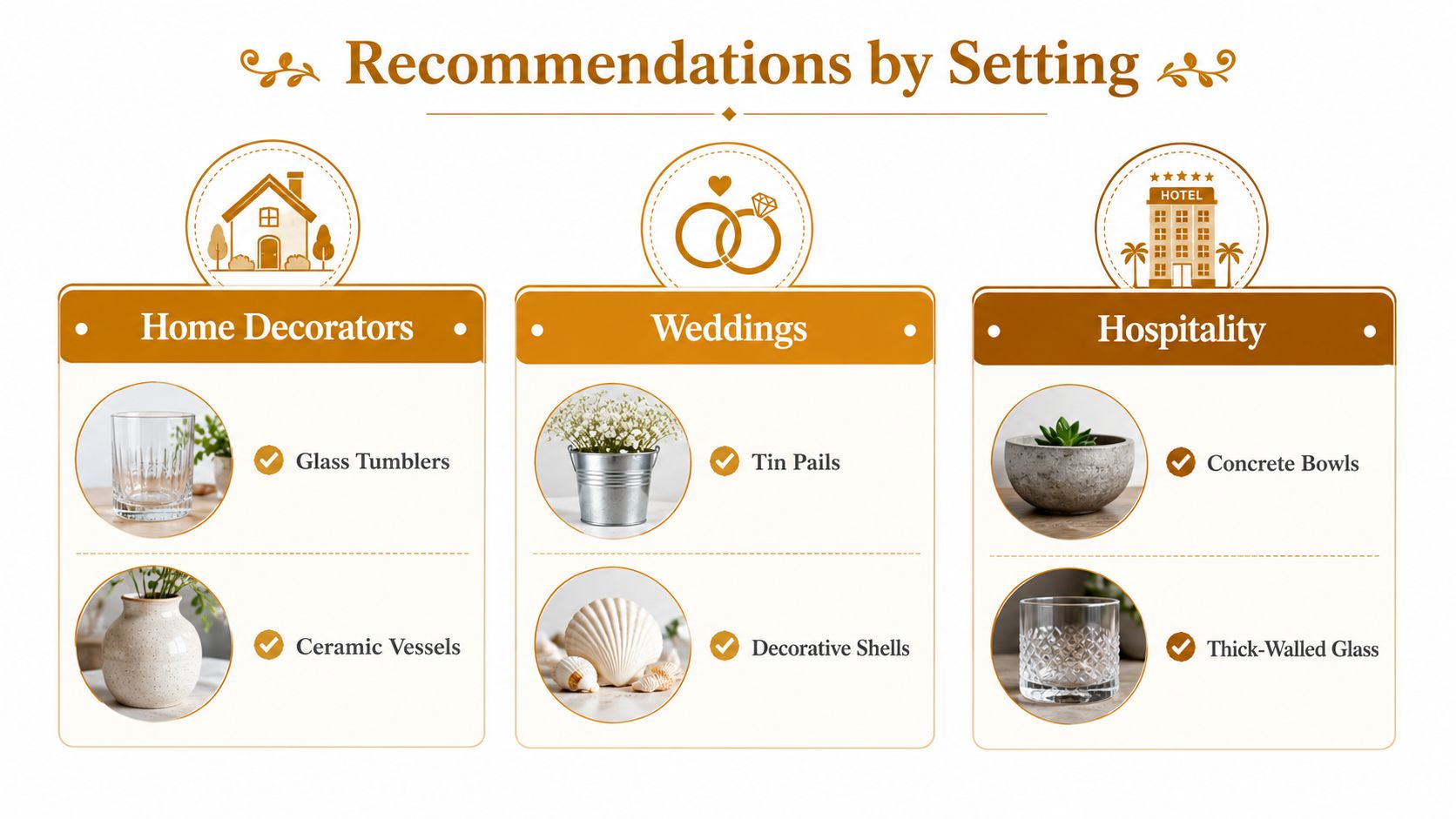
A container that works on a living room shelf may fail on a banquet table, and a vessel that suits one refill size can feel awkward with another. For refillable candle sand, the first question is not whether the jar looks nice once. It is whether the container can be cleaned, rewicked, and used again without turning each refill into a chore. That is the standard to keep in view for home buyers, event planners, and hospitality teams.
Home decorators
For home use, glass tumblers and ceramic vessels usually give the clearest balance of style and repeat use. They work well with 350g refills because the size feels comfortable on shelves, side tables, and coffee tables, and the room can keep the same visual rhythm while the scent changes. A beginner can treat the vessel like a frame around the candle sand, since the frame should support the display without demanding attention every time you refresh it.
If you want a familiar reference point for decorative glassware, the catalog item Candle glass / vase fits the calm, timeless end of the category. It is the kind of shape that makes sense for buyers who want something easy to clean, easy to relight, and easy to keep in rotation.
Weddings and events
Wedding and event buyers usually need containers that are light enough to move, steady enough to stay put, and simple enough to reset after the event. Tin pails and decorative shells can work well for temporary styling, escort tables, and outdoor settings where fragility matters more than long-term display. Larger 650g and 1000g refills make sense for long tablescapes, aisle accents, and ceremony backdrops, because they reduce the need to scatter many small vessels across one space.
If you are building a visual lane around lantern-style décor, browse lantern centerpieces for shape and placement ideas that transfer well to candle-led tables.
Hospitality
Restaurants, hotels, and venues usually need repetition before anything else. Thick-walled glass, concrete bowls, and selected ceramic vessels suit that job because they hold a consistent look from table to table and are easier to standardize across a service floor. For refillable candle sand, that consistency matters as much as appearance, since staff need containers that can be emptied, cleaned, and rewicked without wasting time on stubborn residue.
For ceramic choices, this ceramic container guide helps narrow down vessel families that hold up well in repeated service. In a hospitality setting, that kind of clarity saves guesswork, especially when the same container will be refilled again and again.
Common Buyer Questions Answered
If you are comparing vessels for refillable candle sand, the easiest place to start is the question people ask after they have already chosen a style: will this container still work after the first fill is gone? That matters more than decoration for 350g, 650g, and 1000g refills, because the jar or bowl needs to survive heat, come clean without trouble, and accept a new wick without leaving stubborn residue behind.
How do I test an unknown decorative jar? Check whether it is non-porous, structurally sound, and thick enough to feel stable in your hand, then treat the first burn as a trial run rather than the final use. A jar with thin walls, a shape that narrows sharply inward, or a clearly decorative-only build should stay on the shelf. A first-time buyer can use the same habit as checking a cup for hot tea, if it feels flimsy before filling it, it usually is not the right vessel for candle sand.
Can candle sand go in non-glass vessels? Yes, as long as the vessel is heat-safe and meant for repeated use. Ceramic, tins, and some concrete vessels can fit that role well, while shells work better as limited-use styling pieces. The material matters, but so does the shape, because a vessel that looks attractive on a table may still make wick replacement difficult if the opening is too tight or the inside holds residue in corners.
What's the safest way to reuse a vessel across refills? Let it cool fully, remove the spent wick, clear residue gently, and refill only after the interior is clean and dry. Smooth interiors make this routine easier, because they behave like a plate that rinses clean instead of a textured dish that traps sauce in every groove. For refillable candle sand, that simple cleaning path is part of the product choice, not an afterthought.
How do bulk buyers keep containers consistent? Buy one vessel family, one shape, and one finish, then match them to the refill sizes that fit best. That approach keeps the display steady and also makes rewicking easier for staff or hosts who need to repeat the same setup across many tables. If you need a comparison point for broader sourcing questions, bulk buyer FAQ resources show the kind of practical FAQ structure that helps buyers move faster.
The Candledust offers candle sand refills in 350g, 650g, and 1000g formats, plus containers, wicks, and bulk options for events and hospitality. If you are comparing refillable vessels for home décor, weddings, or table service, visit The Candledust and choose a setup that lets you reuse the same container with less mess and easier wick replacement.