

You want that café feeling at home right now. A warm lamp is on, a favorite mug is within reach, and you're trying to recreate that polished mix of comfort and style that makes a good coffee shop feel so easy to stay in. The first instinct is usually simple: put coffee beans and candles together in a pretty glass vessel and expect the room to smell like fresh espresso.
That look absolutely works. The scent result usually doesn't.
I've found that the most elegant coffee-themed candle styling happens when you separate visual drama from fragrance performance. Whole beans give you depth, texture, and that rich roasted look. High-quality candle sand gives you control, a cleaner finish, and a more consistent scent experience than the usual melted-wax DIY route. That combination creates a display that feels more boutique hotel than craft-table experiment.
Table of Contents
- Creating a Coffee Shop Atmosphere at Home
- The Secret to a True and Lasting Coffee Scent
- Crafting Stunning Centerpieces with Coffee Beans and Candle Sand
- Your DIY Coffee Scented Candle with #PerfectPearl Sand
- Safety Burn Time and Professional Tips
- Event Setups and Sustainable Reuse Tips
Creating a Coffee Shop Atmosphere at Home
A good coffee corner rarely depends on one object. It's the combination of materials that does the work. Glass, ceramics, linen, dark wood, roasted beans, and a soft flame all pull in the same direction.
Coffee beans and candles fit naturally into that palette because they add both color and texture. Beans bring a deep brown gloss that looks expensive in clear vessels. Candlelight softens the harder lines of shelves, trays, and tabletops. When you place them together, even a simple console or dining table starts to feel more composed.
The mistake many people make is treating the beans as the whole project. They fill a jar, drop in a candle, and stop there. The display looks decent from a distance, but it often misses the layered finish that makes home styling feel intentional.
Build the mood with contrast
For a more polished result, I like to think in contrasts:
- Smooth against textured: Pair sleek glass with irregular whole beans.
- Dark against light: Use coffee beans near pale stone, white ceramics, or neutral linen.
- Structured against loose: Keep the vessel shape crisp, but let the beans feel organic.
That's what gives the arrangement that coffee-house ease without making it look themed in an obvious way.
A coffee display looks sophisticated when it feels edited, not crowded.
There's also a sensory reason people keep returning to this combination. Candles mark a space as slower and more personal. Coffee references warmth, hospitality, and ritual. Even before you light anything, the arrangement signals comfort.
Historically, candles have always been part of practical atmosphere-making. The National Candle Association's history of candles traces the earliest use to Ancient Egyptians, who made rushlights by soaking reed pith in melted animal fat. The tools have changed. The underlying appeal hasn't.
The Secret to a True and Lasting Coffee Scent
Most disappointing coffee candles fail for a simple reason. The beans are doing almost all the visual work and almost none of the fragrance work.
Why beans look stronger than they smell
Whole coffee beans are beautiful in candles, but they don't behave the way people expect once heat enters the picture. A major challenge with coffee-themed candles is that whole beans do not release volatile aromatics below 180°C, while a standard tea-light burns at a maximum of 60°C, so it can't bake a coffee aroma into the air. That physical limit is one reason many buyers end up disappointed by candles that look coffee-rich but smell fake or faint, as discussed in this candle discussion about coffee beans in candles.
That's why a vessel packed with beans can smell promising when you lean over it, yet barely change the atmosphere of the room once lit. The decorative setup suggests fresh roast. The burn temperature doesn't support that result.
If you also store beans poorly before using them in décor, the problem gets worse. Oxidation and ambient moisture dull their surface aroma quickly, so a good primer on storage matters even for decorative use. Allied Drinks Systems' storage guide is useful if you want the beans in your styling trays and candle surrounds to smell fresher for longer.
What works better for scent
There are two methods that consistently produce a better result.
First, use the beans as decorative architecture only. Let them frame the candle, line the base of a lantern, or sit outside a smaller inner glass. That gives you the coffeehouse visual without asking the beans to perform like fragrance oil.
Second, use a professionally scented candle medium for the actual aroma. Plant-based sand wax is compatible with a wide range of candle fragrance oils, which allows candle makers to create custom-scented candles with high fidelity, according to General Wax's sand wax product information. In practice, that means your scent choice can be deliberate instead of symbolic.
One useful example is Champagne Rhubarb Scented Candle Sand 1Kg, which is described as the best value for creating new or refilling old candle jars. It isn't a coffee scent, but it shows the practical advantage of candle sand when you want a refillable, styled vessel rather than a one-piece candle you can't easily redesign.
For readers who prefer fragrance built from essential oils rather than a coffee visual theme, this guide to essential oil candles is a helpful comparison point.
Crafting Stunning Centerpieces with Coffee Beans and Candle Sand
The easiest way to make coffee beans and candles look more refined is to stop pouring wax directly onto the beans. Instead, build the centerpiece like a stylist would, with one layer for appearance and another for flame control.
Choose the vessel first
Start with a heat-resistant outer container. Clear glass hurricanes, low cylinders, apothecary jars, and wide-footed bowls all work well. The wider the vessel, the more visible your coffee bean layer becomes.
Then decide whether you want the candle to sit:
- Inside a smaller glass insert surrounded by beans, or
- On a protected top layer above a stable base
The first option is the cleanest and easiest to refresh. It's my default for dining tables and entry consoles because the beans stay decorative and the flame stays visually centered.
Build the display in layers
Use this sequence for a finished, high-end look:
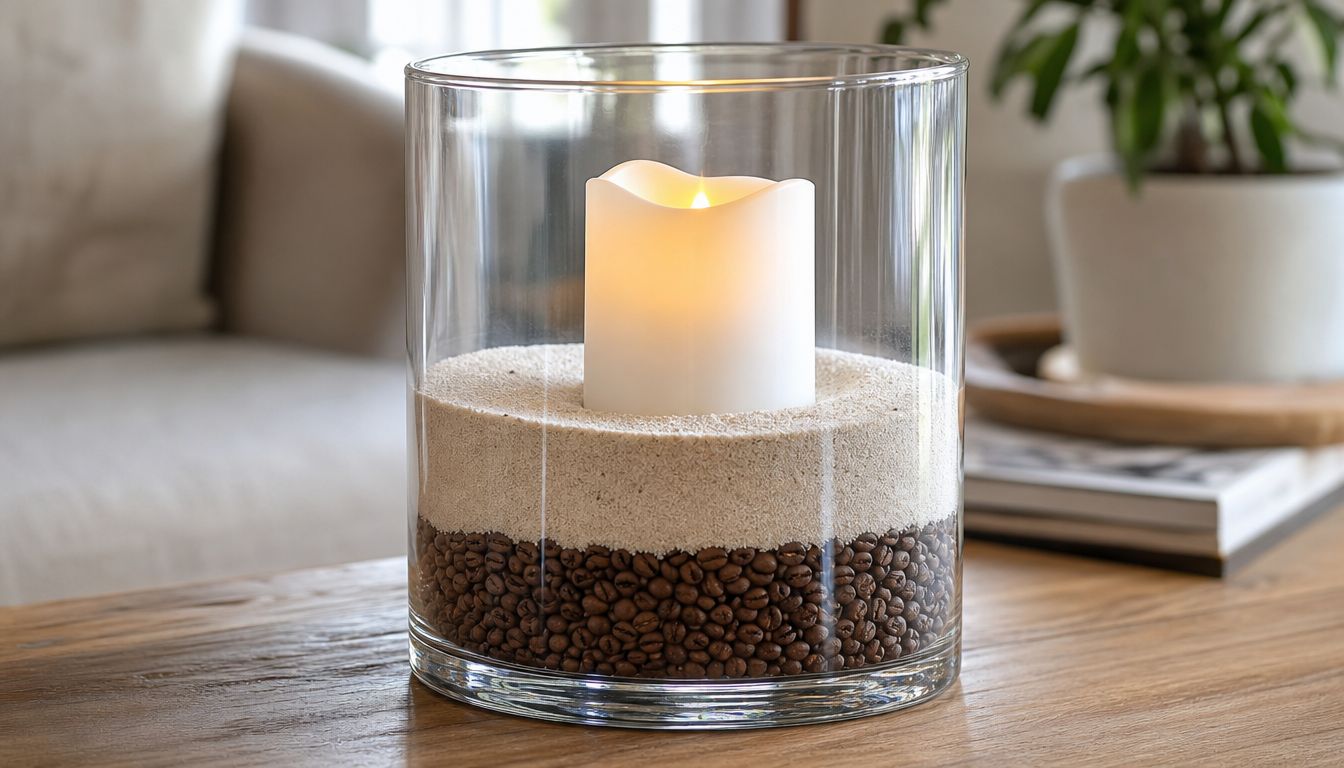
- Base layer: Add whole coffee beans to the outer vessel. Keep the depth shallow enough that the arrangement still looks neat and intentional, not overfilled.
- Inner candle zone: Place a smaller glass container in the center. This creates separation between décor and burn area.
- Top material: Pour candle sand into the inner container and level the surface lightly.
- Final styling: Rotate the vessel until the most attractive beans face outward. Small details matter in clear glass.
If you prefer a cooler, contemporary palette, an unscented grey-toned sand can offset the warmth of the beans beautifully. The effect feels more architectural than rustic.
Keep the visible coffee beans close enough to read as intentional, but never so close that they compete with the wick area.
This format also gives you more flexibility for seasonal styling. Add a linen runner in spring, dark ceramics in autumn, or brass accents in winter, and the centerpiece still holds together.
For arrangements that use separate vessels and floating visual elements, this article on floating wax candles offers good styling ideas that translate well to layered coffee-bean displays.
Your DIY Coffee Scented Candle with #PerfectPearl Sand
Traditional coffee candle DIY projects often look simple on social media and become fiddly the moment you try one yourself.
Why this method looks more refined
When making DIY candles with traditional wax, the natural buoyancy of coffee beans causes them to float, while wax cracking during hardening is a frequent failure point. Expert methods use a multi-step process to manage those issues, and the simple pour-and-place nature of candle sand avoids them, as outlined in Savvy Homemade's DIY coffee bean candle guide.
That difference matters if you care about finish. Floating beans create awkward cavities near the top. Cracked wax makes even a good fragrance feel homemade in the wrong way. A premium vessel needs a smooth surface and clean edges.
The Candledust takes a distinct approach. It is one of the first sand wax candle producers in the world and the first to introduce scented sand candles in the world. The material is presented as silky, smooth, even candle pearls without lumps and uneven particles, with special processing behind what it calls #Perfect pearl. That surface quality matters because it gives the candle a neater top line, a more precise fill, and a cleaner overall appearance in glass.
A simple method that stays elegant
The actual process is straightforward:
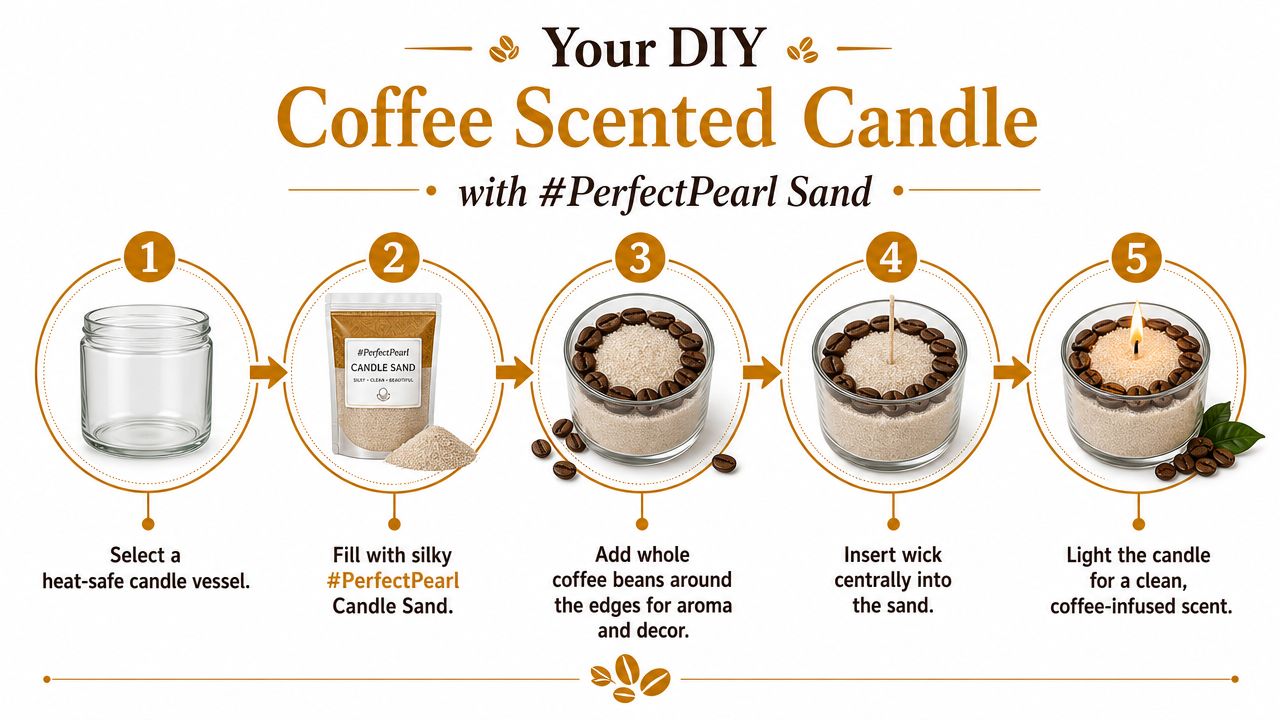
- Select a heat-safe vessel with enough width for a stable wick position.
- Pour in scented candle sand and settle it with a gentle tap rather than compacting it hard.
- Add whole coffee beans only around the outer edge or in a separate surrounding vessel for visual effect.
- Insert the wick centrally.
- Light and monitor the first burn so the setup stays tidy.
A short visual walkthrough helps if you're making your first one.
There's another practical benefit here. Leaving scented sand wax in a living space without burning it can still release a continuous fragrance through the house, a passive scent-diffusion behavior noted in this candlemaking discussion about sand candle wax. That means the display contributes to ambiance even when you don't want an open flame.
For anyone trying to create that steady coffee-shop mood, that passive scent layer is useful. You get a styled object that still participates in the room between burns.
Practical rule: Use coffee beans for the look, and use candle sand for the fragrance job. The setup performs better when each material has a clear role.
Safety Burn Time and Professional Tips
Coffee beans and candles can look luxurious together, but the arrangement has to be built with discipline. Safety is what separates a polished centerpiece from a risky one.
Non-negotiable safety rules
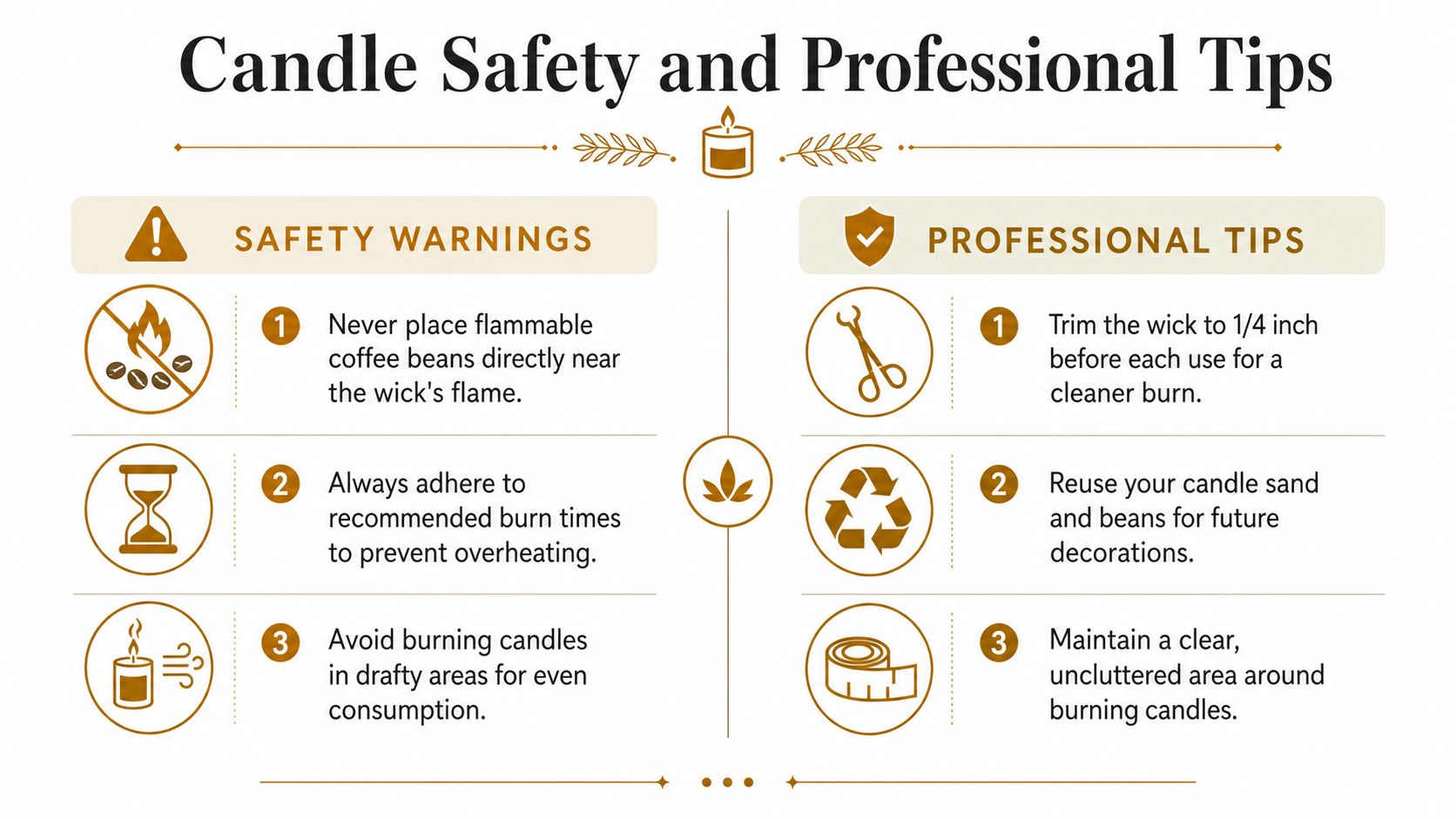
Never place loose coffee beans directly where the wick flame will burn. If you want beans in the design, keep them in an outer chamber, at the vessel perimeter, or fully outside the active melt area.
Keep the top surface around the wick clear and uncluttered. A clean burn zone helps the candle stay more even and makes it easier to see if the wick needs trimming or repositioning.
Burn location matters too. Skip drafty windowsills, crowded shelves, and unstable trays. Coffee displays often use glass, reflective surfaces, and decorative fillers, so a stable base is part of the design, not an afterthought.
Do and don't guide
| Do | Don't |
|---|---|
| Trim the wick before lighting for a neater flame and less residue | Let decorative beans touch the flame zone |
| Use a heat-safe vessel with enough room around the wick | Burn near curtains, paper tags, or dried botanicals |
| Replace the wick and refresh the sand when needed | Overfill a container so close to the rim that the flame feels cramped |
| Keep the display visible while burning | Treat décor as fireproof just because it looks inert |
A well-executed aromatic candle can also change how a room feels emotionally. In a controlled study, candles made from processed coffee bean waste showed an 85% success rate in reducing anxiety levels and 92% satisfaction regarding quality of use and aroma profile, according to the Formosa Journal study on coffee-waste aromatherapy candles. Those figures don't replace fire safety, but they do support the idea that a calm visual setup and a pleasing aroma can contribute to a more relaxing environment.
Keep the arrangement simple enough that you can assess it at a glance. If you can't instantly see the wick, the surrounding surface, and the vessel edge, edit it down.
For longer life, remove spent wick material cleanly, keep leftover sand free of debris, and store unused beans in a sealed container if you plan to style with them again later. The most professional-looking candle setups are usually the easiest to maintain.
Event Setups and Sustainable Reuse Tips
Coffee beans and candles scale beautifully for events because they read as both welcoming and appropriate. On a wedding table, they add depth beneath glass. In restaurants, they fit naturally with wood, stone, and low lighting. In hotel lounges or breakfast spaces, they reinforce the hospitality story without feeling overly themed.
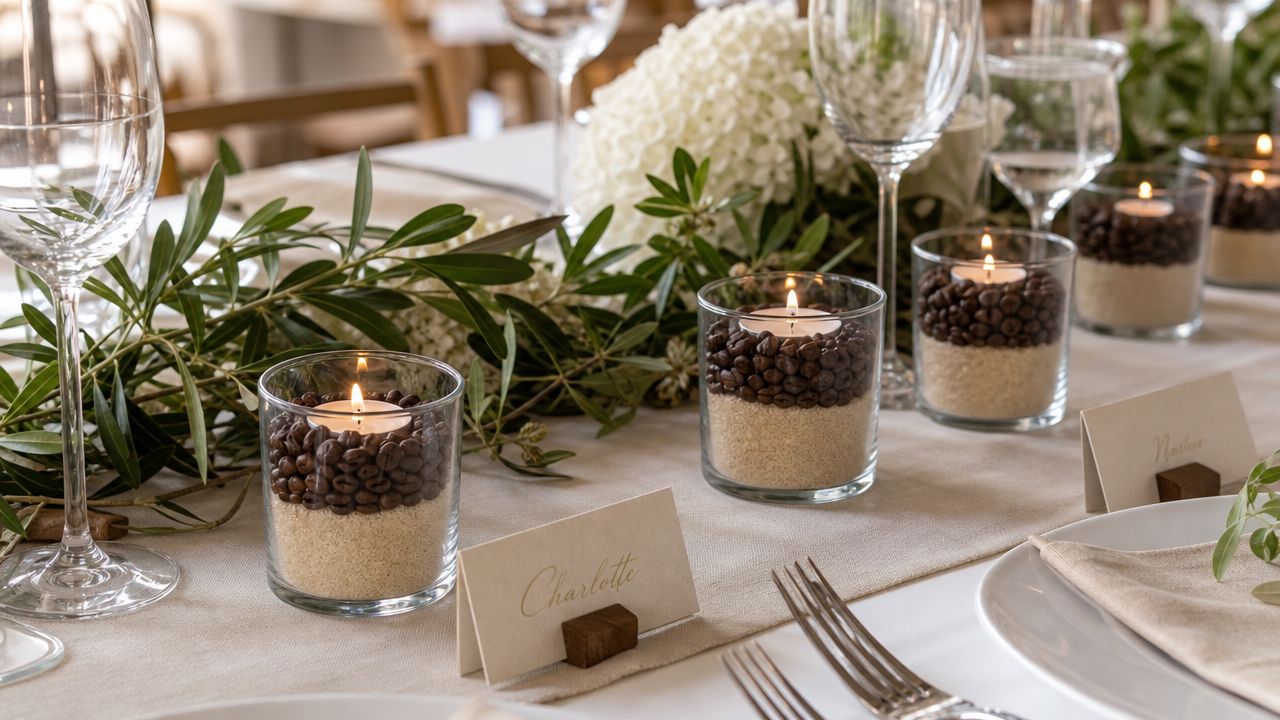
Where this style works beautifully
This setup is especially useful when you need repeatable décor across multiple tables. You can keep the vessel shape consistent, vary the bean depth slightly, and refresh the candle element without remaking everything from scratch.
If you're repurposing containers after an event, this guide on how to reuse candle jars gives practical ideas for extending the life of the pieces instead of storing mismatched glass indefinitely.
What to do with the beans afterward
There's a common assumption that once beans have sat around candle heat, they're finished. That isn't always the case. Studies on plant-based wax suggest that organic fillers like whole coffee beans can retain 85% of their original aroma compounds after hours of heat exposure, which supports reusing them for potpourri or other crafts, as summarized in this article on aromatic coffee bean candles.
That opens up a few smart options:
- Drawer sachets: Place cooled beans in a breathable pouch for a subtle roasted note.
- Decorative bowls: Reuse them as filler on trays or shelves.
- Craft projects: Add them to seasonal centerpieces or gift wrapping details.
If your project also leaves you with used grounds from brewing, PureHQ's guide to composting coffee is worth bookmarking. It's a practical next step for keeping the coffee side of your décor ritual lower-waste.
If you want a cleaner way to style coffee beans and candles without melted-wax mess, The Candledust offers plant-based candle sand that lets you turn heat-resistant vessels into refillable candle displays with a more controlled, design-focused finish.