

You've probably done this recently. A candle burns down, the flame is gone, and you're left with a nice jar, a bit of wax at the bottom, and one nagging question: what happens to this leftover wax now? If you care about waste, that small leftover bit suddenly feels bigger.
The short answer is that some candle waxes are biodegradable and some aren't. But the more useful answer is broader. A candle's environmental impact doesn't depend on wax alone. It also depends on the fragrance, dyes, glitter, wick, and whether the whole setup can be reused instead of thrown away.
That's where many candle guides stop too early. They compare soy versus paraffin and leave out the rest of the candle system. If you want to make better choices, you need a fuller way to judge what you're burning at home.
Table of Contents
- The Lingering Question in Your Empty Candle Jar
- What Biodegradable Really Means for Candle Wax
- A Biodegradability Showdown of Popular Waxes
- Beyond the Wax How Additives Affect Your Candle
- The Modern Solution Reusable Plant-Based Candle Sand
- Your Guide to Eco-Conscious Candle Buying and Disposal
The Lingering Question in Your Empty Candle Jar
An empty candle jar looks harmless. It's small, neat, and easy to forget. But if you burn candles often, those leftovers add up into a steady stream of wax residue, spent wicks, packaging, and containers.
That's why is candle wax biodegradable is such a useful question. It shifts your attention from the moment of use to the full life of the product. Burning a candle is only one part of the story. What's left behind matters too.
Many people assume all wax behaves like a natural material because it looks soft, simple, and almost food-like. That's where the confusion starts. Some waxes come from plants or bees. Others come from petroleum. Some can break down much more readily. Others can persist far longer.
Practical rule: Don't judge a candle by the word “wax” alone. Ask what kind of wax it is, what's mixed into it, and whether the vessel and leftover material can be reused.
There's also a difference between “can be disposed of” and “is environmentally gentle.” Almost anything can be thrown away. That doesn't mean it returns safely to natural cycles.
If you love candles, you don't need to stop using them. You just need a better filter for choosing them. Once you understand how wax type, additives, wick design, and reusability work together, the decision gets much easier and much more assured.
What Biodegradable Really Means for Candle Wax
Biodegradable is a science term, but the idea is practical. It describes whether living organisms such as bacteria and fungi can break a material down into substances that return to natural cycles.
An apple core and a plastic bottle show the difference clearly. One is food for microbes under the right conditions. The other resists that process for a very long time. Candle wax falls somewhere along that same spectrum, depending on what it is made from.
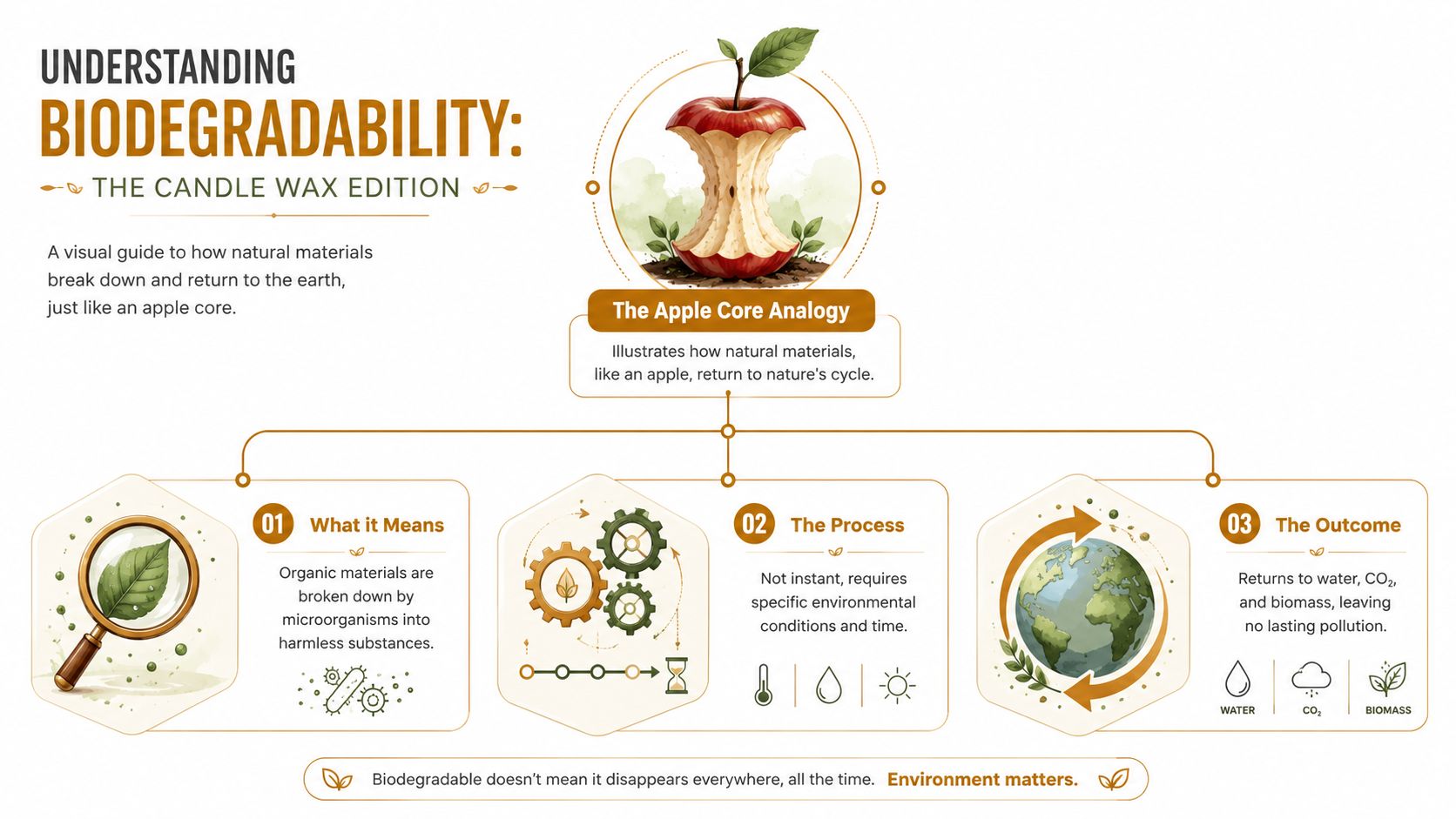
That distinction matters because “biodegradable” does not mean “gone quickly” or “harmless in every setting.” A wax may break down well in an active compost-like environment with oxygen, moisture, and microbial life, yet linger much longer in a sealed landfill or in a jar residue left untouched for months.
For candle buyers, that is the first useful shift in thinking. Instead of asking only whether the wax has a natural origin, ask whether the whole candle system returns cleanly to use or to nature. The wax matters, but so do fragrance additives, dyes, wick materials, and the container itself. If you want a fuller comparison of wax options, this guide to eco-friendly candle wax choices is a helpful next reference.
Three conditions have to line up for wax to biodegrade well:
- A workable material: Plant-based and other natural waxes usually contain compounds microbes can process more readily than petroleum-derived waxes.
- Active decomposers: Bacteria and fungi do the actual breaking down.
- Supportive conditions: Oxygen, moisture, temperature, and time all affect the pace.
That is why biodegradability is better understood as a process than a label.
According to The Minch's explanation of paraffin and natural wax decomposition, paraffin wax breaks down more slowly than natural waxes such as soy under laboratory conditions, and paraffin is not readily biodegradable. The practical takeaway is straightforward. Two candles can look similar on a shelf while leaving very different leftovers behind.
A better candle question is: What is this candle made of, and what happens to every part of it after I use it?
Once you start asking that, labels become easier to read with a critical eye. “Natural” is only one clue. A more eco-conscious choice usually comes from looking at the full structure of the candle, and in newer formats such as plant-based candle sand, the reusable container and refill model can matter almost as much as the wax itself.
A Biodegradability Showdown of Popular Waxes
A useful wax comparison starts with one simple question. What kind of material are microbes more likely to recognize as food, and what kind will linger more like plastic-coated residue in the environment?
That question quickly separates petroleum waxes from plant-based and animal-derived options. Paraffin comes from petroleum, so it generally breaks down more slowly and less readily. Soy, beeswax, coconut wax, and plant-derived stearin come from renewable biological sources, which usually gives them a clearer path at end of life under the right conditions.
Source still is not the whole story. It is the starting point, much like checking the fabric tag before buying clothes. Cotton and polyester can both make a shirt, but they behave very differently after years of wear and disposal. Candle wax works in a similar way.
Malibu Apothecary's overview of candle wax impacts describes coconut wax, beeswax, and plant-derived stearin as biodegradable and compostable, and notes that stearin is widely treated as a greener alternative to paraffin because leftover material can be composted. Soy is also commonly grouped with the more biodegradable waxes, and Candle World's history of candles describes soy wax as natural, biodegradable, and slower burning than traditional paraffin.
If you want a fuller look at plant-based options, this guide to eco-friendly candle wax choices adds helpful context.
Candle Wax Biodegradability Comparison
| Wax Type | Source | Is it Biodegradable? | Renewable? |
|---|---|---|---|
| Paraffin | Petroleum-derived | Not readily biodegradable | No |
| Soy | Hydrogenated soybean oil | Yes | Yes |
| Beeswax | Bees | Yes | Yes |
| Coconut wax | Plant-derived | Yes | Yes |
| Plant-derived stearin | Plant materials | Yes | Yes |
Here is how that table becomes more useful in real life.
- Paraffin: Widely available and often inexpensive, but the weakest fit for shoppers prioritizing biodegradability and renewable inputs.
- Soy: A practical plant-based option with a strong reputation for easier breakdown than petroleum wax.
- Beeswax: Biodegradable and natural, though some buyers also factor in animal-origin questions.
- Coconut wax: Appealing for shoppers who want a plant-based wax outside the standard soy discussion.
- Plant-derived stearin: Often overlooked, yet worth attention for its compostable residue and renewable origin.
The strongest takeaway is broader than a wax ranking. A lower-impact candle is rarely defined by wax type alone. Wax gives you the foundation, but the full candle system includes fragrance, dye, wick, and container too.
That wider view matters because two soy candles can perform very differently as environmental choices. One may use a simple formula in a reusable jar. Another may pair soy with heavy synthetic additives and mixed materials that are harder to dispose of responsibly.
That is why comparing waxes is helpful, but incomplete. An eco-conscious choice starts with the wax and then keeps going.
Beyond the Wax How Additives Affect Your Candle
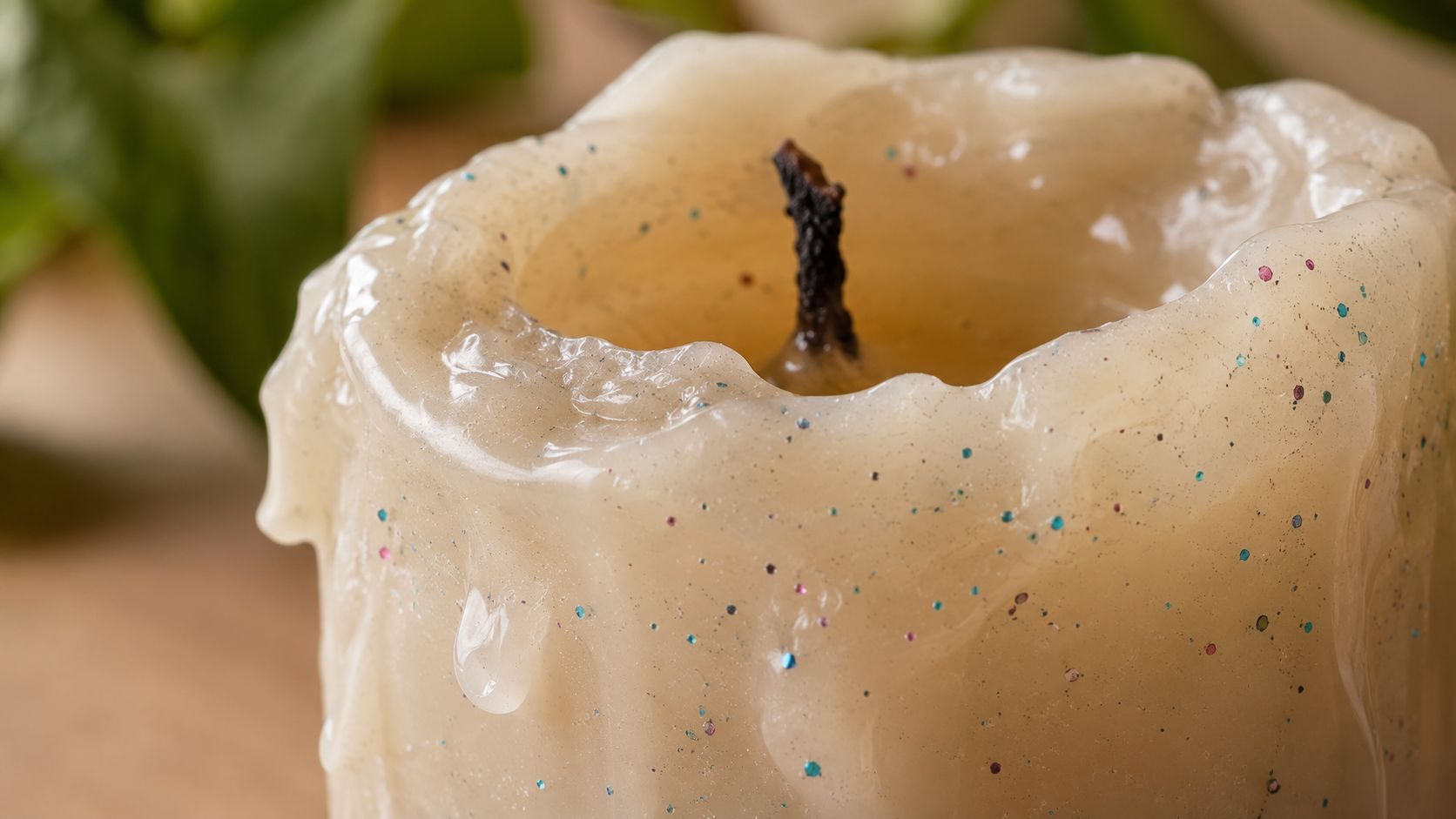
You finish a candle made with soy wax, feel good about the choice, then notice dyed wax residue, a glittery rim, a metal wick tab, and a jar you are not sure how to clean out. That moment explains why wax type is only the starting point.
A candle works like a small system, not a single material. The wax may be plant-based and biodegradable, yet the final product can still be harder to reuse, recycle, or dispose of responsibly once fragrance blends, colorants, decorative extras, and packaging enter the picture.
The hidden ingredients that change the picture
Fragrance often adds the first layer of complexity. Some candles keep the scent formula relatively simple. Others rely on heavier synthetic blends or provide so little detail that shoppers cannot tell what they are burning. If a brand talks at length about “natural wax” but says almost nothing about fragrance ingredients, that is a sign to look closer.
Decorative add-ons can create the same problem. Glitter, bold dyes, dried flowers, crystals, and other embedded items may look beautiful on the shelf, but they can leave behind mixed waste after the candle is gone. A compost-friendly wax residue stops being so simple once non-wax materials are mixed into it.
Wicks deserve more attention too. They are small, but they shape the candle's material profile. Cotton and wood wicks are often easier to understand at a glance than vague wick descriptions, especially if you are trying to avoid unnecessary mixed materials in the leftover stub.
The container matters just as much. A sturdy glass vessel that can be washed and reused has a very different footprint from a decorative container that is difficult to clean or unlikely to serve a second life. That same systems view also helps when comparing newer formats such as what candle sand is made of, because the reusable format changes the waste question, not just the wax ingredient.
How to read a candle more critically
A good habit is to assess a candle layer by layer, the same way you might check the ingredients, packaging, and refill options for any other household product.
- Wax base: Is the wax clearly named, or does the label hide behind broad terms like “natural blend”?
- Fragrance blend: Does the brand explain the scent ingredients in plain language, or rely on soft marketing claims?
- Color and decoration: Are there dyes, glitter, botanicals, or embedded extras that make cleanup and disposal messier?
- Wick: Is the wick material identified clearly?
- Container: Can the vessel be reused easily, or is it mostly decorative and likely to be discarded?
A “natural wax” label can be true while still telling only part of the story.
The biggest mindset shift is simple. Do not judge a candle by wax alone. Judge the whole setup, including what burns, what is left behind, and what can be reused afterward. That broader view gives you a much better tool for choosing candles with lower waste.
The Modern Solution Reusable Plant-Based Candle Sand
A newer approach changes the discussion from disposal to reuse. Instead of pouring wax into one fixed container and scraping out the leftovers later, granular candle systems let you use the wax more flexibly from the start.
Why reusable wax systems change the waste equation
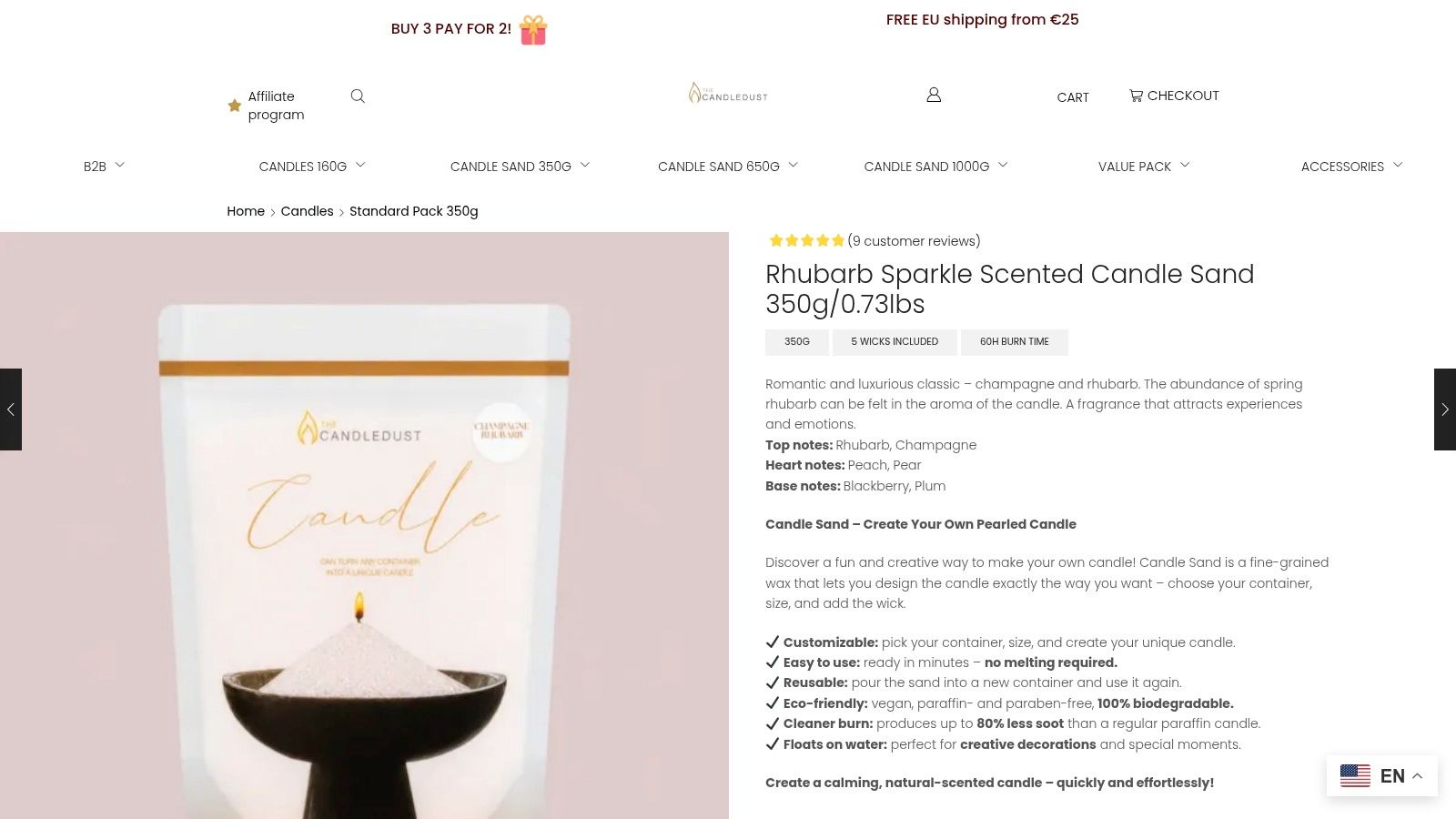
Sand candles are made from tiny pearled wax beads, described as small, round pellets of soy-blend wax that look and feel like fine sand, according to Aroma Paradise's explanation of sand candles. That structure allows users to pour them into a heat-safe vessel, reuse after melting, and change scents freely.
Plant-based sand wax is also compatible with most candle fragrance oils, which supports its use in scented candle making and custom aromatherapy applications, as noted on General Wax's sand wax product page.
A reusable format becomes practical rather than theoretical. You're not committing to one jar, one shape, or one finished candle. You're working with a refillable material.
What makes candle sand different in practice
The Candledust is one option in this category. The brand describes a proprietary, eco-friendly granular wax designed to be reusable, where users replace the wick and reuse the remaining powder, minimizing waste, in its article on what Candle Sand is made of.
We are providing ultimately best quality candle sand. Special processing ensures silky, smooth, even candle pearls without lumps and uneven particles. We call it #Perfect pearl. We can guarantee it and this will be our most important talking point. One of the first sand wax candle producers in the world. The first ones that introduced scented sand candles in the world.
That matters because consistency changes the user experience. Even granules are easier to pour into a vessel, easier to reset with a new wick, and easier to use without the usual hardened-wax cleanup.
Here's a quick look at the format in action:
Reusability doesn't erase every environmental question, but it does reduce the cycle of burn, scrape, discard, and replace that comes with many traditional candles.
For people trying to reduce mess, stretch the life of their vessels, and stay closer to plant-based materials, candle sand offers a modern alternative worth considering.
Your Guide to Eco-Conscious Candle Buying and Disposal
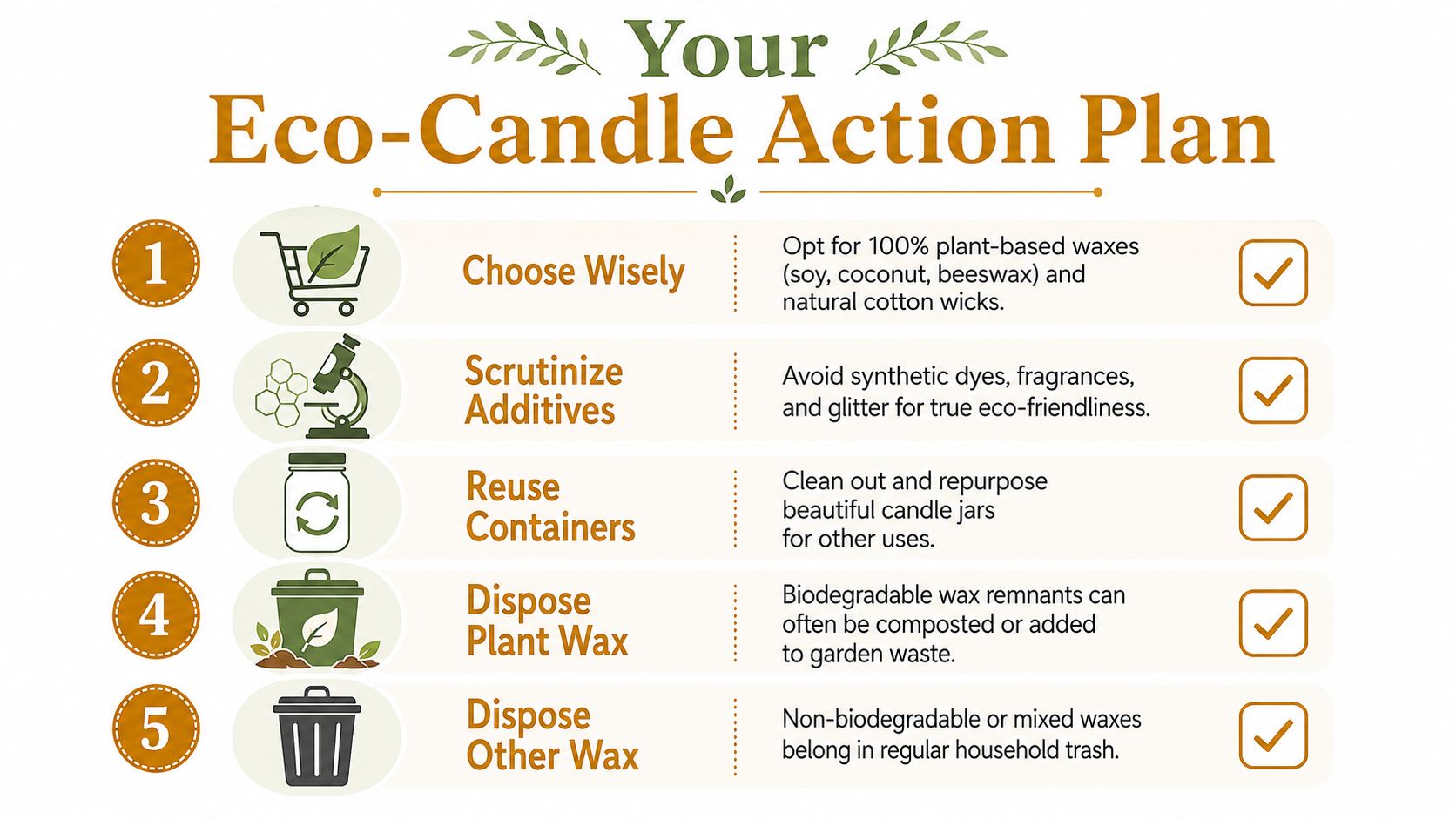
Good candle choices get much easier when you use one simple filter: choose the cleanest full system you can, then dispose of each part realistically.
A simple buying checklist
Use this short checklist when you shop:
- Start with the wax type: Look for clear wording such as 100% soy, beeswax, coconut wax, or plant-based wax.
- Check whether the container can be reused: A vessel with a second life is usually better than one designed only for disposal.
- Scan for extras: Glitter, heavy decoration, and vague blended formulas can complicate the picture.
- Think in systems: Wax, wick, fragrance, and container should make sense together.
For jars you want to keep and repurpose, this guide on how to recycle candle jars is a practical next step.
How to dispose of what you already own
You don't need to throw out every candle you have and start over. Work with what's already in your home.
- If the wax is clearly natural and minimally treated, set aside small leftovers for appropriate compost or garden-waste handling where that fits local practice.
- If the wax is paraffin or an unclear blend, put the residue in regular household waste rather than treating it like compostable material.
- Clean and reuse the vessel whenever possible. Candle jars make useful homes for matches, cotton pads, clips, or small bathroom items.
- For reusable granular wax systems, replace the wick and keep using the remaining material instead of scraping everything out.
The ultimate goal isn't perfection. It's better decisions repeated over time. If you ask better questions at purchase, buy fewer throwaway formats, and reuse containers and refillable wax systems where possible, your candle habit becomes much more aligned with your values.
If you want a lower-waste candle format that works with heat-resistant vessels and can be reset by replacing the wick, explore The Candledust. It offers a plant-based candle sand system that helps you reuse containers, refresh your setup, and avoid the usual leftover-wax cleanup cycle.