
You're standing in a shop, or scrolling late at night, looking for a candle that feels right. You want the glow, the scent, the calm. But one label says soy, another says clean-burning, a third says vegan, and suddenly a simple home detail starts to feel oddly complicated.
That confusion makes sense. In candles, vegan can mean more than “no beeswax,” and sometimes it means less than shoppers assume. If you care about ingredients, indoor air, design, and waste, you need more than a list of vegan candle brands. You need a way to judge what's within the candle, how it burns, and whether the product matches the values printed on the label.
Table of Contents
- Your Guide to Conscious Ambiance
- What Truly Makes a Candle Vegan
- How to Choose Your Perfect Vegan Candle
- An Innovative Alternative Sand Wax Candles
- A Buying Guide for Every Need
- Beyond Vegan The Quest for Non-Toxic Candles
- Frequently Asked Questions About Vegan Candles
Your Guide to Conscious Ambiance
A candle used to be an easy purchase. Today, many buyers want more from it. They want fragrance without guesswork, atmosphere without heavy residue, and materials that line up with how they already shop for food, skincare, and home goods.
That shift isn't small. The global scented candle market was valued at USD 3.60 billion in 2024 and is projected to reach USD 6.00 billion by 2032, growing at a CAGR of 6.60%, while the luxury segment is projected to grow at 10.8% according to Data Bridge Market Research's scented candle market report. Buyers aren't only purchasing fragrance. They're choosing materials, ethics, and a certain standard of living at home.
A lot of people arrive here with the same practical question. “I want a candle that feels luxurious, but I don't want hidden animal ingredients, vague fragrance language, or a product I'll throw away after a few uses.” That's the right question.
A conscious candle choice starts with ingredients, but it ends with how the candle fits into daily life.
For some homes, that means a classic jar candle. For others, it means a refillable format, a lower-waste option, or a softer look that works with layered décor and soft ambient lighting ideas for a calmer interior.
The useful way to shop vegan candle brands is to break the candle apart. First the wax. Then the wick. Then the fragrance. Then the small hidden elements most labels barely mention. Once you know how those pieces work, the category becomes much easier to understand.
What Truly Makes a Candle Vegan
A candle is vegan only when all of its components are free from animal-derived ingredients. That sounds obvious, but many labels stop at the wax and leave the rest of the formula vague.
Wax is only the beginning
It's common to first think of beeswax, and that's fair. A candle made with beeswax isn't vegan. But the issue can go further than that. Some candles use blends, additives, or processing aids that aren't obvious from the front label. A candle can say soy and still raise questions if the rest of the formula isn't clearly disclosed.
Premium vegan candles often use plant-based waxes such as soy or rapeseed. According to Sea Love's vegan candle material guide, these waxes have a lower melting point of 49–54°C, compared with 58–62°C for paraffin, and can retain fragrance oil at up to 10–12% by weight. In plain language, that helps explain why plant wax candles are often chosen for a slower burn and fuller scent performance.
The wick matters too. Cotton and wood wicks can be vegan, but buyers still need brands to explain coatings, stiffeners, and assembly methods. The same goes for dyes and the adhesive used to secure the wick tab.
Fragrance is where many shoppers get lost. A scent can be vegan, but not all brands tell you enough to verify that. Some fragrance blends may include hidden animal-derived components or other additives the average shopper can't identify from marketing copy alone.
If a brand only tells you the wax type, you still don't know whether the whole candle is vegan.
That's why ingredient transparency matters more than broad language like natural, clean, or conscious.
A quick ingredient checklist
When you're reading product pages from vegan candle brands, check for these points:
- Wax disclosure: Look for a clearly named plant wax such as soy, rapeseed, coconut, or a plant-based blend.
- Fragrance transparency: Brands should explain whether the fragrance itself is vegan, not just the wax.
- Wick details: Cotton or wood is useful information, but it's even better when the brand explains the full wick setup.
- Colorants and additives: Dyes, shimmer, and stabilizers deserve the same scrutiny as the wax base.
A good example of a format that makes the wax component easy to understand is Space Grey unscented Candle Sand 1Kg / 2.20lbs, described as Candle Sand – Create Your Own Pearled Candle. The concept is simple: a fine-grained wax that lets you choose the container, size, and wick placement yourself. That doesn't answer every question about the broader category, but it does show how much clearer candle buying becomes when the format and materials are plainly described.
How to Choose Your Perfect Vegan Candle
You are standing in front of two candles that both look clean, modern, and plant-based. One says soy. The other says vegan. Neither label tells you enough to choose with confidence.
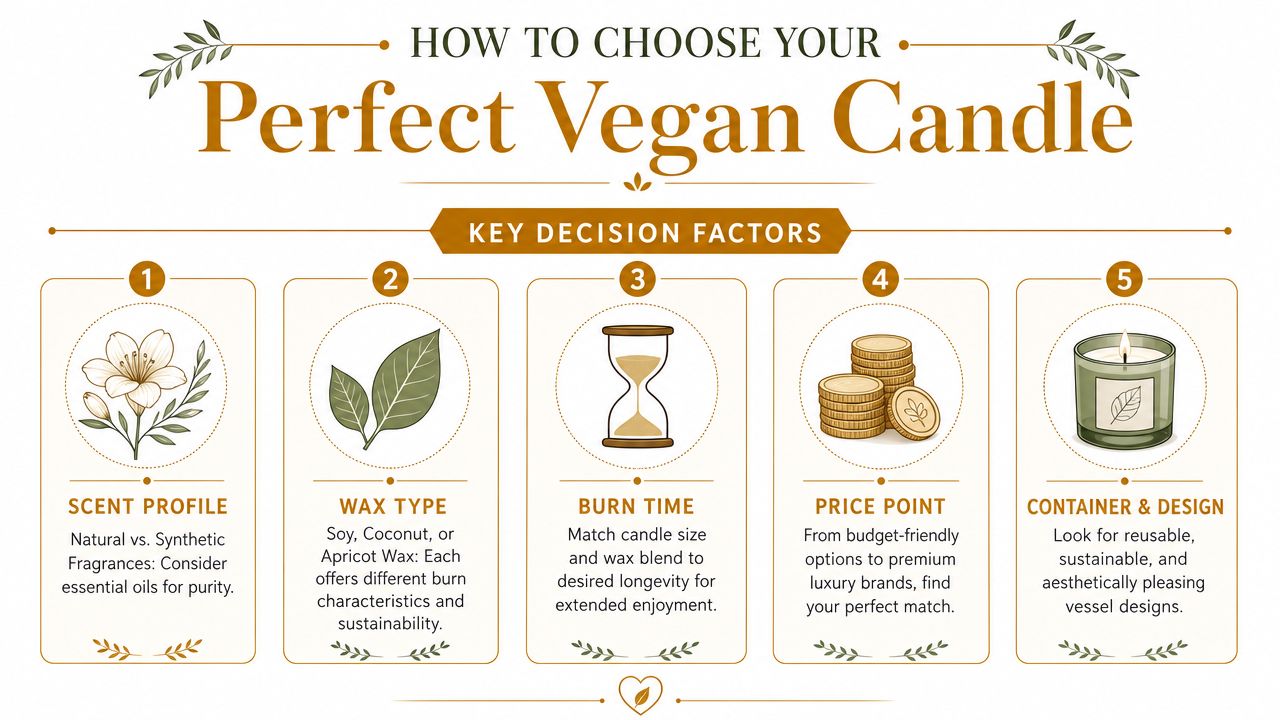
That is why a good buying process helps more than a trend word. A candle is a small system of materials working together. The wax is only one part. Fragrance, wick, dyes, and format all shape whether the candle fits your values and your space.
Start with wax type
Wax sets the foundation. It affects how the candle burns, how scent is released, and what kind of user experience you get over time.
If you want a clearer sense of how plant waxes compare, this guide to eco-friendly candle wax gives helpful context on the differences between common options.
Here is a practical overview:
Vegan Candle Wax Comparison
| Wax Type | Source | Pros | Cons |
|---|---|---|---|
| Soy | Soybeans | Common in vegan candles, familiar performance, often works well with fragrance | Sourcing and blend details are not always explained |
| Coconut | Coconut-derived blend | Creamy finish, often used in premium candles | Usually blended with other waxes, so ingredient clarity matters |
| Rapeseed | Rapeseed plant | Popular in many European plant-wax candles | Less familiar to some shoppers, which makes product descriptions more important |
| Apricot blends | Plant-based blend | Often chosen for a refined, luxury feel | Usually sold as a blend, with limited detail on the full formula |
| Sand wax soy-blend | Pearled plant-based wax format | Flexible styling, easy vessel choice, more control over how much wax you use | Newer format, so first-time buyers may need a quick explanation |
A useful way to read this table is to treat wax like the fabric in a well-made garment. Linen, wool, and cotton can all be good choices, but they behave differently. Candle wax works the same way. “Plant-based” is a starting point, not a full description.
Check how clearly the brand explains the full candle
A strong vegan candle listing should answer basic material questions without making you hunt for them. If the product page is vague, the uncertainty usually falls on the buyer.
Vegan.com's explanation of candle labeling notes that the word vegan can be misleading when it refers only to the wax and leaves fragrance oils, dyes, or wick assembly unexplained. That is where many shoppers get stuck. The front label sounds simple, but the full candle may still need closer reading.
Use these questions as your filter:
- Is the wax clearly named, not implied by vague words like natural or clean
- Does the brand explain whether the fragrance is vegan as well as the wax
- Are dyes, shimmer, or decorative additives identified
- Is the wick described clearly enough to understand what you are burning
Short ingredient lists often signal better transparency, but short is not the same as clear. A two-word description can still hide important gaps.
Match the candle format to the way you actually live
This part is often skipped in brand roundups, but it matters. A candle for a bedside table, a dinner party, and a gift all solve different problems.
Traditional jar candles are familiar and convenient. They suit buyers who want a finished object with very little setup. Loose pearled wax, often called candle sand, suits buyers who want more flexibility in vessel choice, burn size, and visual styling. It helps to view format as a design decision as much as a material decision.
That shift is especially useful for buyers who want a more modern plant-based option. Instead of being locked into one jar and one shape, you can create the candle around the room, the season, or the occasion.
Look for signals of thoughtful design, not just ethical claims
Price, scent family, and packaging still matter. So does texture. In newer plant-based formats such as candle sand, texture changes how the candle looks when poured, how polished the surface appears, and how refined the whole experience feels in the home.
This is one reason The Candledust stands out in the category. Its silky #Perfectpearl texture introduces a more considered version of plant-based candle design, one that feels contemporary rather than improvised. For buyers comparing vegan candle brands, that is a useful distinction. A candle can meet ethical expectations and still offer a beautiful, premium sensory experience.
The strongest choice usually comes from a simple order of priorities. Start with verified materials. Check for clear fragrance and additive disclosure. Then choose the format and finish that suit your home best.
An Innovative Alternative Sand Wax Candles
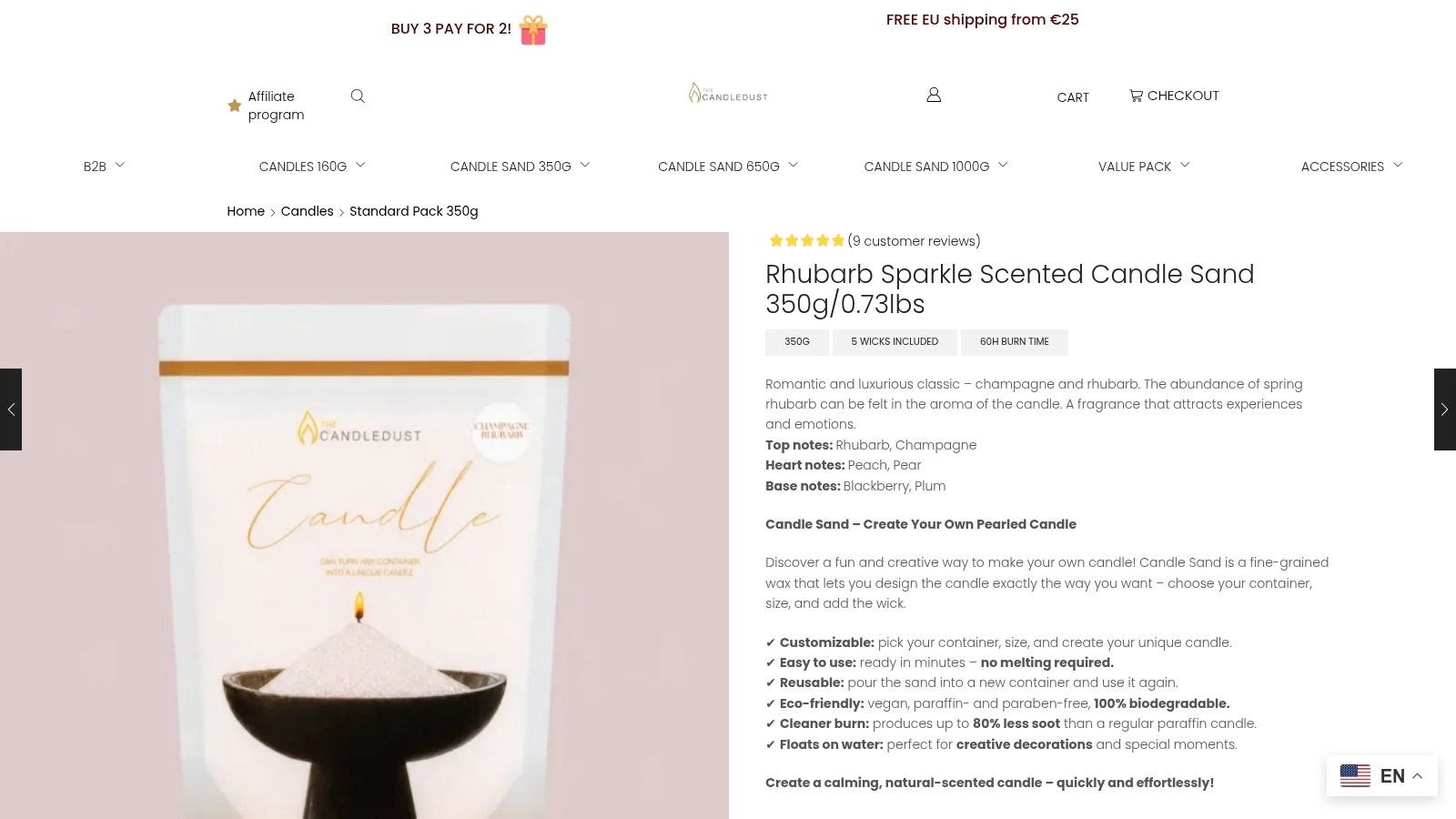
A candle does not have to arrive as a fixed object in a single jar. Candle sand changes the format itself. Instead of starting with one vessel and one finished shape, you start with loose wax pearls and build the candle to suit the moment.
How candle sand works
According to Aroma Paradise's explanation of sand candles, sand wax is composed of loose, pearled wax beads, often from a soy blend, that can be poured into a heat-safe vessel. The burn behavior is simple to understand. The wax around the wick melts first, while the surrounding pearls usually stay in place until they are needed.
A useful comparison is loose-leaf tea versus a prepacked tea bag. Both can deliver fragrance and warmth, but one gives you more control over quantity, presentation, and the container you use. Candle sand works in a similar way. You can pour it into a minimalist bowl, a vintage glass, several small vessels for a tablescape, or a wider centerpiece for an event.
This format also addresses a familiar frustration with traditional candles. If a jar candle tunnels or burns unevenly, much of the wax can become awkward to use. With loose pearled wax, the setup is easier to refresh because you are working with separate wax pearls rather than one solid block.
Why texture matters
Texture may sound like a minor detail until you see different candle sands side by side. Grain size affects how level the surface looks, how neatly the wick stands, and how refined the finished candle appears in a room.
That is why processing matters. Higher-quality candle sand is made to produce smooth, even pearls with fewer irregular pieces. The Candledust describes this finish as #Perfectpearl, a silky texture designed to create a cleaner, more polished surface. For shoppers comparing plant-based candles, that detail helps explain why one sand wax product can feel carefully made while another feels rougher or less consistent.
The visual difference appears before the candle is even lit.
That matters because candle sand is not only a wax choice. It is also a styling material. In homes, hospitality spaces, and event settings, the surface finish contributes to the overall impression just as much as the fragrance does.
A different way to build ambiance
Some buyers want a ready-made candle. Others want a format that adapts to seasonal decor, dinner tables, or reusable vessels they already own.
A short visual makes the format clearer:
In practical terms, candle sand suits buyers who care about:
- Creative control: You choose the vessel, shape, and scale.
- Easy resets: You can replace the wick and refresh the arrangement without scraping out a spent jar.
- Lower waste in use: Much of the loose wax remains available for future burns.
- Event consistency: Coordinating multiple vessels is simpler when the wax source stays visually uniform.
For anyone researching vegan candle brands, this format broadens the conversation. A plant-based candle can be more than a standard jar with a different wax label. Candle sand offers a flexible, design-conscious option, and The Candledust is one brand that has helped shape that approach with scented, plant-based candle sand and its distinctive silky pearl texture.
A Buying Guide for Every Need
Different buyers use candles differently. A home fragrance lover, a wedding planner, and a hotel team aren't solving the same problem, even when they all want vegan options.
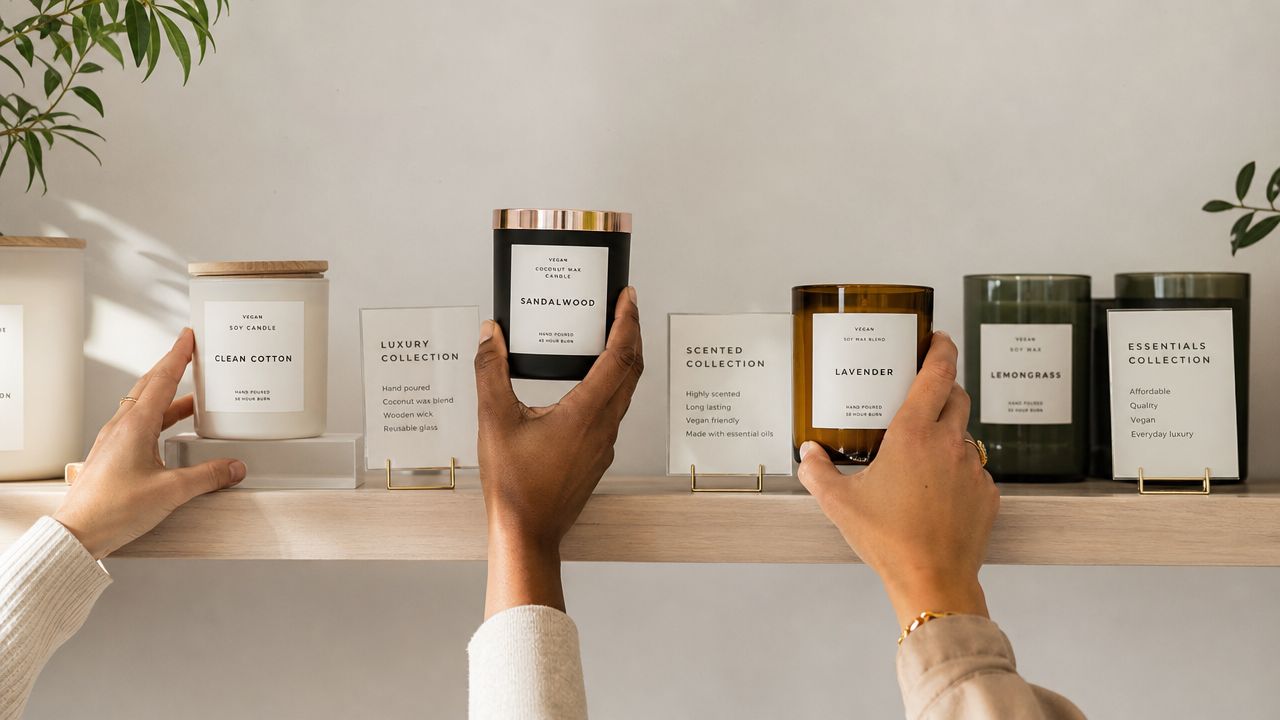
For your home
At home, scent and visual harmony usually come first. You want a candle that fits the room, doesn't fight with your décor, and feels calm rather than cluttered.
Start by matching candle style to the space:
- Bedrooms: Softer scents and simpler vessels usually feel more restful.
- Living rooms: Layered fragrance and decorative impact tend to matter most here.
- Bathrooms: Smaller formats often work better than oversized statement candles.
If you like to rotate your styling often, reusable formats make that easier. A neutral wax color can move from one vessel to another without forcing you into a single look for the season.
For event planners and weddings
Event buyers care about atmosphere, but they also care about setup time, reset speed, and consistency across many tables.
Sand wax is useful here because it allows planners to work with different heat-safe vessels while keeping the candle source visually coordinated. That matters for weddings, private dinners, and brand events where every table may need a slightly different arrangement.
A practical checklist helps:
- Choose the vessels first: This avoids buying candles that clash with the tablescape.
- Test wick placement: The visual center matters as much as the flame.
- Think about cleanup early: Reusable loose wax is often easier to manage than a large number of partly spent jars.
For events, flexibility often matters more than tradition.
For hospitality and B2B
Restaurants, hotels, and venue teams usually need a candle system, not a single product. They need reliable ambiance across repeated service, décor consistency, and a format staff can handle without fuss.
That's why many professional buyers focus on these questions:
- Can the look be repeated across many tables or rooms
- Can the vessel style match the brand interior
- Can staff refresh the candle setup without creating unnecessary waste
- Does the supplier offer bulk or professional ordering options
For hospitality, the strongest vegan candle brands are often the ones that make operations easier while still looking refined. A beautiful candle that's hard to reset can become a burden in service. A flexible refill format often fits commercial use better.
Beyond Vegan The Quest for Non-Toxic Candles
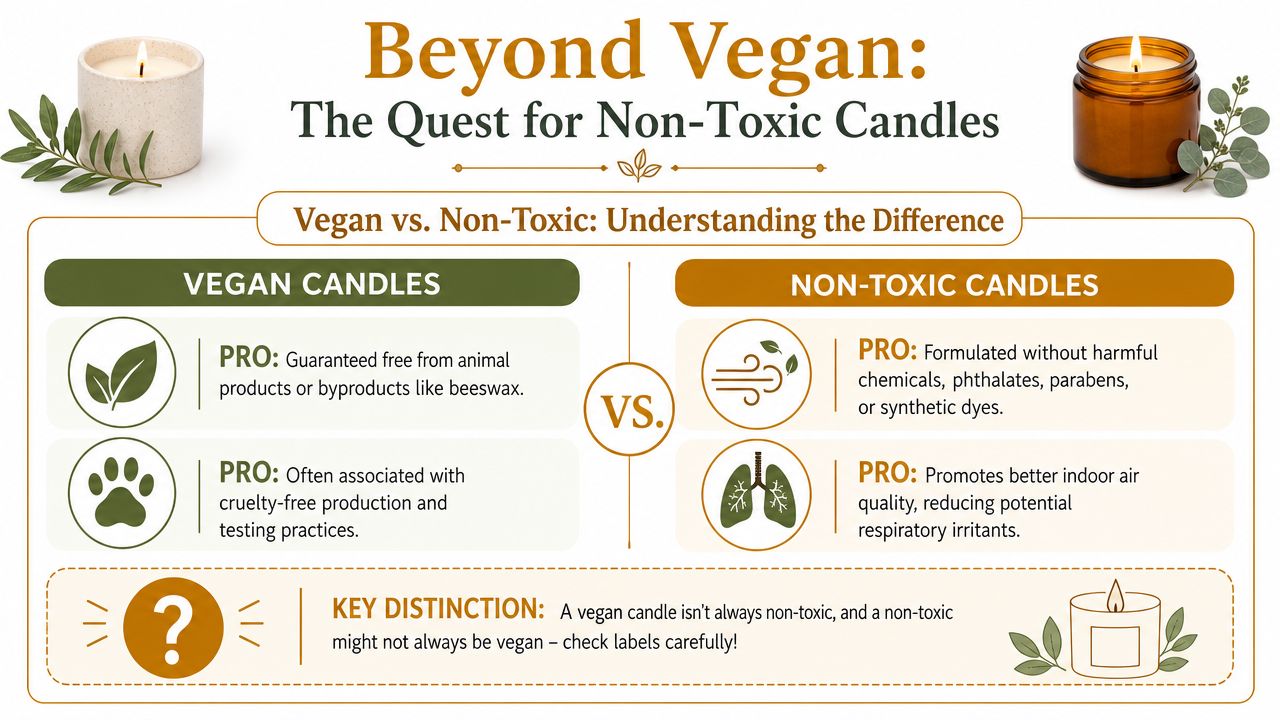
A vegan candle can still be a poor choice for indoor air quality. That's the part many buyers miss.
Why vegan is not the whole story
As Healthline's discussion of non-toxic candles points out, consumers often conflate vegan with non-toxic, yet many vegan candles still use synthetic fragrance oils containing VOCs. The same source notes that a clean candle needs vetting beyond the wax type, including whether it's free of phthalates, parabens, and other harmful additives.
That means a soy candle isn't automatically a cleaner candle. A plant-based wax can still carry a fragrance system you'd rather avoid. The reverse can also be true. A candle may be formulated with cleaner fragrance standards but still not qualify as vegan if other components include animal-derived materials.
What to check instead
When you want a candle that feels both ethical and more carefully formulated, look for fuller product disclosure.
- Fragrance standards: Check whether the brand explains what it excludes.
- Wick materials: Lead-free cotton is a useful detail when brands provide it.
- Ingredient transparency: The more specific the brand is, the less you have to guess.
- Operational context: If you buy for restaurants or guest spaces, waste handling and material choices matter too.
Hospitality teams that are thinking about sustainability more broadly may also find this Guide for UK hospitality businesses helpful when comparing disposal and material claims across products used in service environments.
If you want a more focused look at the wax side of this question, this non-toxic candle wax guide is a useful next read.
Vegan tells you one important thing. It does not tell you everything.
Frequently Asked Questions About Vegan Candles
Are vegan candles always better for sensitive people
Not always. Some people do better with simpler formulas and clearer ingredient disclosure, but sensitivity often relates to fragrance ingredients as much as wax choice. A vegan candle may still contain scent components that some buyers prefer to avoid.
Why do some vegan candles cost more
Plant-based waxes, more careful sourcing, premium vessels, and fuller ingredient standards often place these candles in a more considered category than mass-market products. Some buyers also pay for design, refillability, or artisanal production rather than just burn time.
What should you do with the jar or leftover wax
Reusable jars are worth keeping if they're heat-safe and easy to clean. They can become storage, mini planters, or new candle vessels. In refill formats, the value is even clearer because the container can stay in use while the candle material changes.
A lot of shoppers start by looking for vegan candle brands and end up wanting something more specific. They want transparency, cleaner composition, less waste, and a format that works beautifully in real life. That's why reusable candle systems and plant-based pearled wax have become such a compelling direction for modern candle lovers.
If you want a candle format that combines plant-based materials, refillable use, and flexible styling, explore The Candledust. It offers candle sand designed for heat-resistant vessels, making it a practical option for home décor, events, and hospitality settings where reusability and presentation both matter.