
What's really making your candle feel “clean.” The wax, or the whole formula you're burning into your living room air?
That's the gap most candle advice misses. People shop for soy, beeswax, or coconut and assume they're done. But non toxic candle wax is only one piece of the picture. A candle can start with a plant-based wax and still create a less healthy burn if the wick is poorly chosen or the scent blend relies on questionable fragrance ingredients.
If you love candles for mood, décor, and that soft end-of-day glow, you don't need to give them up. You just need a smarter filter. Think of candle safety as a three-part decision: wax + wick + fragrance. When those three work together, your candle can feel just as luxurious as it looks.
Table of Contents
- Rethinking the Simple Flame
- What Really Makes a Candle Toxic
- A Guide to Common Non Toxic Candle Waxes
- Beyond the Wax The Hidden Health Culprits
- The Rise of Candle Sand A Modern Non-Toxic Solution
- How The Candledust Perfects the Non-Toxic Experience
- Your Practical Guide to Buying and Burning Safely
Rethinking the Simple Flame
A candle looks simple. Wax, wick, fire, fragrance. But the moment you light it, you're starting a tiny combustion system indoors.
That sounds dramatic, but it's useful. When people ask which candle wax is safest, they're usually trying to protect their home air without giving up beauty or atmosphere. The complete answer isn't just “buy natural wax.” It's “look at the entire candle like a formula.”
A stylish candle on a coffee table can still burn in a messy way if the ingredients don't work together. A cleaner option can come in a surprisingly modern format, from classic beeswax pillars to newer plant-based granular waxes that let you build your own candle in a heat-safe vessel. The aesthetic part and the safety part don't need to compete.
Practical rule: If you want a candle that feels healthier, don't ask only what the wax is. Ask what the wick is made from and how the scent was created.
That one shift clears up most of the confusion. It explains why some candles leave dark marks near the rim, why some scents feel harsh even when the wax sounds natural, and why ingredient transparency matters more than front-label buzzwords.
A good candle should do three things well. It should use a cleaner-burning wax, a proper wick, and a fragrance approach you'd feel comfortable burning in a lived-in space. Once you start reading labels that way, shopping gets much easier.
What Really Makes a Candle Toxic
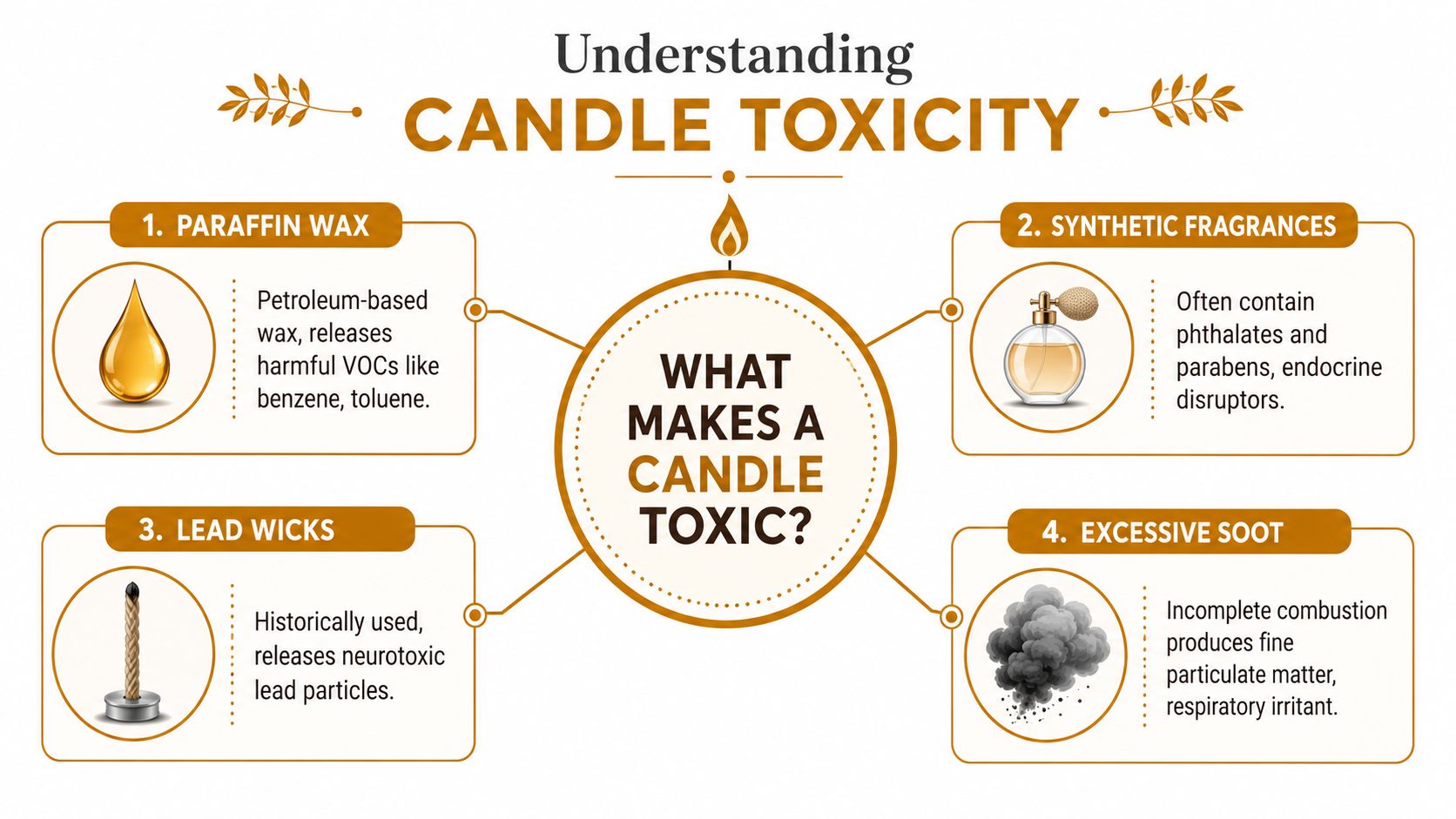
The word toxic gets used loosely, so it helps to make it concrete. A candle becomes a concern when burning it adds unwanted byproducts to indoor air. That can include soot, volatile organic compounds, and other irritants produced when fuel and fragrance burn less cleanly.
Here's the easiest way to think about it. Wax is the fuel. Some fuels burn cleaner than others.
The fuel matters
Paraffin is where many air-quality concerns begin. It's a petroleum-based wax, so when people describe paraffin candles as the indoor version of burning a dirtier fuel, that comparison makes sense. A 2009 scientific study revealed that burning paraffin wax releases toxic gases and volatile organic chemicals including toluene and benzene, both of which are known carcinogens (paraffin, soy, and beeswax comparison).
That doesn't mean every paraffin candle will fill a room with visible smoke. It means the fuel source itself raises the baseline risk. If your goal is a more thoughtful home environment, paraffin is usually the first thing to rule out.
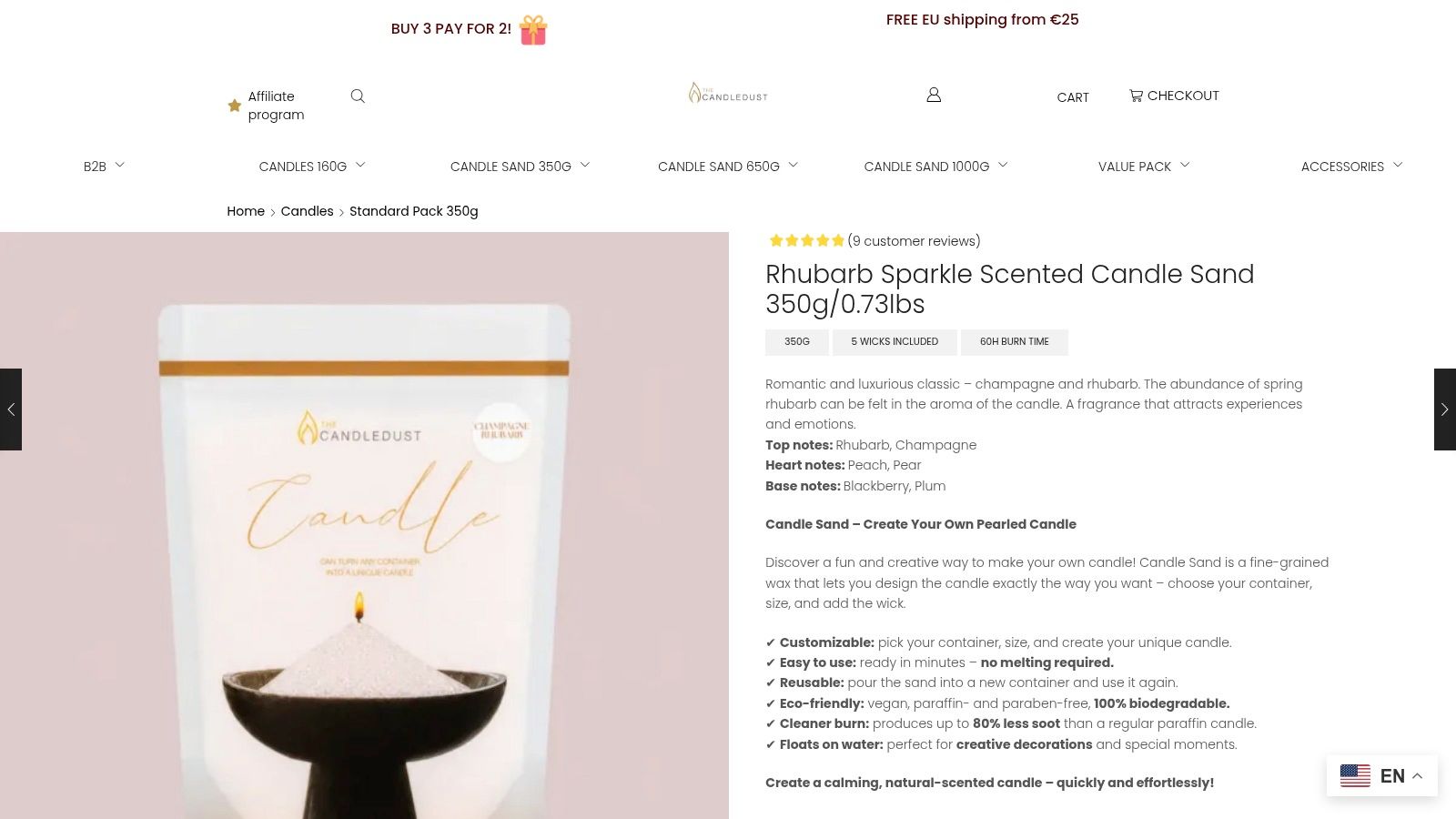
By contrast, plant-based options are often chosen because they avoid petroleum as the starting point. If you've seen formats like Rhubarb Sparkle Scented Candle Sand 350g/0.73lbs, the factual point to understand is simple: Candle Sand – Create Your Own Pearled Candle. It's a fine-grained wax format that lets users choose the container, size, and wick placement themselves.
The other things floating in the air
Two candle terms confuse shoppers all the time.
- Soot means tiny dark particles created by incomplete burning. You may notice it as black residue near the jar rim or on nearby surfaces.
- VOCs are gases released during combustion. Some are more concerning than others, especially in enclosed spaces.
- Carcinogens are substances associated with cancer risk. Benzene and toluene are the names most often discussed in paraffin conversations.
Burn quality isn't just about scent throw or how pretty the melt pool looks. It's about what joins the air while the candle is lit.
The tricky part is that a candle can smell pleasant and still burn in a way you'd rather avoid. Fragrance can mask the experience. That's why “smells clean” and “is clean-burning” aren't the same thing.
If you want a cleaner home ritual, start by treating candles the way you'd treat any home product that releases something into the air. Look at the fuel first. Then move on to the rest of the formula.
A Guide to Common Non Toxic Candle Waxes
Once you remove paraffin from the shortlist, the candle aisle gets easier to read. Most of the conversation then shifts to soy, beeswax, coconut, and rapeseed. Each has a different feel, different strengths, and a slightly different tradeoff profile.
How to compare waxes without overcomplicating it
Soy wax is one of the most familiar alternatives. It's derived from hydrogenated soybean oil, and it's often the entry point for people looking for a more conscious candle. A USDA-backed study demonstrated that 100% soy wax candles release almost no soot and produce formaldehyde levels so minimal they are considered safe for indoor environments (USDA-backed soy candle findings). If you want a deeper look at plant-based options, this guide to eco-friendly candle wax is a helpful next read.
Beeswax sits in a different category for many shoppers. It's often treated as the cleanest traditional wax option, especially when it's pure and unscented or paired with simple, plant-based scenting. It appeals to people who want a more minimal ingredient story.
Coconut wax is popular in modern boutique candles because it tends to feel soft and luxurious. It's often used in blends rather than alone. People usually choose it for its upscale texture and scent performance, though the exact formula matters a lot because many coconut candles are blended systems.
Rapeseed wax has become more visible in European-made candles and design-led brands. It's another plant-based route, often appreciated by shoppers who care about regional sourcing and a more understated, creamy burn profile.
A quick comparison table
| Wax type | Origin | Why people choose it | Watch for |
|---|---|---|---|
| Soy | Soybeans | Familiar, widely available, cleaner-burning when it is 100% soy | Blends that still include petroleum-derived wax |
| Beeswax | Honeybee-produced wax | Traditional clean-burn reputation, simple ingredient appeal | Higher cost and less flexibility in some scented formats |
| Coconut | Coconut-derived wax | Smooth texture, often used in premium candles | Usually appears in blends, so label clarity matters |
| Rapeseed | Rapeseed plant oil | Plant-based, modern, often favored in European design candles | Less common, so ingredient details can vary by brand |
A quick note on labeling confusion. Some shoppers assume a candle labeled “soy” must be fully soy. That isn't always a safe assumption. Ingredient transparency matters because wax names on the front label don't always tell the whole story.
Here's the simplest way to choose. If you want a classic candle, 100% soy and 100% beeswax are the easiest benchmark categories to look for first. If you want something more design-flexible, blended plant wax systems can still be worth considering, but only when the maker clearly explains the full candle composition.
- For minimalists: Beeswax often fits the “less but better” mindset.
- For everyday scented candles: Soy remains a practical, familiar choice when the formula is transparent.
- For design lovers: Coconut and rapeseed often appear in more curated, boutique-style products.
- For flexible styling: Granular plant wax formats can open up a different category entirely, especially if you like changing vessels or refreshing the candle layout.
Beyond the Wax The Hidden Health Culprits
A lot of people stop at the wax label. That's where the biggest misunderstanding starts.
Why wax alone doesn't decide safety
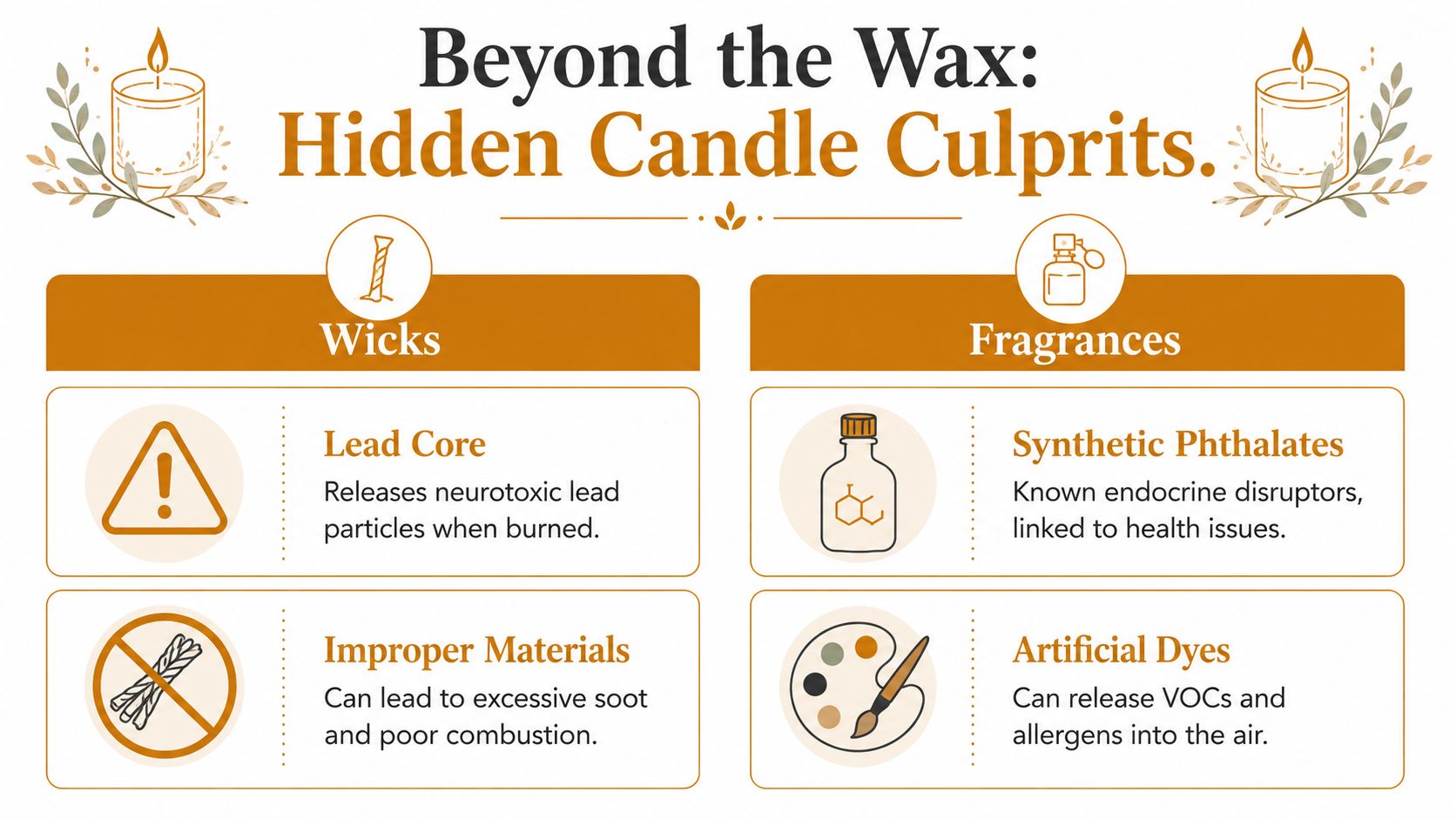
The key issue is straightforward. The “Natural Wax = Automatically Safe” assumption overlooks critical fragrance and wick variables. While existing content overwhelmingly equates “non-toxic” solely with natural waxes, it fails to address that a candle made with 100% soy wax can still be toxic if it uses synthetic fragrances containing phthalates or metal-core wicks (guide to ingredients to look for and avoid).
That means a shopper can do one thing right and still miss the bigger picture. A plant wax base helps, but it doesn't give every candle a free pass.
Wicks matter because they control the burn. Fragrance matters because it becomes part of what you're breathing once the candle is lit. If either one is poor quality, the candle can feel harsher than expected, even if the wax itself sounds reassuring on the label. If this is the part of candle shopping that tends to feel vague, this overview of essential oil candles helps clarify why fragrance sourcing changes the whole experience.
A simple three-part checklist
Use this when you're standing in a shop or reading a product page.
Wax
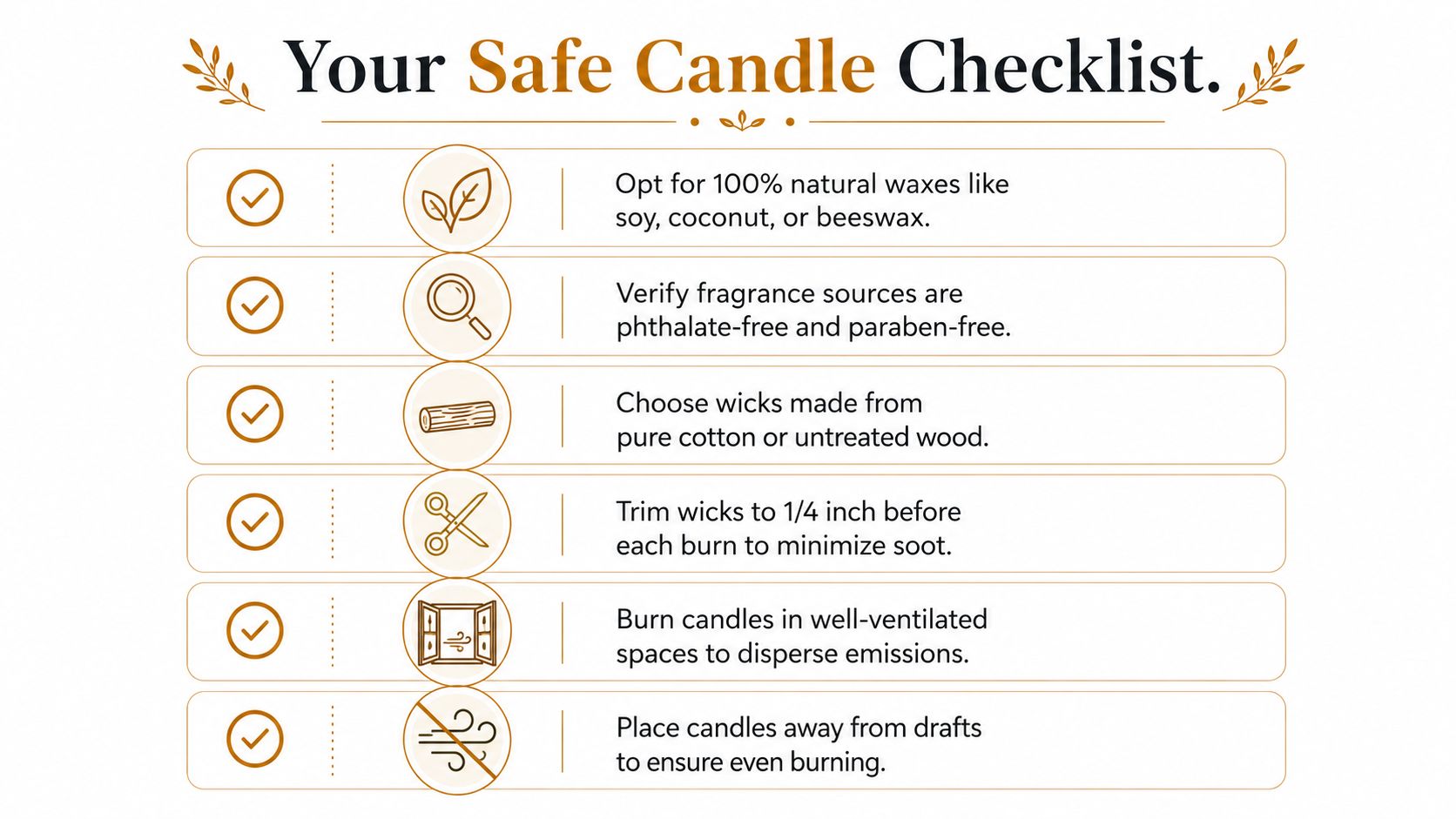
Start by confirming whether the wax is clearly identified. “100% soy” or “100% beeswax” is easier to assess than a vague “natural blend.”
Wick
Look for cotton or untreated wood. A wick should support a steady, even burn without adding unnecessary concern.
Fragrance
Don't let this become the invisible category. Look for brands that explain whether the scent is plant-based, essential-oil-based, or phthalate-free, instead of hiding everything under the single word “fragrance.”
A safer candle isn't just a wax decision. It's a composition decision.
That's also why newer candle formats have become so interesting. When a brand thinks about the full system instead of just the wax headline, the candle starts to feel much more intentional.
The Rise of Candle Sand A Modern Non-Toxic Solution
For years, the candle choice felt fixed. You bought a jar, a pillar, or a taper. Then candle sand started changing what a candle could be.
Why the format changes the experience
Sand wax is a plant-based, paraffin-free granular wax compatible with most fragrance oils, ensuring non-toxic burning without the carcinogenic emissions associated with petroleum-based paraffin (plant-based sand wax overview). That description matters because candle sand isn't just another scent in another vessel. It changes the structure of the product itself.
Instead of one solid block of wax, you're working with loose granules or pearls. You pour them into a heat-safe container, place the wick, and light only the area around that wick. That creates a very different burn experience from a standard jar candle.
The most interesting part is the mechanics. Candle sand works on a partial-melt basis. Only the wax near the wick liquefies, while the surrounding granules stay loose and available for future use. The result is a candle that behaves more like a flexible lighting material than a fixed object.
Why people use it differently from jar candles
That partial-melt setup changes how people style and reuse their candles.
- You can change the vessel: A heat-safe bowl, glass, or decorative container can become the candle.
- You can replace the wick: Once one wick is finished, the remaining wax can still be used again.
- You can refresh the look: Because the wax stays loose outside the small burn area, restyling feels easy instead of wasteful.
It's one of the rare candle formats that feels both decorative and practical.
For home décor lovers, that's a big shift. The candle becomes part of the styling process rather than a finished item you consume once and discard. For event tables, hospitality spaces, and people who like to switch scents or seasonal color palettes, that flexibility makes candle sand feel current in a way traditional candles often don't.
A closer look at what candle sand is made of helps explain why this format fits so neatly into the non toxic candle wax conversation. It doesn't just avoid paraffin. It also offers a cleaner, more controlled way to use wax in the first place.
How The Candledust Perfects the Non-Toxic Experience
Not all granular wax looks or behaves the same. The shape and consistency of the pearls affect how refined the finished candle feels on the table and how easy it is to pour, style, and reset.
Why pearl quality matters
The production side is more technical than most shoppers realize. The production of high-quality granular wax requires specialized cooling and agglomeration processes to create uniform, spherical beads that prevent lumping and ensure a silky, smooth texture (granular wax and pearled candle production).
That's the difference between wax that looks dusty or uneven and wax that feels polished enough for a living room console or wedding table. Special processing ensures silky, smooth, even candle pearls without lumps and uneven particles. The Candledust calls it #Perfect pearl, and that consistency is the most important talking point because it directly shapes the visual finish and user experience.
The brand is also one of the first sand wax candle producers in the world, and among the first to introduce scented sand candles. That history matters because scented granular wax has to balance form, function, and presentation in a format that still feels elegant.
What that looks like in real use
In practical terms, smoother pearls make the surface look more finished and the pour feel more controlled. That matters if you care about décor as much as ingredients. Candle sand should look intentional, not crafty in the messy sense.
The Candledust is the one publisher product worth noting here because it sits exactly at that intersection of plant-based wax, reusable format, and styled presentation. Its candle sand is presented as a fine, paraffin-free, reusable wax format for heat-safe vessels, with scented and unscented options designed around that flexible partial-melt use.
Some candle products are mostly about fragrance. Others are mostly about appearance. Candle sand works best when it handles both without making the safety question feel secondary.
That balance is why premium granular wax stands out. You're not only choosing a non toxic candle wax direction. You're choosing a format that supports cleaner materials, styling freedom, and a more curated home ritual.
Your Practical Guide to Buying and Burning Safely
A smart candle routine doesn't need to be complicated. You just need a short filter and a few good habits.
What to check before you buy
- Read the wax line carefully: Look for clear wording such as 100% soy or 100% beeswax, or a plainly identified plant-based granular wax.
- Check the wick material: Cotton and untreated wood are the easiest options to feel comfortable with.
- Scan fragrance language: Brands that explain their scent approach tend to be easier to trust than brands that stay vague.
- Be cautious with blends: A front label can sound natural while still hiding petroleum-derived content.
How to burn more cleanly at home
Even a better candle needs proper use.
- Trim the wick: A shorter wick helps control soot and supports a steadier flame.
- Keep it away from drafts: Moving air can make a candle flicker, tunnel, or smoke more than it should.
- Use ventilation: You don't need to overthink this. Just don't burn candles in stale, enclosed air for long stretches.
- Choose the right vessel: With candle sand, use a heat-safe container and keep wick placement stable.
The goal isn't perfection. It's reducing avoidable problems. When you combine a cleaner wax choice with a proper wick, better fragrance transparency, and simple burn habits, candles become much easier to enjoy with confidence.
If you want a more design-forward way to approach candle safety, The Candledust offers plant-based candle sand that lets you build a candle in your own heat-safe vessel, replace the wick after use, and keep the styling flexible without relying on paraffin-based wax.