

You're standing at a table with a pretty thrift-store bowl, a bag of candle sand, and a match in your hand. The bowl looks right, the color works, and the whole setup feels easy until you remember that a glass vessel can go from elegant to dangerous the moment heat starts moving through the sidewall. That's the question with a glass bowl for candles, not “does it look good,” but “will it survive repeated burns without cracking, chipping, or turning into a heat trap?”
Glass earned its place in candle making for a reason. Human-made glass goes back to about 4000 BC, so this material has more than 6,000 years of history behind it, and modern candle use leans on the same core strengths, nonporous structure, visual clarity, and the ability to handle heat cycles when the vessel is made correctly. In the U.S. candle market, retail sales are estimated at about $3.14 billion annually, container and jar candles are the most popular type among American consumers, and 35% of sales happen during Christmas and the holiday season while 65% are non-seasonal, which tells you this isn't a niche styling choice. It's a mainstream format built for both daily ambiance and gifting demand, and the right bowl matters because the vessel is part of the product, not just the décor.
The candle buyer data helps explain why glass bowls stay commercially important. Candles are seen as suitable gifts for 76% of holidays, 74% of housewarmings, 66% of hostess or dinner-party occasions, 61% of thank-yous, and 58% of adult birthdays, so attractive vessels get used in exactly the settings where presentation matters most. If you want a vessel that still looks polished after repeated use, start with the safety rules, then worry about styling. The Candledust's vessel guidance is a useful reference point for that mindset, because it treats the bowl as a reusable tool rather than a one-off prop. glass candle containers guidance
Table of Contents
- The Moment a Pretty Bowl Becomes a Hazard
- The Pre-Burn Vessel Checklist
- Pouring Sand Wax the Right Way
- How Bowl Shape Changes the Burn
- Sizing the Wick to the Bowl
- Styling Ideas for Home, Events, and Hospitality
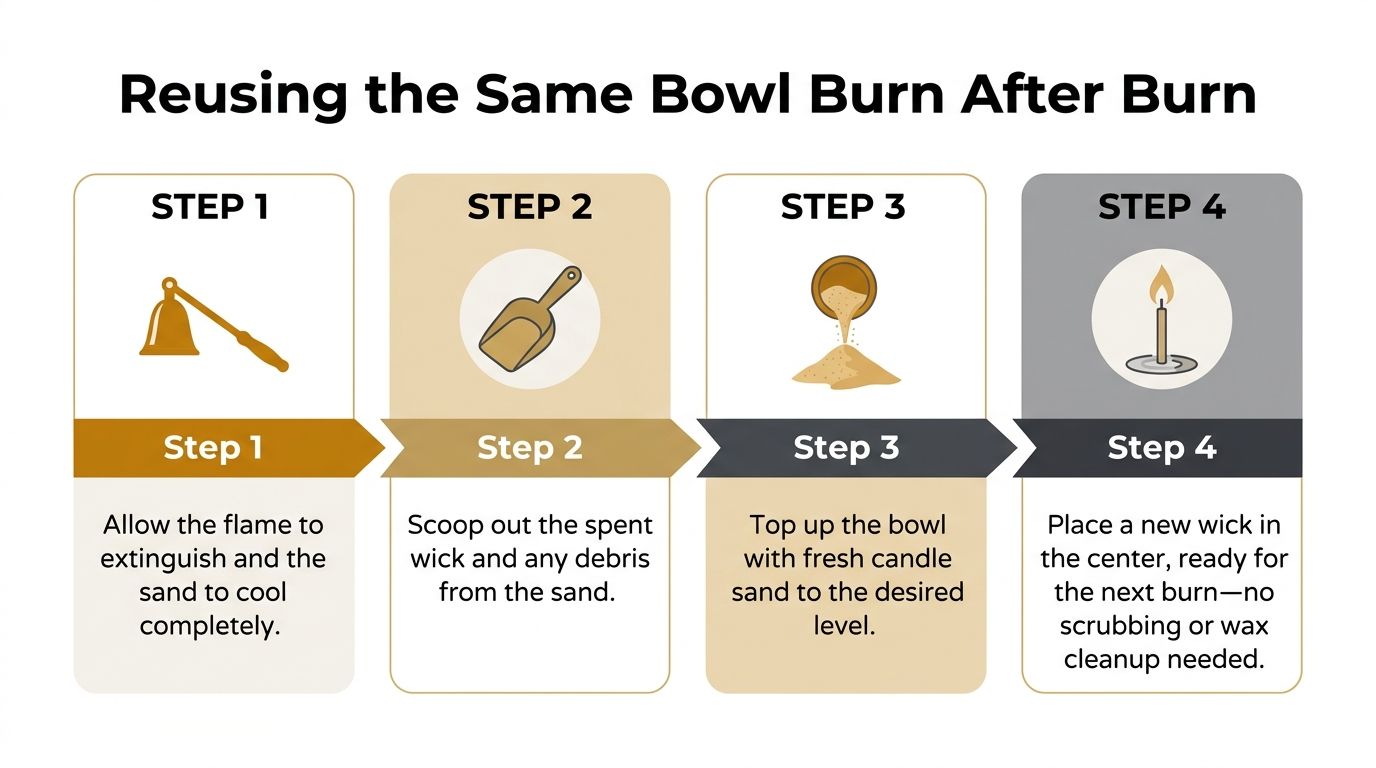
- Reusing the Same Bowl Burn After Burn
The Moment a Pretty Bowl Becomes a Hazard
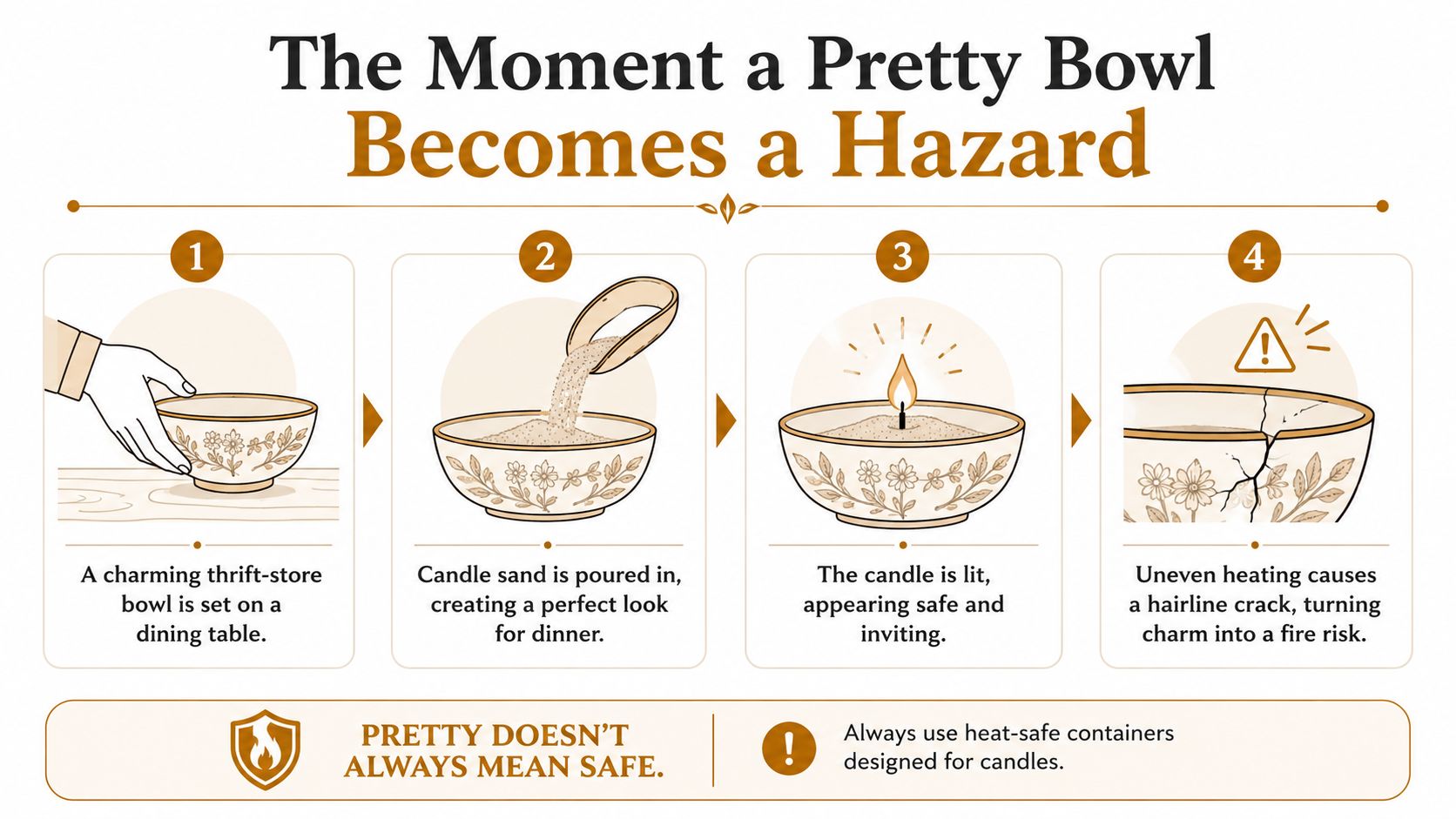
A candle table can fool people fast. A charming bowl from a market stall or thrift shop looks right under dinner light, and once you pour in sand wax, it feels finished before the flame even starts. Then the burn begins, heat concentrates where the glass is thinnest, and a vessel that looked decorative suddenly behaves like weak equipment.
Treat the bowl like gear, not décor
That shift in mindset is the whole game. A glass bowl for candles has to be judged as a working container that handles repeated heat, rather than a styling object designed for a single photo. Candle-safe glass should be thick, smooth, nonporous, and free of weak seams, cracks, or bubbles, because damaged or thin glass is more likely to shatter under heat. Straight-sided jars are preferred because they reduce sidewall heat concentration and help limit tunneling, according to glass container safety guidance.
Practical rule: if the bowl's beauty is doing all the work and the glass itself gives you no safety clues, skip it.
That warning matters even more with decorative bowls that flare, pinch, or curve inward. Those shapes may look elegant on a shelf, but they are poor candidates for repeated live-flame use because they trap heat where the rim or sidewall cannot shed it cleanly. The old habit of treating any transparent dish as candle-ready has burned enough people already. Don't repeat it.
Why glass is still the right material
Glass remains the workhorse for a reason. It shows color and texture clearly, it does not absorb wax the way porous materials can, and it can be made into candle-safe forms that hold up under heat cycles. That is why the market keeps returning to containers, jars, and bowls whenever the goal is a vessel that is both decorative and practical.
The key question is whether that specific vessel was built to live with flame, heat, and repeated use. If the answer is unclear, keep looking.
The Pre-Burn Vessel Checklist
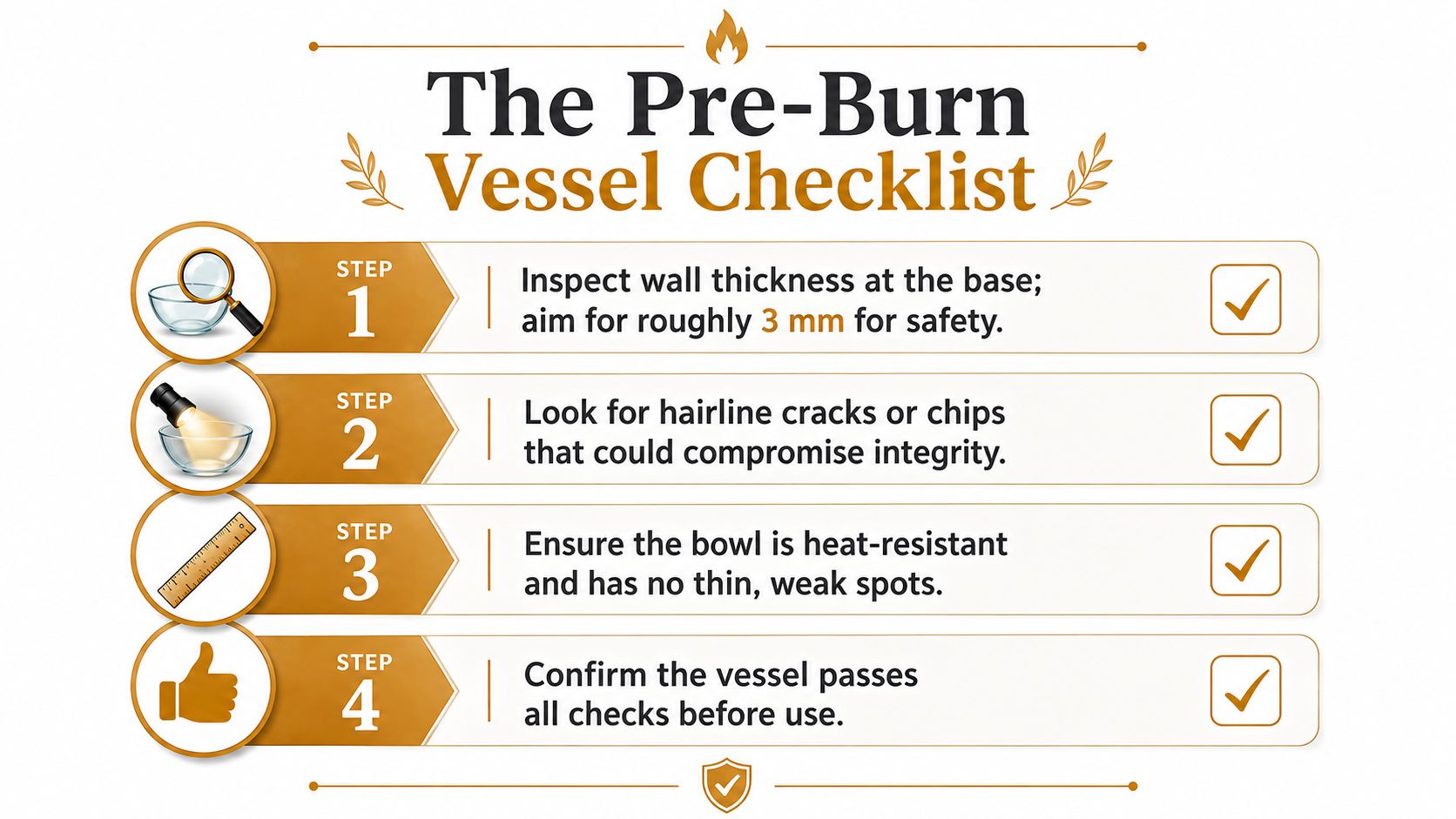
Before a bowl ever gets wax or a wick, inspect it like you're approving equipment for service. You can do this at the table in under a minute, and you should. Aim for a standard that goes beyond “seems sturdy,” the bowl must pass every basic test for heat and stability.
Check the body first
Start with the glass itself. Look for hairline cracks, chips on the rim, visible bubbles, or rough seams, because those defects are exactly where stress shows up first when the bowl heats and cools. Candle-making guidance also points to thick-walled glass of at least about 3 mm at the base as a safer standard for repeated burn cycles, and that's the line I use before trusting any bowl for live flame. glass safety errors and misconceptions
Confirm the shape and finish
Then check the form. Straight-sided or only slightly flared bowls are safer than inward-tapering shapes, and the diameter should make sense for the height so air can move and heat doesn't stack up in one spot. A candle-making guide recommends a jar diameter of at least 70% of its height, which is a useful proportion rule when you're judging a vessel by eye in a shop. glass for candle making guide
If the base feels light, the rim looks delicate, or the wall changes thickness suddenly, put it back.
The last check is provenance. Make sure the glass was manufactured for candle use, not grabbed from food storage or drinkingware. Standard soda-lime glass can fail under sudden temperature changes even when it looks thick, and oversized wicks are a major cause of jar failure because they create too much localized heat. A glass bowl for candles should be approved before the first burn, because a cracked vessel is already too late.
Pouring Sand Wax the Right Way
Candle sand belongs in a bowl that already passed the safety test. Once you've got that vessel, the actual setup is straightforward, which is the reason this format works so well for events, hospitality, and home styling. You're not melting wax on a stove, and you're not scrubbing out residue later, you're building the candle directly in the bowl.
Keep the surface calm and even
The product itself matters here. The Candledust candle sand is processed for a silky, smooth, even pearl texture without lumps or uneven particles, a quality the brand calls the Perfect pearl and uses as its primary guarantee. That matters because a clean surface pours better, settles more evenly, and looks right in a clear bowl where the layers are visible. The Candledust refill candle format
A good fill should look relaxed, not packed tight. Pour in gentle layers, let the sand settle naturally, and leave enough open space above the surface so the flame has room to breathe. If the bowl is overly full, you're making heat management harder for no reason.
Use the vessel as a reusable base
This format makes the bowl part of the ritual, not a disposable shell. Choose a vessel with stable proportions, then refill it after each use instead of treating the candle as a permanent pour. That's why a glass bowl for candles makes sense here, especially in settings where the same piece may move from dinner table to gift display to event centerpiece.
If you want a visual payoff, layering is the cleanest route. Put in one color, level it lightly, then add another shade for contrast. Keep the top layer smooth and uncrushed, because the clean surface is what makes the whole arrangement look intentional rather than messy.
How Bowl Shape Changes the Burn
Shape changes performance more than you might expect. A wide, shallow bowl and a tall, narrow bowl can both look attractive, but they don't behave the same once flame and heat enter the picture. The geometry drives air movement, sidewall temperature, and how balanced the candle feels during the burn.
Width, depth, and rim shape all matter
Round bowls with enough diameter and depth are easier to work with than decorative shapes with pinched necks or dramatic flares. Floating-candle guidance for bowl setups recommends generous clearance around the flame, and it notes that a floating candle should be no wider than one-third of the container diameter, which is a smart practical ceiling when you're thinking about central placement and flame steadiness. Wider bowls can be beautiful, but if the rim shape turns theatrical, you lose control over the burn zone. bowls for floating candles
Use geometry as a buying rule
Think in proportions, not in vibes. A bowl that is too shallow can throw heat up into the room without giving the flame enough containment, while a bowl that pinches inward can trap heat against the sidewall. Straight-sided or slightly flared vessels are the simplest answer because they keep the flame centered and the wall exposure predictable.
| Bowl Shape | Burn Behavior | Best Use |
|---|---|---|
| Straight-sided round bowl | Stable heat pattern, easier flame control | Reusable home centerpieces and event tables |
| Slightly flared bowl | Good visibility, still manageable if the flare is mild | Decorative settings with moderate burn time |
| Tapered or pinched bowl | Heat can concentrate at the sidewall | Skip for repeated live-flame use |
| Very wide, shallow bowl | Pretty, but needs careful wick control | Ambience pieces with ample clearance |
If you're shopping in person, measure with your eyes before you fall in love with the color. A bowl that looks dramatic but makes the flame work harder is the wrong buy.
Sizing the Wick to the Bowl
Wick size matters more than vessel beauty, and I'll say that plainly because too many failures come from people choosing flame by appearance instead of function. An oversized wick is the fastest way to overheat a vessel, scorch the sand, and push the glass toward thermal stress.
Match output to volume
The job is simple, make the flame small, steady, and centered. You're not trying to light the whole room from inside one bowl, you're trying to create a controlled burn that respects the glass. That means reading the bowl's diameter and depth together, then choosing a wick that suits the vessel volume rather than chasing brightness.
Simple sizing logic: if the flame looks hungry in the bowl, it's too much wick.
Sidewall overheating usually starts before the bowl looks damaged. The flame gets tall, the burn zone widens, and the glass begins handling more heat than it should. If the vessel is thin, the problem compounds quickly, which is why the earlier thickness check matters so much.
What goes wrong when you overshoot
Oversized wicks create a chain of problems. The sand darkens near the flame, the sidewalls heat unevenly, and the glass takes on stress from repeated hot-cold cycling. That's how a vessel that felt fine on the first burn becomes unreliable by the next one.
The clean rule is boring but effective. Match the wick to the bowl, not the other way around. If you want more visual drama, choose a better vessel or a better color story, not a bigger flame.
Styling Ideas for Home, Events, and Hospitality
A safe bowl still has to do a job in the room. Once the vessel and wick are right, the styling choices can be simple and sharp, because the format already gives you flexibility without wax cleanup. That's where a glass bowl for candles becomes useful across very different settings.
Three setups that actually work
A low, wide bowl works well as a dinner-table centerpiece when the sand layer stays thin and the wick sits centered. You get a clean profile, a controlled flame, and a surface that doesn't fight the rest of the tablescape.
A cluster of small bowls works better for a wedding aisle or event path, where quick resets matter more than ornate pouring. The vessel can be refilled fast between placements, which is the kind of practical detail planners care about when they're moving through a venue.
A row of matching bowls makes sense for restaurants and hotels because each piece can be swapped table by table without scrubbing out hard wax. If you're collecting options for event styling, browse wedding decorations listings can help you compare how bowls, flowers, and table pieces work together in a real venue context.
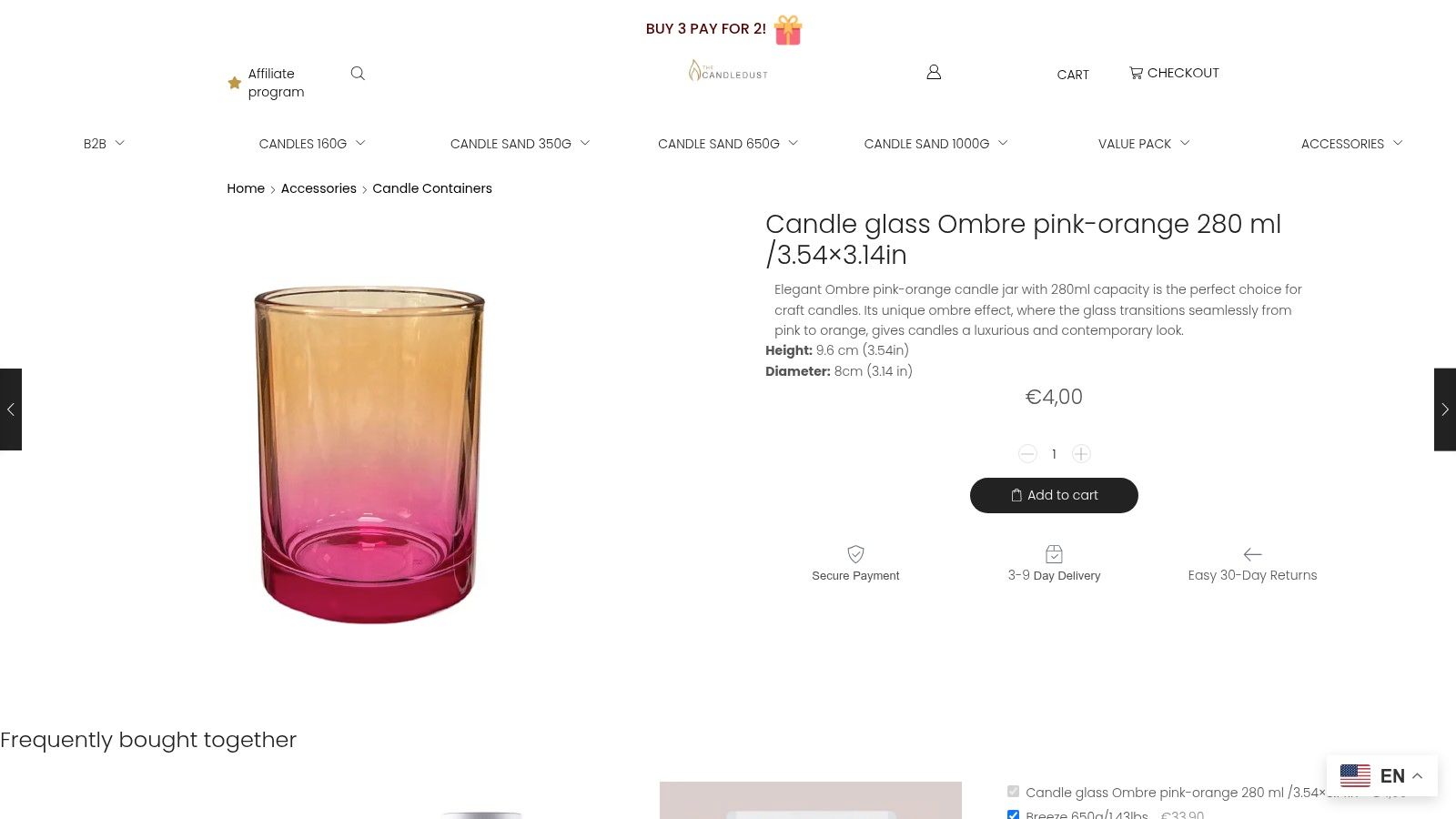
The ombre pink-orange and pink-purple 280 ml candle glasses are good examples of vessels that fit this workflow because their proportions and wall thickness suit repeat use rather than one-off décor. That doesn't make them magical, it makes them properly shaped for the job. The point is consistency, not spectacle.
Reusing the Same Bowl Burn After Burn
Candle sand earns its keep after the first burn. Once the flame is out and the bowl has cooled, lift out the spent wick, clear away ash or debris, top up the sand, and place a fresh wick in the center. That means no scraping hardened wax, no scrubbing, and no tossing a good vessel because cleanup became a nuisance.
Reuse is the business case
That is why this format works for home tables, bridal shoots, and hospitality rows. One bowl can move from a dinner centerpiece to a wedding setup to a restaurant display without changing the basic handling routine. The vessel stays in service because sand wax is built for reset, not disposal.
The maintenance cycle tells you the rest. If the sand darkens around the wick area, that is normal wick use, not the bowl failing and not the sand “going bad.” Refresh the top layer, replace the wick, and keep going.
For a step-by-step guide on vessel care, see our article on how to reuse candle jars.
Keep the standard simple
A decorative glass bowl only works if the vessel can handle heat and repeated resets. The safe setup is thick-walled, heat-resistant, straight-sided or slightly flared glass, with no chips, cracks, bubbles, or weak seams, and a wick sized to the bowl instead of pushed wide for more brightness. That combination protects the look and keeps the vessel usable burn after burn.
Use this checklist before you light it:
- Thick wall, especially at the base
- No chips, cracks, bubbles, or weak seams
- Straight-sided or only slightly flared shape
- Base stable enough to sit without wobble
- Wick small enough to keep the flame controlled
- Sand surface left loose, even, and uncrowded
The Candledust builds around that logic with candle sand that is meant to be poured, lit, refreshed, and reused. If you want to work with a glass bowl for candles the right way, start with the vessel rules above, then visit The Candledust to see how sand wax refills fit into a reusable bowl setup for home, events, or hospitality.