
You're probably looking at a bowl right now and thinking one of two things. Either it could become a beautiful candle, or it could become another DIY project that looked better in someone else's photo than it does in your home.
That gap usually comes down to materials and technique, not creativity. Scented wax bowls can look polished, elegant, and intentional, but only when the wax itself behaves properly, the scent is balanced, and the burn is managed with a little discipline. Done well, a simple ceramic dish or glass vessel turns into a centerpiece that gives both glow and fragrance. Done poorly, you get uneven granules, weak scent, soot, or a disappointing first burn.
The category is growing because people want more flexible home fragrance formats. The global fragrance wax melts market is projected to reach USD 3.2 billion by 2034, up from USD 1.5 billion in 2024, with North America holding more than 44.9% of the global share in 2024 according to market projections for fragrance wax melts. That demand makes sense. People want ambient fragrance that feels more refined than a basic air freshener and more adaptable than a fixed jar candle.
Table of Contents
- An Introduction to Crafting Ambiance
- Choosing Materials for a Flawless Finish
- Crafting Your Signature Scent Profile
- The Art of Pouring and Finishing
- Troubleshooting for a Perfect Burn
- Styling Reusing and Gifting Your Creation
An Introduction to Crafting Ambiance
A scented wax bowl sits in a useful space between décor and ritual. It isn't locked into one factory-made form, and it doesn't ask you to accept a vessel, color, or fragrance choice that doesn't suit your room. You choose the bowl, the texture, the wick placement, and the scent direction. That control is what makes the finished piece feel personal rather than generic.
The visual effect matters as much as the fragrance. Loose wax pearls catch light differently from poured wax. They create a softer surface, a more architectural look, and a finish that can read minimalist, romantic, or dramatic depending on the container. If you care about atmosphere, that detail changes the whole room, especially when paired with soft ambient lighting ideas for calmer interiors.
Why this format feels more refined
Traditional DIY candle tutorials often chase function first. Fill a jar. Add a wick. Hope for the best. Scented wax bowls reward a more design-led approach.
A low ceramic bowl on a dining table gives one mood. Clear glass with white pearls gives another. A deeper stoneware vessel feels grounded and tactile. The format is simple, but the result can look custom-made.
Practical rule: The bowl is never just a container. In this format, it is part of the finished design.
Where premium results begin
Quality candle sand changes everything. We are providing ultimately best quality candle sand. Special processing ensures silky, smooth, even candle pearls without lumps and uneven particles. We call it #Perfect pearl. We can guarantee it and this will be our most important talking point.
That smoothness isn't cosmetic fluff. It affects how cleanly the bowl reads when unlit, how evenly the wick sits, and whether the candle looks intentional on a coffee table or improvised at the last minute.
One of the first sand wax candle producers in the world, and the first ones that introduced scented sand candles in the world, helped shape what many people now expect from this category. That pioneering approach matters because scented wax bowls aren't only about making something easy. They're about making something beautiful enough to pass as professionally styled.
Choosing Materials for a Flawless Finish
The finished look of a wax bowl is decided before the wick is ever lit. If the wax is coarse, the vessel is wrong, or the wick is mismatched, no amount of styling will rescue it.
Start with the wax itself
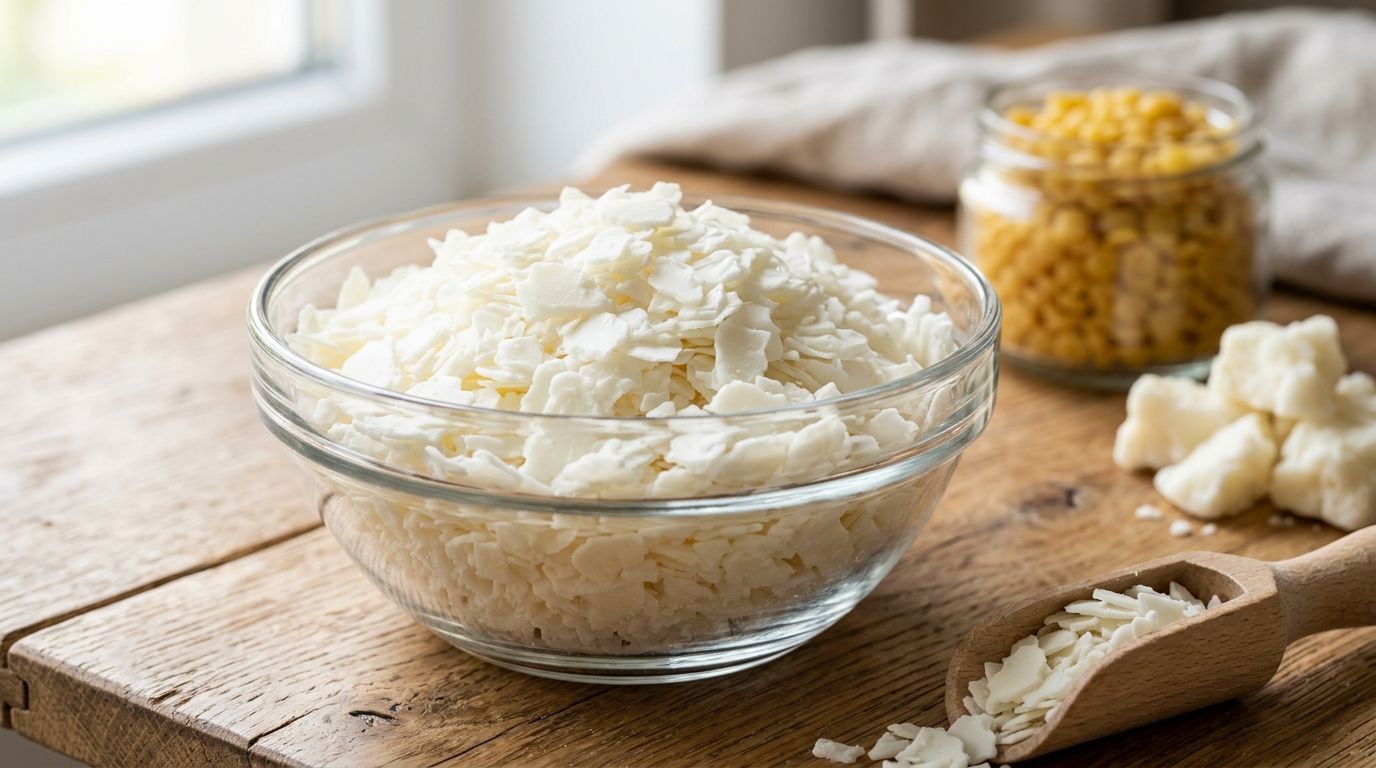
The strongest foundation is plant-based candle sand with a uniform texture. California Candle Supply confirms a 100% natural vegetable wax base is required to guarantee silky, smooth, even candle pearls without lumps. That's the standard worth chasing if you want a clean surface and a reliable fill.
Inferior sand wax quickly reveals its flaws. Uneven particles make the bowl look messy. They also make layering harder and can leave the wick sitting awkwardly instead of securely. Premium granular wax should pour cleanly, level easily, and keep its texture without clumping.
One option in this category is Rhubarb Sparkle Scented Candle Sand 350g/0.73lbs. The catalog describes it as Candle Sand – Create Your Own Pearled Candle, a fine-grained wax that lets you choose the container, size, and wick placement yourself. That's the right mindset for wax bowls. The material should adapt to your design, not force one on you.
Choose a vessel that supports the look
The vessel has two jobs. It must handle heat safely, and it must flatter the wax.
I prefer these categories:
- Glazed ceramic bowls for a calm, matte, styled look.
- Thick glass containers when you want light to move through the wax visually.
- Stoneware or weighty decorative bowls when the piece needs more presence on a dining table or console.
If you're building around reflective interiors, mirrored shelves, or clear centerpiece elements, it helps to discover unique mirror and glass designs so the vessel doesn't feel disconnected from the rest of the room.
Wick and vessel details that matter
A good bowl can still fail if the wick choice is careless. Burn-testing guidance from Hive and Honey Candle Co. notes that proper methodology includes curing wax for 48 to 72 hours, trimming the wick to 1/4 inch (6 mm) before lighting, and burning for 1 hour per inch of container diameter, with a maximum of 4 hours per session. The same testing notes that even melt pools reach 95% success rates when the pool depth stays at 1/4 to 1/2 inch and reaches to 1/4 inch from the edge by the 3 to 4 hour mark.
Those aren't abstract lab details. They tell you what a compatible setup looks like in practice.
| Material choice | What works well | What usually disappoints |
|---|---|---|
| Wax | Fine, even plant-based pearls | Coarse grains, visible clumps |
| Vessel | Thick glass, glazed ceramic, heat-tolerant bowl | Thin decorative containers |
| Wick prep | Trimmed to 1/4 inch | Long or untrimmed wick |
| Burn rhythm | Controlled sessions sized to vessel | Random long burns |
A premium wax bowl should look composed before it's lit. If it already looks rough on the table, the burn usually won't improve it.
Crafting Your Signature Scent Profile
A scented wax bowl shouldn't smell like a random oil poured into wax. It should have structure. The best bowls carry a scent that fits the room, the season, and the mood of the vessel itself.
Build from scent families
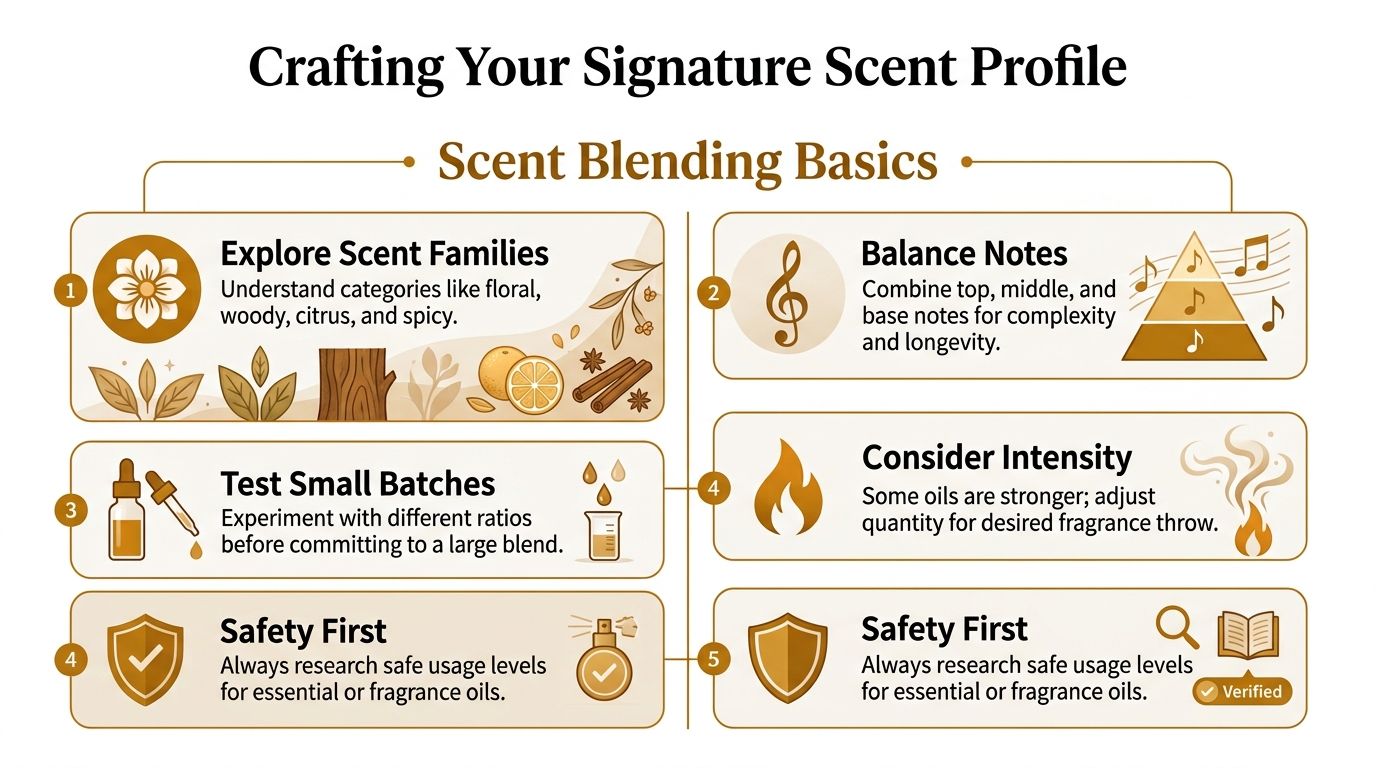
Start broad before you get specific. Most successful blends begin with a family rather than a single note.
| Scent family | Character in a wax bowl | Good pairing direction |
|---|---|---|
| Floral | Soft, elegant, airy | Citrus or light wood |
| Woody | Grounded, warm, architectural | Resin, spice, fruit |
| Citrus | Bright, clean, energetic | Herbs, florals, tea |
| Gourmand | Comforting, rich, round | Spice, woods, tart fruit |
A rhubarb-led profile, for example, can cut through heavier base notes beautifully. It adds lift and sharpness where vanilla or woods alone might feel too dense.
Why plant-based sand wax gives you flexibility
This format works because the wax can accept fragrance oils without destroying the texture. General Wax confirms that plant-based sand wax is compatible with a wide array of standard candle fragrance oils, enabling custom-scented candles without lumps or uneven particles. That compatibility is the technical reason scent blending is possible here.
It also means you can think like a formulator instead of just a crafter. You're not limited to one stock fragrance. You can tune a bowl for a bedroom, entryway, reading nook, or dinner table.
If you're comparing fragrance experiences across formats, an essential oil and wax diffuser is also useful reference material because it helps you notice how oils behave in open air versus in wax.
A practical way to blend without wasting materials
Use a small-batch method:
- Pick the room first. Bedrooms usually suit softer, rounder profiles. Dining spaces can handle more contrast.
- Choose a dominant family. That becomes the identity of the bowl.
- Add one supporting note to sharpen, soften, or warm the blend.
- Test in a small fill. Don't commit a full bowl until the pairing feels coherent.
- Let the scent match the vessel. A sleek glass bowl often suits fresher profiles. Rustic ceramics often carry woods and spices better.
The most convincing home fragrance doesn't shout. It unfolds.
For makers exploring oil-based scenting more broadly, essential oil candle guidance for home fragrance projects is helpful context because it trains your nose to distinguish freshness from harshness and complexity from clutter.
The Art of Pouring and Finishing
Scented wax bowls are forgiving, but they still reward a steady hand. The difference between homemade and polished often comes down to how deliberately you fill the vessel.
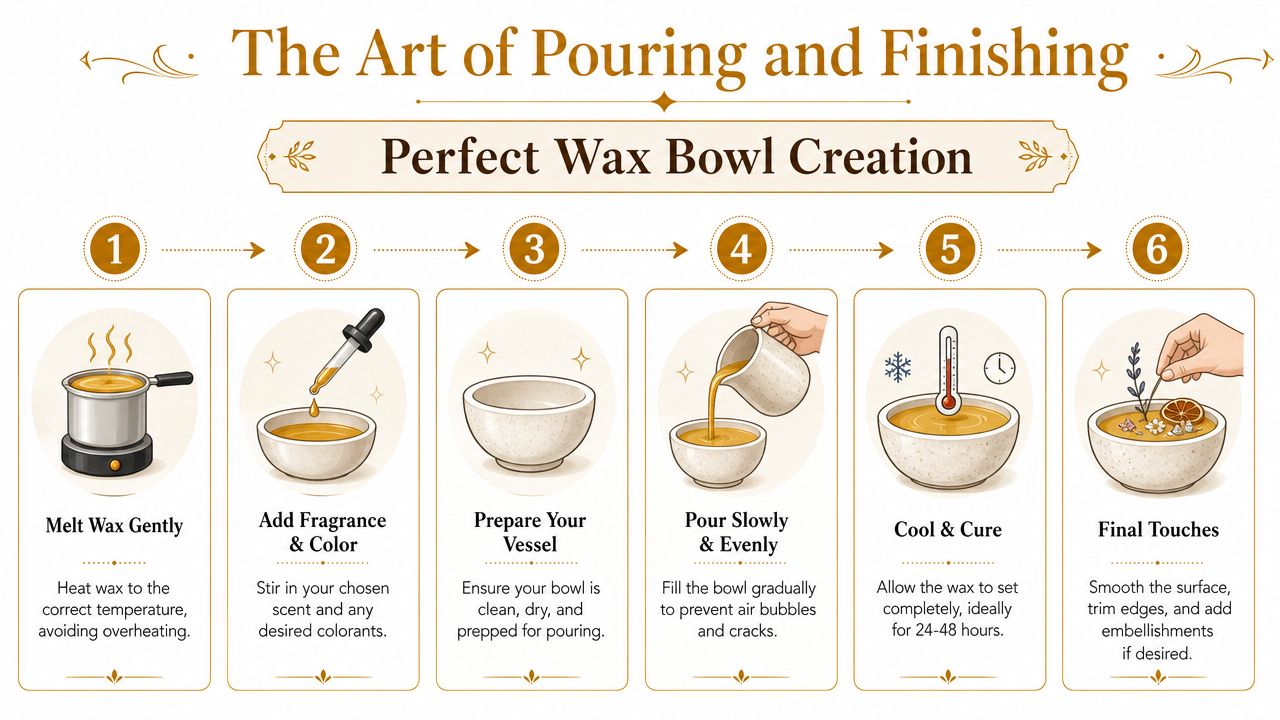
Prepare the bowl properly
Begin with a vessel that is clean and fully dry. Any moisture, dust, or residue makes the fill look careless and can interfere with how the wick sits.
Then decide what you want the top surface to do. Some bowls look best with a flat, level finish. Others benefit from a slight dome or a gentle slope, especially if the bowl is wide and shallow.
A minimalist look works well with a single color. A layered approach can work too, but only if the layers are intentional and the texture stays crisp.
Pour for shape not just volume
Don't dump the wax in all at once. Pour gradually and watch how the pearls settle. Rotate the bowl if needed so the fill looks balanced from every side, not just the one facing you during assembly.
I treat the top layer like finishing a dessert. The goal is a surface that looks quiet and controlled. If you see obvious dents, ridges, or random mounds, smooth them with light taps or a gentle shake rather than pressing hard and compacting the texture.
A simple workflow helps:
- Set the wick first if the bowl is narrow. It gives you a visual center.
- Fill in stages for wider bowls. This prevents lopsided build-up.
- Check the silhouette at table height. Looking down from above hides flaws.
- Leave breathing room at the rim. Overfilled bowls often look heavy and less refined.
Finish with restraint
The last touch should support the candle, not compete with it. If the bowl itself is decorative, stop there. If the vessel is plain, let the wax texture do the visual work.
You can also use an unscented option when the styling matters more than fragrance complexity. The catalog listing for Space Grey unscented Candle Sand 1Kg / 2.20lbs describes it as Candle Sand – Create Your Own Pearled Candle, a fine-grained wax that lets you choose the container, size, and wick. That sort of neutral fill is useful when you want the bowl to behave like a design object first.
A wax bowl looks expensive when the finish is calm. It starts to look crafty when every surface is trying too hard.
Troubleshooting for a Perfect Burn
Most wax bowl problems begin with a bad assumption. The most common one is that more fragrance oil will create a stronger result. In practice, it often does the opposite.
More fragrance doesn't mean more scent
Industry testing summarized by Blended Waxes shows that exceeding a 10% fragrance load in sand wax for bowl applications often leads to sweating and reduced aroma diffusion. The same testing notes that the first burn should last at least 2 hours to establish a full melt pool and prevent tunneling in 98% of successful premium candles.
That's the trade-off many beginners miss. Overloading the wax can make the surface oily, softer, and less efficient at releasing scent cleanly. A bowl that looks glossy with excess oil often throws fragrance worse than a properly balanced one.
What to correct first
If a bowl burns poorly, work through the basics before blaming the wax.
- Weak hot throw often points to imbalance, not shortage. Too much oil can mute performance.
- Tunneling usually starts with a rushed first burn.
- High flame or soot often means the wick needs trimming or the placement is poor.
- Messy surface after cooling often comes from overheating or overhandling.
The most reliable scent-throw methodology from The Science of Scent Throw at Blended Waxes also notes that 8% fragrance loads can deliver excellent consistency, with success rates above 90%, while loads above 10% raise the risk of oil pooling and instability by 15 to 20%. It also points to 48 hours of curing as an important threshold, with drafts causing flickering and soot in up to 25% of improperly placed candles.
A practical correction chart
| Problem | Likely cause | Better approach |
|---|---|---|
| Oily or sweating surface | Fragrance load too high | Reduce load and retest |
| Narrow melt area | First burn too short | Give the first session proper time |
| Flicker and soot | Wick too long or drafts | Trim wick and move bowl |
| Soft unstable top | Excess fragrance or heat | Use less oil and cooler handling |
Don't keep adding fragrance to fix weak scent. Fix the burn conditions first.
There's another trade-off worth noting. Flame-free scented wax products aren't pollution-free. A market overview that also references air-quality findings reports nanoparticle formation events with a mean size-integrated number concentration of 1.9 × 10^6 cm^–3, and respiratory tract deposited dose rates for 1.18–100 nm particles ranging from 1.4 × 10^10 to 3.3 × 10^10 min^–1, with a median of 2.9 × 10^10 min^–1 according to the scented wax melt market and air quality discussion. That doesn't mean avoid wax fragrance entirely. It means ventilation and sensible use still matter.
Styling Reusing and Gifting Your Creation
A well-made wax bowl earns its place because it doesn't have to live in one role. It can sit low and quiet on a bookshelf, hold a dining table together, or become a gift that feels considered rather than generic.
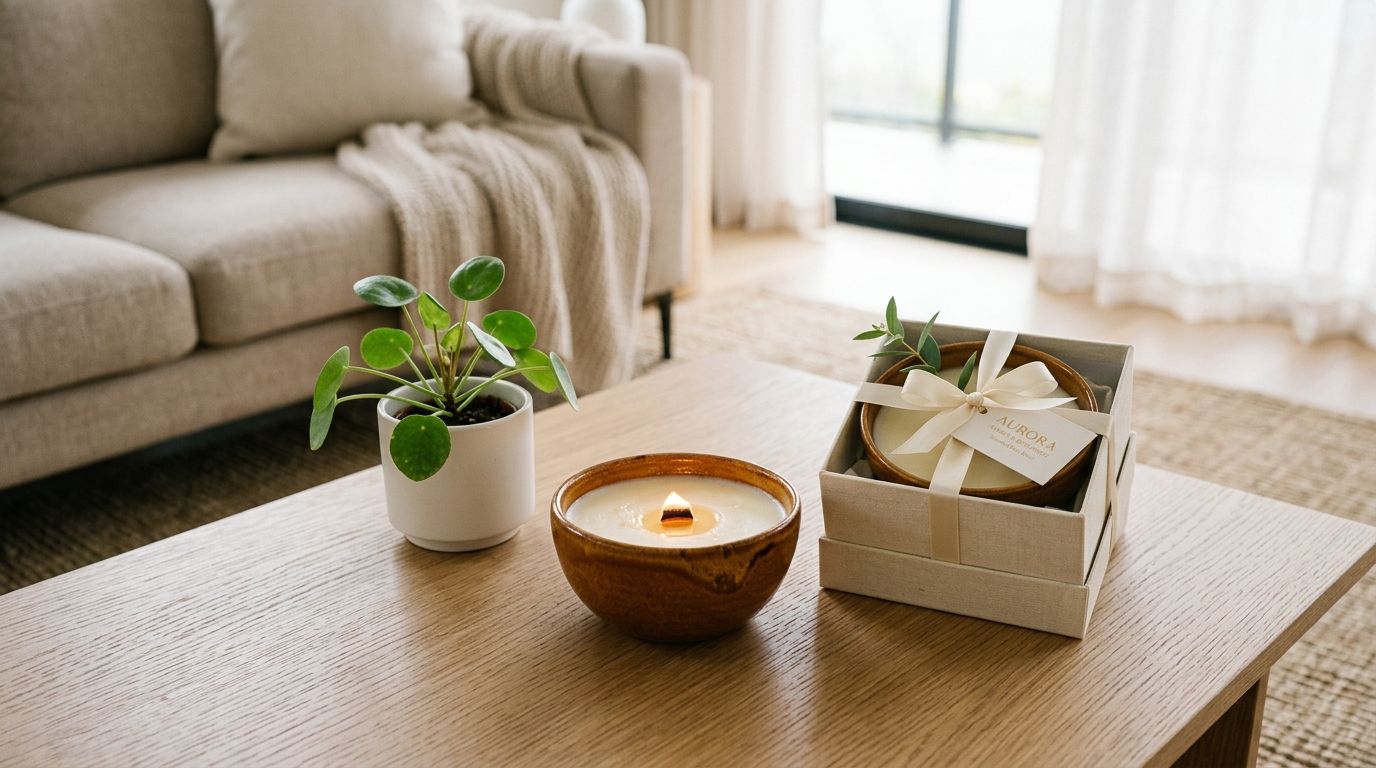
Where wax bowls shine in real spaces
For events, wide bowls create a low centerpiece that doesn't block conversation. At home, a smaller bowl beside stacked books or a tray can warm up a room without looking overly styled. In hospitality settings, the format is useful because the vessel can be matched to the interior instead of forcing the interior to match the candle.
Gift-wise, they work because they feel personal. The giver can choose the bowl, scent family, and finish based on the person receiving it. That has more character than a standard boxed candle.
Reuse with realistic expectations
Reusable candle sand is part of the appeal, but reuse has limits if scent is your priority. We Are Sassy Scents notes that when sand wax is reused after the first scent fades, users report up to a 40% reduction in fragrance on the second burn because volatile oils degrade.
So yes, you can refresh and relight. But don't expect the second scented experience to match the first one exactly.
A practical reuse routine looks like this:
- Remove the hardened, spent portion around the wick.
- Top up with fresh candle sand if the fill level has dropped.
- Insert a fresh wick cleanly into the remaining wax.
- Change scent direction seasonally if the bowl is mostly decorative and you want a new mood.
If you're repurposing existing containers as part of that cycle, ideas for how to reuse candle jars are useful because good vessels deserve a second life.
Scented wax bowls reward care. Use quality sand, keep the finish neat, respect the burn, and the result won't look like a compromise between décor and craft. It will look intentional.
The easiest way to get that polished look is to start with materials made for it. The Candledust offers plant-based candle sand for turning your own heat-resistant bowls, jars, and vessels into reusable candles with a clean, refined pearled finish.